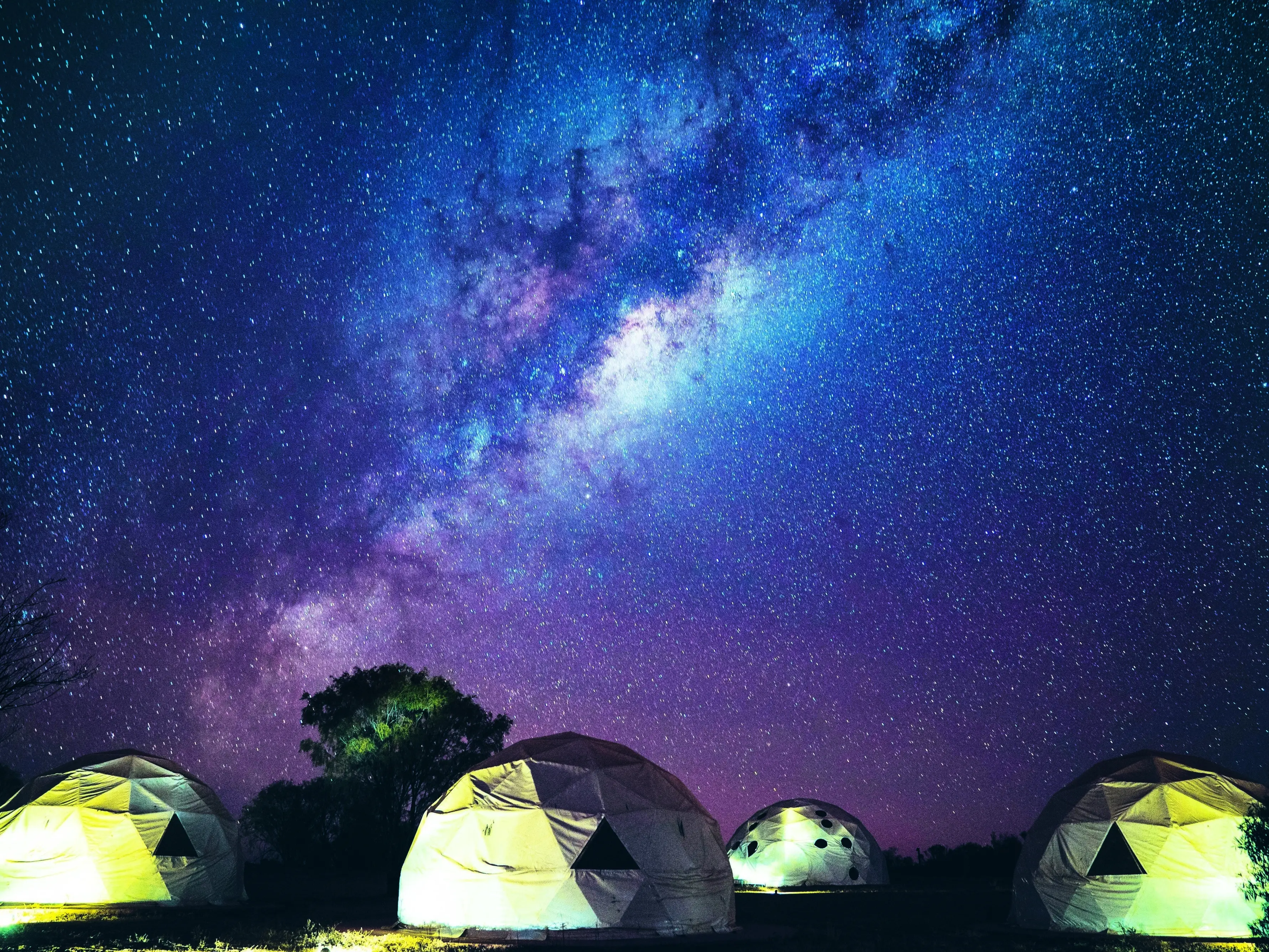
You get to sleep in ‘‘star beds’’, or heavy duty swags but tents are available if the desert gets too cold. PHOTO: SUPPLIEDIf you are looking at a trip to Alice Springs, Melbourne- based travel writer Catherine Best suggests an overnight stargazing experience should be on your itinerary.
THE BOOK: This is an edited extract from Ultimate Family Holidays: Australia by Catherine Best, published by Hardie Grant Explore.
Earth Sanctuary overnight stargazing, Alice Springs/Mparntwe, NT, Arrernte Country
What
Stargazing in a desert swag, with camp-fire tales, damper and pancakes.
Where
Earth Sanctuary is about a 15min drive south of Alice Springs/Mparntwe, off Colonel Rose Dve. You can fly to Alice and mini-bus transfers are available from your hotel.
Ready, set, go!
Sure, you could take the kids to the planetarium and sit in a comfy theatre while the night sky is beamed across the ceiling. Or you can treat them to an authentic stargazing journey that lasts all night long under a desert sky in the heart of central Australia. No contest. Welcome to the Sunset 2 Sunrise Experience at Earth Sanctuary, a nature-therapy enterprise inspired by one family’s mission to make people better custodians of the planet by connecting them to it. And connect they do, through a riveting and informative camping powwow that takes you to the edge of human comprehension about the universe.
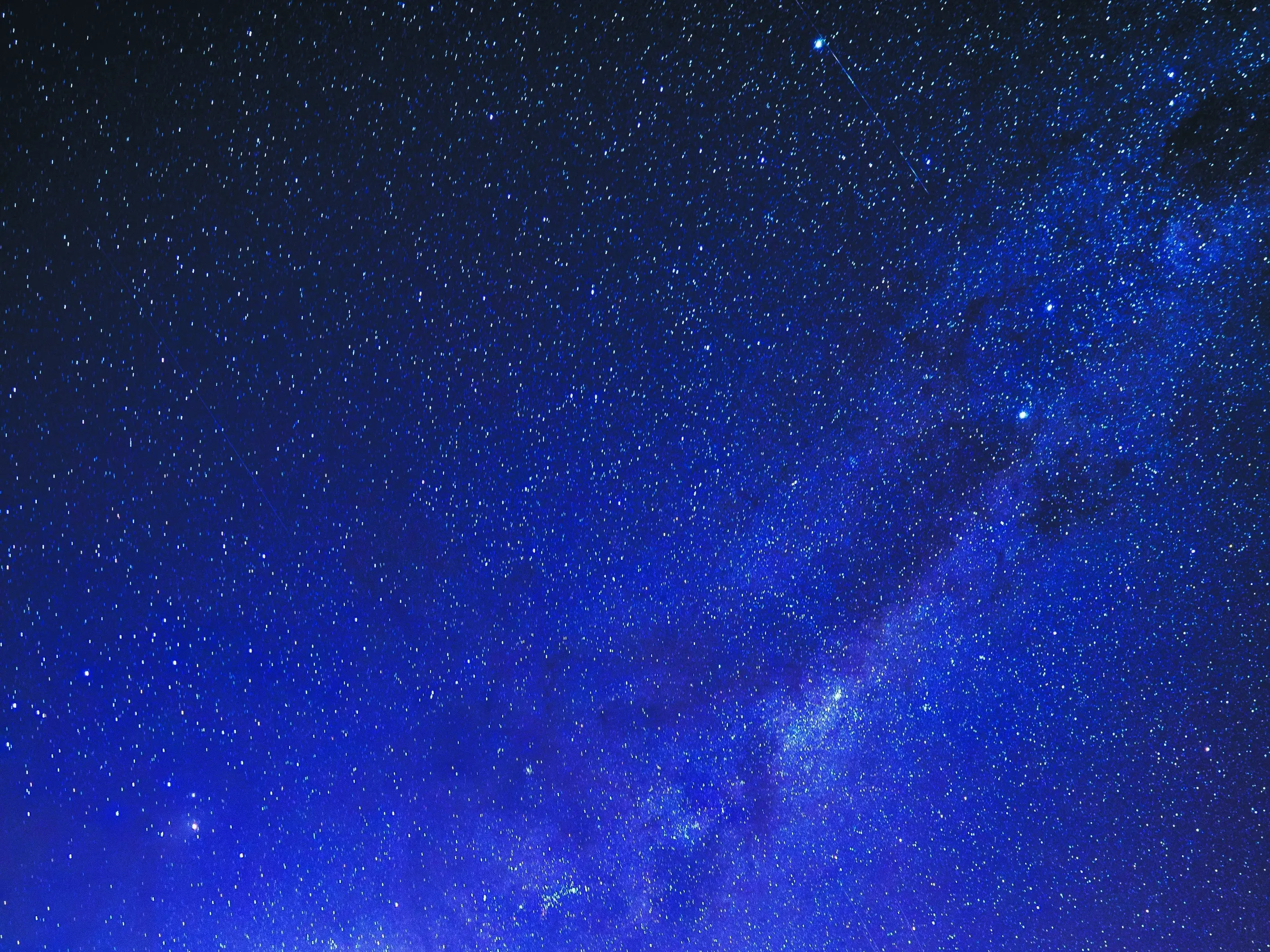
Earth Sanctuary provides families with a views of the stars through telescopes. PHOTO: SUPPLIED
The experience takes place at a Space Camp just south of Alice Springs/Mparntwe, where the Falzon family has carved a business leading astronomy tours and guiding school groups through the outback for 25 years. The family — Joe, Roz Lane and adult sons, Tom, Ben and Dan (a former Neighbours star) — moved to the Red Centre from Victoria in 1999 on a planet-saving quest. What followed was the launch of an eco-certified, carbon-neutral programme of tours and experiences designed to rewild guests and inspire sustainable living.
‘‘The crux of Earth Sanctuary is inspiring change in people and creating experiences that will open their mind up to appreciating and falling in love with the Earth again, the planet and stars and our beautiful environment here in the Northern Territory,’’ Tom says.
Our journey begins just before sunset with a welcome drink and an introduction to the night sky where one lucky boy is chosen to help make damper to accompany dinner. The group then moves inside the homestead for an intimate meal on two big, round share tables. There’s a selection of barbecue cuts and vegetables (Tom tells us meat is their biggest carbon contributor), followed by dessert. It’s an assisted buffet and there are plenty of options for fussy eaters (snags and damper, kids?).
Soon it’s show-time. The group sits in a circle of chairs, heads craned skyward as Tom, brandishing a powerful laser that would make Luke Skywalker swoon, starts pointing out the Southern Cross and pointer stars, Alpha and Beta Centauri. He illustrates how to identify the South Celestial Pole and explains how the stars have been used for navigation and storytelling since the beginning of humankind.
‘‘We call the stars above us the original library on Earth ... these shapes up there and the stories embedded in them are some of the oldest stories on Earth.’’ Tom explains how the Spanish and Portuguese dubbed the Southern Cross the South Celestial clock, noting how it circled across the sky in parallel with the seasons. First Nations Peoples of the Central Desert see the constellation as the footprint of a wedge-tailed eagle and the pointer stars as fire sticks, their billowing smoke creating the Milky Way.
Tom’s laser streaks between the stars, joining the dots in an abstract animation of Zodiac signs (see the hook of Scorpio’s tail here, the hang glider of Capricorn there). There are six Zodiac signs present at any one time but, sketched in the northern hemisphere in antiquity, they require some imagination to decipher. Tom’s delivery is light-hearted, engaging and peppered with fascinating fun facts for young ones: the moon could fit on the surface of Australia, Never Enter Santa’s Workshop is a cheat sheet for the north-south-east-west acronym, and the universe comprises 180 billion galaxies, 20 for every man, woman and child on Earth.
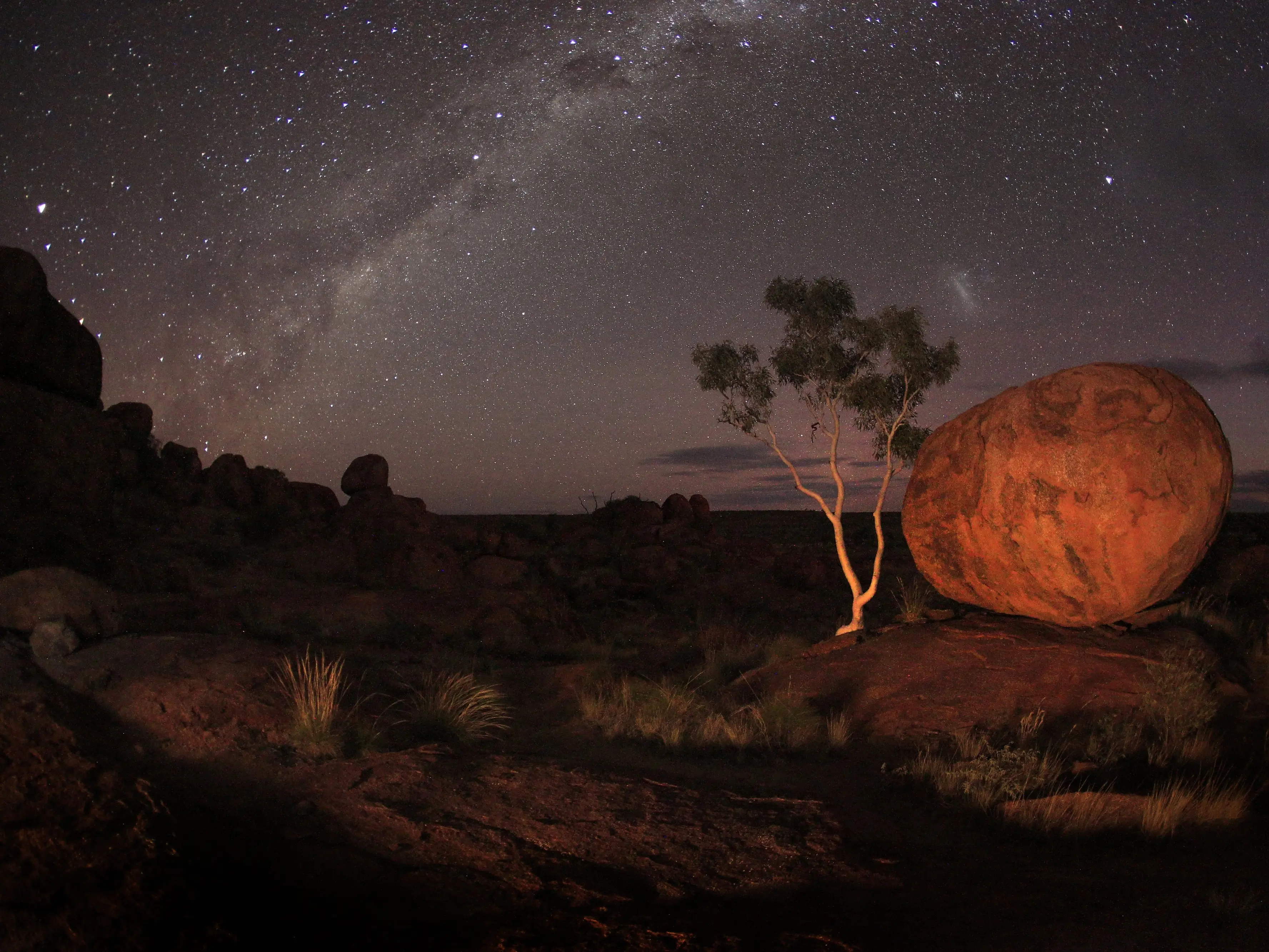
The Northern Territory offers spectacular views of the night sky. PHOTOS: GETTY IMAGES
Just as our brains are set to spaghettify, we move to the telescopes. We peer into deep space at Omega Centauri, the largest globular cluster of stars in the Milky Way, and view the Jewel Box, 6400 light years away. After the telescope viewing, most of the group departs (Astro Tours and Dinner and Stars packages run concurrently). The handful of us remaining sip on steaming mugs of hot chocolate as we warm our hands by the camp-fire. ‘‘This is black belt astronomy now guys. We’ve done a little warm-up and now we can just sit back and enjoy the galaxy,’’ Tom beams. What transpires is a no-limits conversation about space where kids can ask about any cosmic concept that’s ever piqued their curiosity.
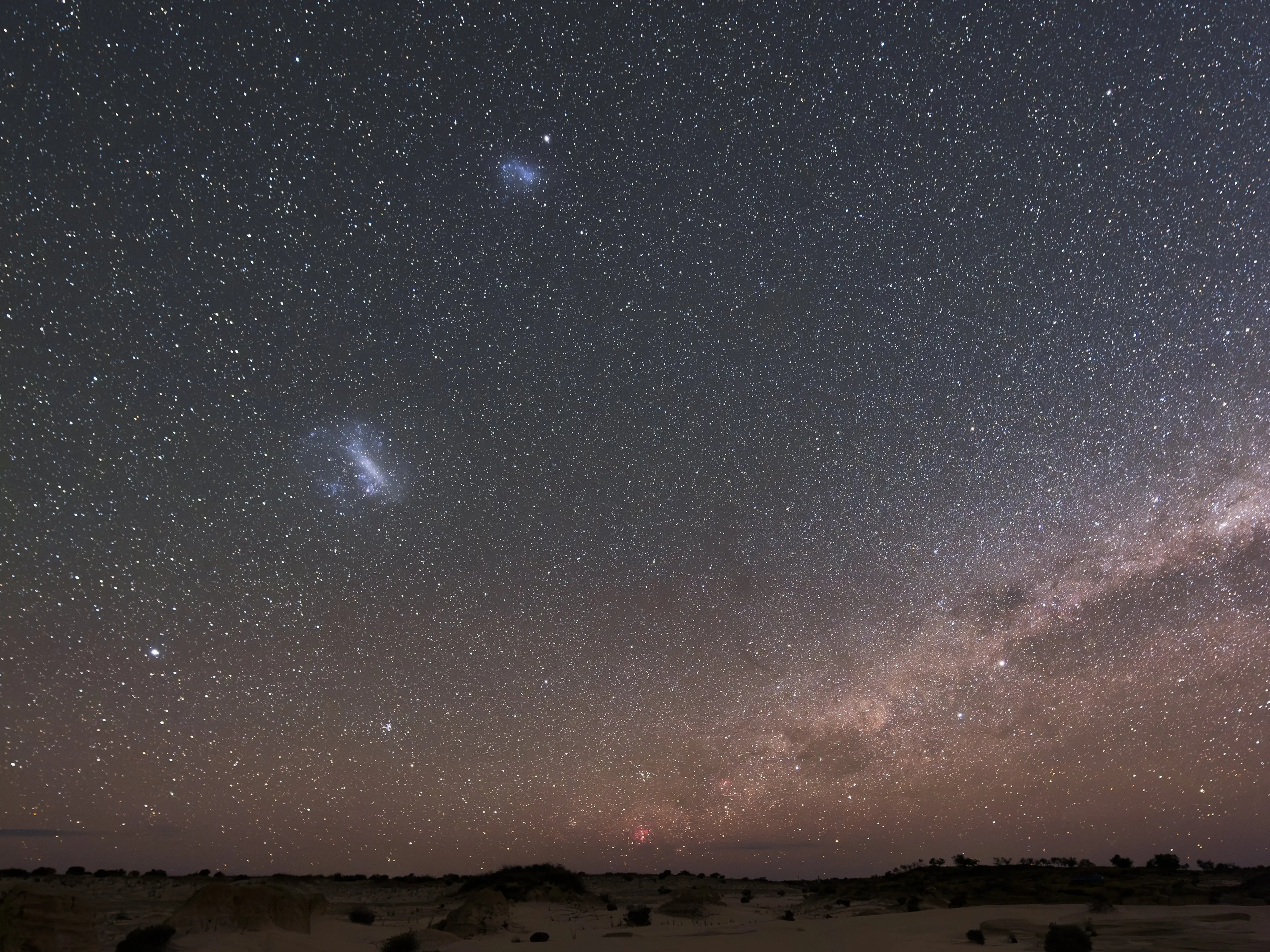
A whole new vocabulary pings our boggled minds: nebulas, white dwarfs, Fraunhofer lines, pulsars, Magellanic Clouds. We discuss the viability of colonising the moon, mining meteors and how each of us is made of stardust base elements that originated from supernovas (exploding stars). Then there’s the existential question of life beyond Earth.
When it’s time to turn in, my daughter and I snuggle into our Star Beds heavy-duty swags on raised camp stretchers as the universe pulses above us. There’s an astro dome (fixed tent) nearby where we can change and leave our belongings and retreat to if the desert night becomes too cold (its 4°C and dewy, but we’re toasty in our sleeping bags). Tom plans to wake us at 2am when Scorpio, the centre of the Milky Way, is at its zenith, but a light cloud cover has moved in, so we sleep on.
We rise just before daybreak. The Southern Cross is setting in the west, the moon is rising in the east, and the telescope sweeps us on to the rings of Saturn. Soon the sun will be up and the curtain will fall on this (inter)stellar sky show, but not before an encore of pancakes for breakfast.
Magellanic Clouds and the Southern Milky Way over the Horizon. PHOTO: GETTY IMAGESTHE DETAILS
WHEN TO GO Sunset 2 Sunrise stargazing experiences run in the cooler months (Apr-Sept). Time your visit on a moonless night.
WHO’S IN 5+
MORE INFO earth-sanctuary.com.au
WHY KIDS LOVE IT It starts with damper, ends with pancakes and is packed with a who’s who of planets, stars and cosmic curiosities. If ever there was an experience for a budding astronomer or mini Star Wars aficionado, this overnight stargazing experience is it. That the family gets to sleep, drover-style, in a fair-dinkum swag makes this outback sleep-out all the more memorable. Plus kids under 8 are free.
IN THE KNOW This is an outdoor camping experience and you will need to BYO pillow, warm sleeping bag and a torch. Wear enclosed shoes and dress very warm with gloves, a jacket and beanie. Even if the desert is hot during the day, nights can be freezing.
WHILE YOU’RE HERE For an immersive outdoor experience of the kangaroo, not cosmos, variety, head next door to the Kangaroo Sanctuary Alice Springs.For a self-guided wilderness adventure, visit Standley Chasm/Angkerle Atwatye and Simpsons Gap/Rungutjirpa in the West MacDonnell Ranges, just west of Alice Springs/Mparntwe.
ALSO TRY For a daytime sky-gazing venture that will blow the kids’ minds, try sun viewing at the Charleville Cosmos Centre (cosmoscentre.com) in outback Queensland. Visit during the day and view solar flares and sunspots through one of the world’s largest hydrogen-alpha telescopes.