


From Lisbon to the Douro Valley
Take a trip to the sunny Costa de Prata and central Portugal, driving through a rich architectural and cultural heritage and a wide variety of landscapes.
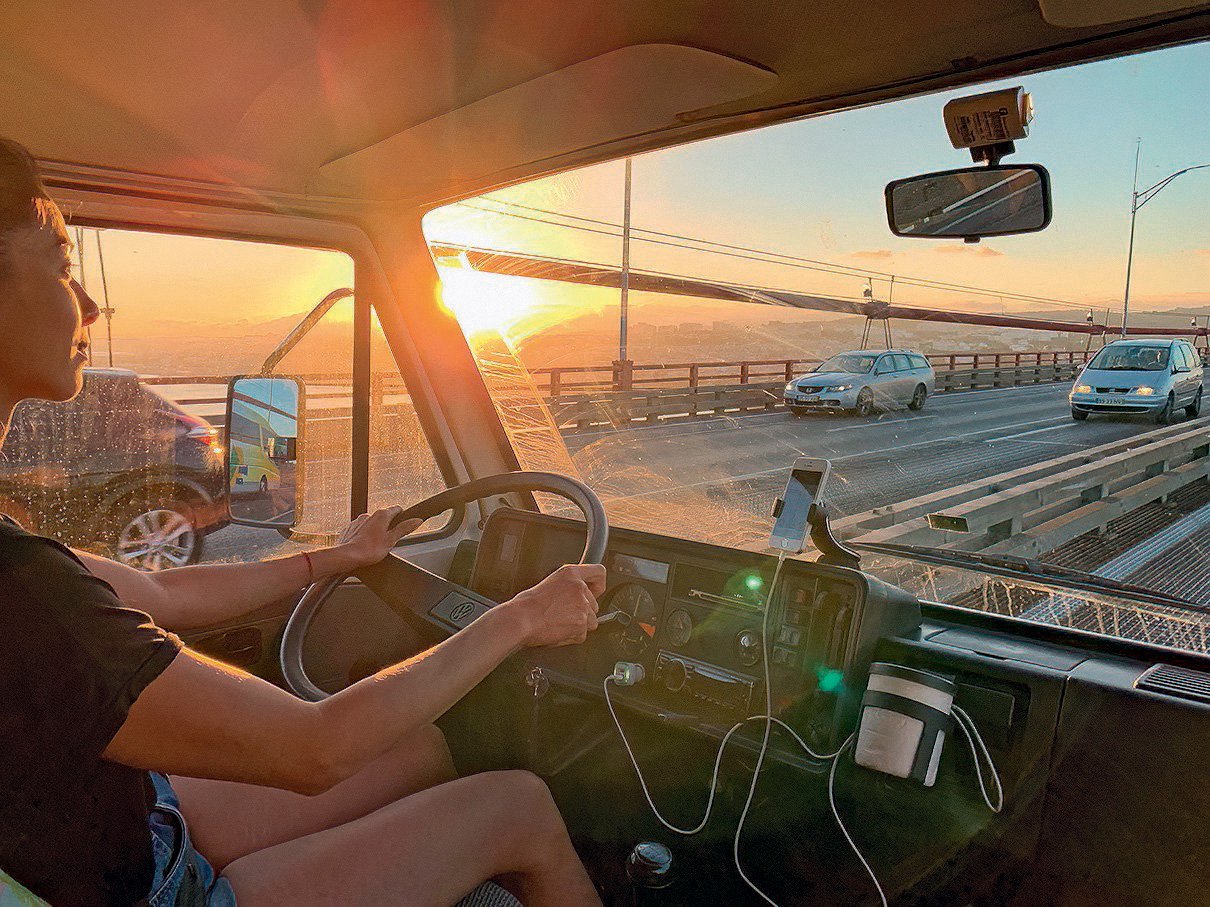
With the window wide open and fado music on the radio, I approach Lisbon, the first stage of a route that will take me via the Costa de Prata to Porto and the Douro Valley.
Portugal’s capital rolls out the red carpet to welcome visitors with its incredible steel bridge over the Tagus River, a lookalike of San Francisco’s Golden Gate Bridge (it was built in 1966 by the same company), under the protective gaze of the immense Cristo Rei a replica of Rio de Janeiro’s Christ the Redeemer statue.
I stop for an extended stay in the port’s huge carpark, Rua da Cintura do Porto de Lisboa. It’s cheap, but rather noisy due to the nearby railroad and clubs so bring earplugs. The city centre and beach are a 30-minute walk away.
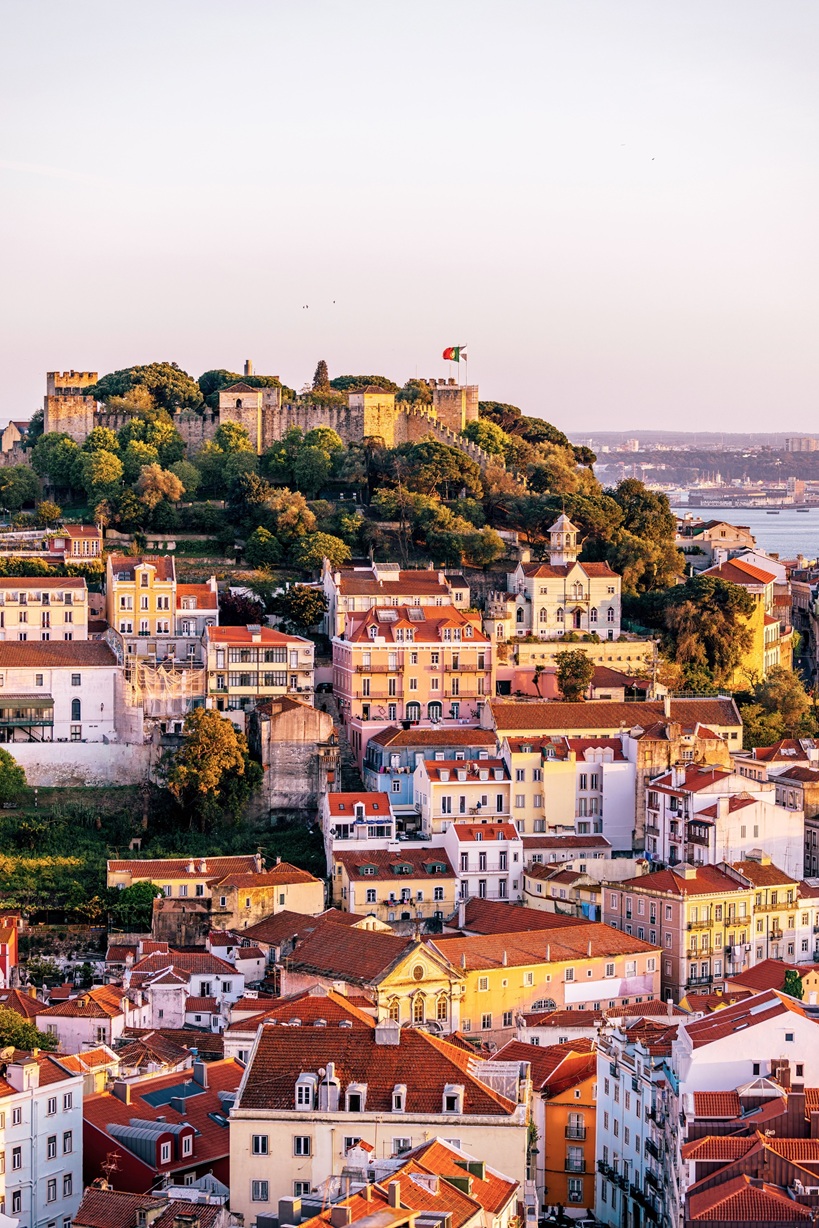
After devouring a delicious pastel de nata, a traditional custard tart, at the Pastis de Belm shop, I take line 28 of the legendary yellow tram system, passing some of the city’s most beautiful sights: the Baslica da Estrela, the lively streets of Baixa and Alfama.
Top tip: the streets are narrow so keep your elbows tucked in.
Next stop is the LX Factory, where disused warehouses have been renovated to house designer boutiques, bookshops and trendy restaurants, against a backdrop of vivid street art.
It’s time to hit the road again. I follow the coast along the N247 and make my first stop at Cabo da Roca, a steep, wild cliff that is the most westerly point in continental Europe.
Just inland, it’s easy to spend the rest of the day visiting the romantic parks and exuberant palaces and castles of Sintra and the surrounding area. The road winds through wooded hills in a long, one-way loop, and I fall in love with the fantastical Palcio Nacional da Pena — all domes, crenellated towers and bright colours — and the extravagant, Gothic manor house Quinta da Regaleira, with its well and spiral staircase leading to mysterious underground galleries.
At the end of the day, a seaside spot in Praia da Mexilhoeira (50km north via the N247) is the perfect place to spend the night. As soon as I wake up, the refreshing spray of the ocean beckons and I run to the water’s edge. I love this life without routine, letting myself be amazed by Mother Nature, having my nose tingle in the morning freshness, filling my lungs with salty air. I feel lucky and free when I travel by camper van.
Continuing north on the N247 soon brings you to the Costa de Prata. This stretch of coast is home to timeless places such as the charming medieval village of bidos, which is in a remarkable state of preservation. A stroll among the whitewashed houses covered in red tiles, sitting behind the ramparts, is highly recommended. I then make a detour to Nazar, a picturesque town known to surfers the world over for its incredible Praia do Norte. This beach is where, from October to March, you’ll find the world’s biggest waves: the record for the highest wave ever surfed took place here in 2017 — 24.38m. I’m amused by the number of people who offer me a room to rent even though I’m driving around in a converted van ‘No, obrigado’ and head to So Miguel Lighthouse, atop a cliff separating the touristy beach of Nazar from the wild and windy Praia do Norte.
The view is exceptional.
Pushing north, next on the itinerary is Batalha Monastery, a masterpiece of flamboyant Gothic art, with lace-like stonework and a fabulous royal cloister. Then it’s on to the old university town of Coimbra, Portugal’s medieval capital, majestically perched above the Mondego River and notable for its steep streets and cathedral.
Next morning, as I’m about to leave the spot where I’d spent the night, I notice that my dirty water tank is spilling and rubbing on the ground. I jump into action, throwing down a towel and sliding under the vehicle. Nothing serious, it’s just the tank’s retaining bar that’s come loose. In my toolbox, I retrieve a size 12 wrench to tighten the bolts. With the job done, I stand up again, my hands black, when a Portuguese man kindly approaches me to offer his help. I politely decline, my proud smile speaking volumes as I relish this small DIY victory. I can hardly get through the camper’s door, my head is so big.
The rest of the day involves the lush Buaco National Forest, home to many plant species, from cedars to tree ferns, and the town of Agueda, where the Agitgueda Festival is taking place.
Street art covers the walls, multicoloured umbrellas hang in the streets and a huge podium is being installed. Even my van is playing along and posing in front of the scenery.
Culture fix enjoyed, the sun beckons me to Aveiro Beach, 30km away, for an afternoon of idleness and swimming. I rinse off my salty skin in the public showers, then set up for the night under a bridge near Aveiro’s city centre with its canals, small bridges and painted boats, called moliceiros.
Hours later, a ray of sun sneaks in through the camper’s skylight, which has been open all night. I smile and stretch as I think about the day’s programme — visit the church of Santa Maria de Valega, covered in more azulejos, then finish off the trip in Porto and the Duoro Wine Valley. More adventures to come.
ROAD MAP
Start: Lisbon
Finish: Douro Valley
Distance: 618km
Recommended duration: 10 to 15 days
When to go: At the beginning or end of summer, when temperatures rise, the lack of shade makes itself felt.
Culinary specialities: Pastis de nata (custard tarts), francesinha (a kind of meat sandwich topped with melted cheese), bolinhos de bacalhau (cod croquettes)
The perfect sleep spot
Description: Large carpark in the dunes.
GPS coordinates: 39.153301, -9.36895
Light pollution: None
Access: Easy, on a dirt track
Facilities: Public toilets
Parking: 30 pitches
Little extras: Accessible to all vehicles. Quiet and deserted in the evening. Direct access to the beach (supervised by lifeguards) for swimming and surfing.
Epicureans will be delighted by this itinerary, which combines old ruins, gourmet delights and a hidden paradise.
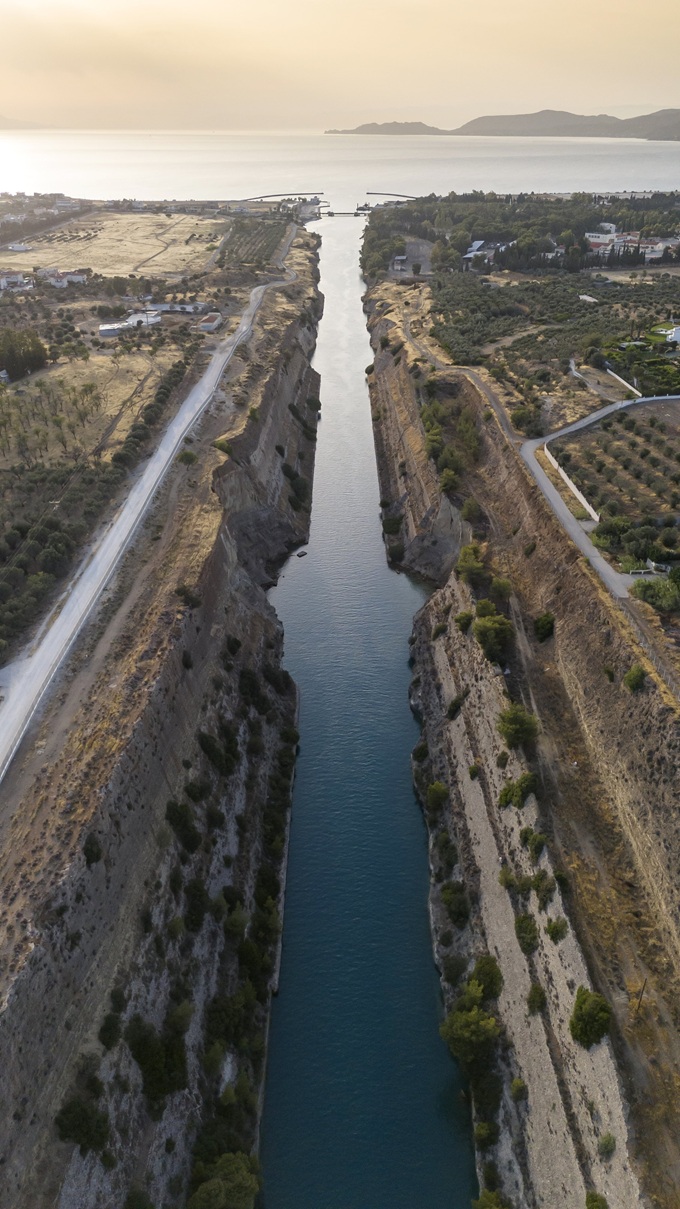
Having just about managed to park in the narrow, hectic streets of Athens, I intend to explore the city without getting back behind the wheel. If I were to judge by this first impression, I could almost regret having come here with my camper van. But fortunately I know that the rest of Greece is an Eden for van-lifers — you can park in a thousand idyllic places, many roads offer wonderful views, the sun shines most of the time and the cost of living is relatively low. As soon as I leave the capital, I know I’ll be able to enjoy a rural road trip via the Corinth Canal to Kalamata in the south of the Peloponnese, taking in mountains and olive groves on the way.
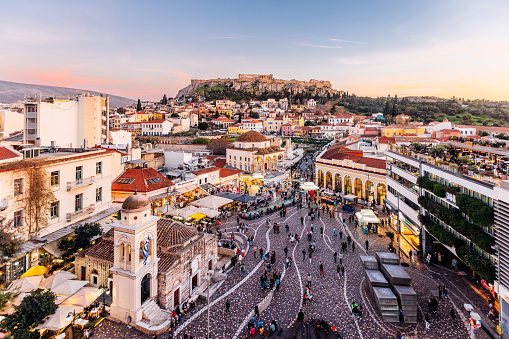
As this world-famous ‘‘upper town’’ attracts tourists from all over the planet, I get up early to avoid the crowds. The ancient heart of the Greek metropolis contains several celebrated temples, including the famous Parthenon, a structure supported by 46 marble columns and dedicated to the goddess Athena. Just as stunning as the architecture of the Acropolis are the views it presents from its hilltop location — you can survey the whole city.
This panorama makes me want to lose myself in the city’s streets, away from the busy areas of Monastirki and Plka. I stroll aimlessly and my wanderings lead to the central market, whose halls are filled with tempting stalls selling spices, dried fruits, cakes, olives and cheese. I don’t even try to resist and soon find myself with my arms full of delicacies.
Before leaving the Attica region surrounding Athens, I visit Piraeus, Greece’s principal port, taking the metro and getting off at the Piraeus stop, the terminus of line 1. Leaving the docks behind, I walk along the coast to Zea Marina and am transported to another world. Here, luxury yachts compete in grandeur, while I, surrounded by all this opulence, bite into my modest feta cheese sandwich. I continue my exploration of Piraeus and fall under the spell of the place. This town, built 2500 years ago by Themistocles, has a unique feel thanks to its mix of industrial warehouses, historic relics, art galleries, fine restaurants and a seaside resort popular with wealthy holidaymakers.
Continuing southwards across the Peloponnese, I notice that local driving can be surprising when you’re not used to it. In Greece, for example, the secret to a smooth ride is to keep as far to the right as possible. As the kilometres go by, I take in as much of the mountainous, wooded terrain as I can, as well as the hills planted with olive trees, which seem to stretch on forever.
After a few hours on the road, I arrive in Kalamata, a major olive-growing area (most of them fleshy and dark purple), which I know from having spent several months there. I love this city. It’s built on a human scale and little affected by mass tourism, meaning it’s a great place to live. The tiny Agioi Apostoloi Church, with its russet stones crowned with tiles, and the ruins of Ville Hardouins Castle are among my favourite places. What’s more, Messinia’s capital boasts several kilometres of beach, plus a pretty marina with affordable cafes.
All that said, the main reason I’m in the Kalamata region is to visit my Greek ‘‘granny’’, Diane, a lively pensioner who I met here years ago on a hitchhiking trip across Europe. To celebrate our reunion, we head for the nearest tavern, where we order saganaki (fried sheep’s cheese), Greek salad, courgette fritters and tzatziki (yoghurt with cucumber, herbs and lemon). We then return to Megali Mantineia, the village where Diane has set up her yurt. She’s been living here for over 15 years, in the middle of the olive groves, combining ecology and the good life on a daily basis. From the garden table where we share our meals, the view of the Gulf of Messinia is enchanting.
Every evening, this little paradise on Earth throws up a new spectacle, a mix of indescribable colours setting the sky ablaze. A breathtaking inferno that seems impossible to tire of.
ROAD MAP
Start: Athens
Finish: Megali Mantineia
Distance: 271km
Recommended duration: 5 to 7 days
When to go: Spring, autumn and winter to avoid the heat (plus, there are fewer crowds at tourist sites)
Culinary speciality: Horiatiki salata (salad with tomatoes, cucumbers, olives, onions, feta and oregano)
The perfect sleep spot
Description: Yurt overlooking the Gulf of Messinia
GPS coordinates: 36.95547208206742, 22.168649081012447
Access: Medium, via a small, steep asphalt road
Facilities: Yurt with electricity, toilet and Wi-Fi
Reservations: Book in advance on Airbnb.
Little extras: Admire the sunset over one of the most beautiful views in the entire region.
 THE BOOK
Epic Van Trips of Europe, Lonely Planet, RRP $55.


