PHOTO
An incredible 43 million international visitors turned up in Japan in 2025 — incredible when compared to the 3.5 million who arrived in New Zealand, a country of a similar size. And some New Zealanders believe that we are awash with tourists!
I’m continually on the lookout for off-the-beaten-track highlights and on a recent trip to Japan, my wife Yuriko and I went on some very enjoyable day trips from our base in her home city of Osaka.
Only 45 minutes by train east of Osaka (and 45 minutes south of Kyoto), the city of Nara has been well and truly discovered by international visitors. Nara city’s major attractions are the mesmerising 16m-high Daibutsu (Great Buddha) and lovely Nara Park, with its 1500 semi-tame deer.
If, like me, however, you’re not fond of crowds, the good news is that surrounding Nara Prefecture is also home to some as-yet undiscovered gems of Japan, all within easy reach of Nara city.
We’ll get on to those later, but point one is: Go to Nara city and don’t miss the Great Buddha or Nara Park, despite the crowds. Japan’s first permanent capital, during the Nara period from 710 to 784, Nara is an attractive city, with a large park; the Buddhist temple Tōdai-ji, where the great bronze Buddha resides is in the park’s north, while the Shintō shrine Kasuga Taisha is in its east, at the foot of the mountains. It’s all part of the Historic Monuments of Ancient Nara World Heritage site.
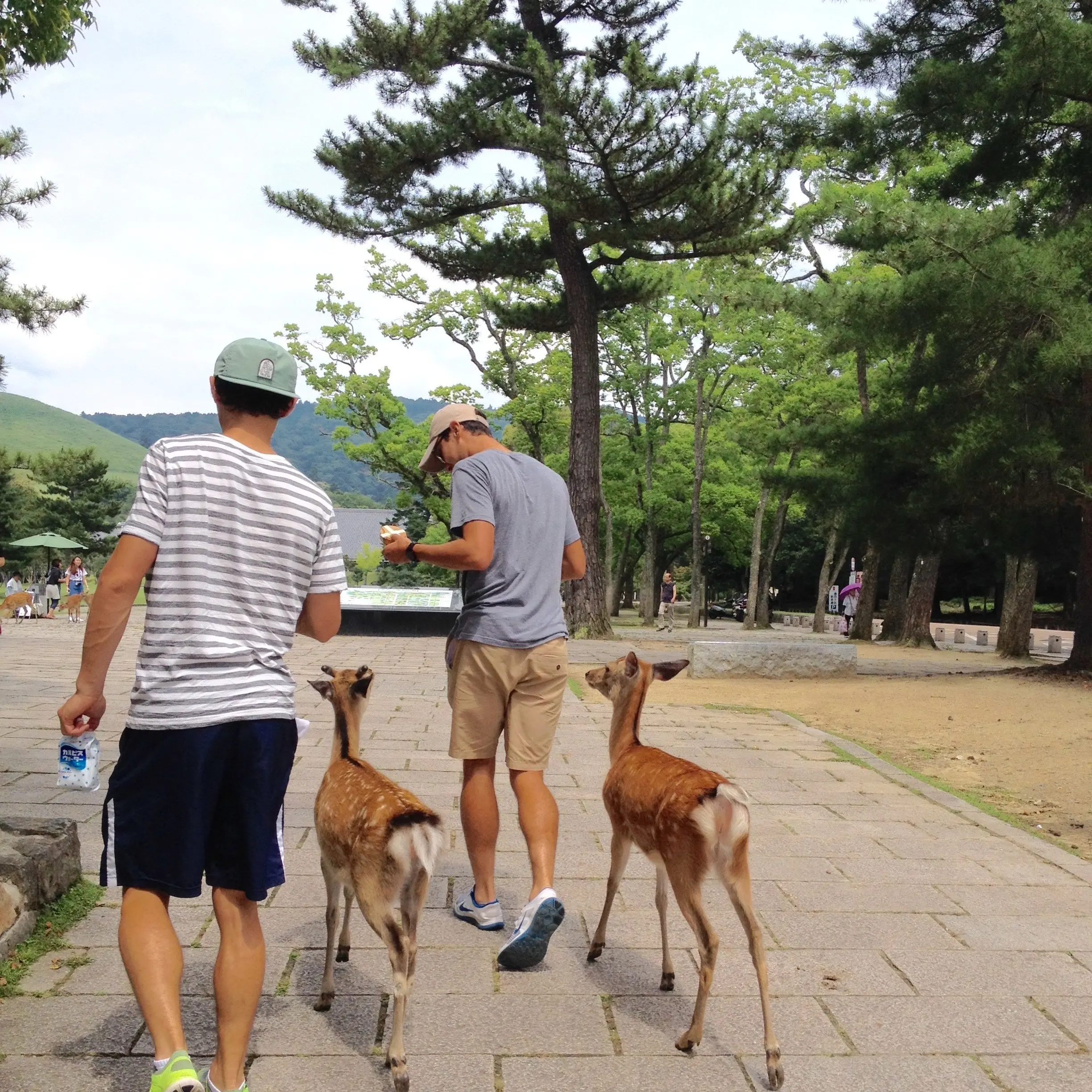
Some 1500 semi-tame deer (shika in Japanese) roam the park cadging shika-sembei, “deer crackers”, from visitors who buy them from vendors. It’s great family fun. Some shika have learnt to bow in return for crackers, though others can get a bit pushy and try to pull things out of people’s pockets. The deer are considered sacred, as “messengers of the gods”, though following World War 2, with debilitating food shortages, deer numbers mysteriously plummeted.
After being recognised as national treasures in 1957, numbers quickly rebounded, with the present park deer population at a record high. Drivers are encouraged to proceed slowly and keep a sharp eye out as deer wander across roads whenever they feel like it, though some seem to have figured out the safety that accompanies the green “walking man” pedestrian signals and zebra stripes at road crossings. Conservationists continue to worry about their concentrated “deer cracker diet”.
If you’re thinking, “hey, we have a species of deer called sika in Aotearoa; I wonder if they were brought from Japan?”, you’re on the right track. Sika deer (Cervus nippon) were first liberated near Oamaru in 1885, but it was a second release of six sika in 1905 in the North Island’s Kaimanawa Ranges that really took off and became a success.
Funnily enough, the sika were a gift to the New Zealand government by the Duke of Bedford from his herd in Woburn in England; a very roundabout way for an East Asian deer species to end up in New Zealand. Though they aren’t farmed, sika have thrived in the wild of the central North Island ever since, where their numbers are now estimated to be in excess of 25,000.
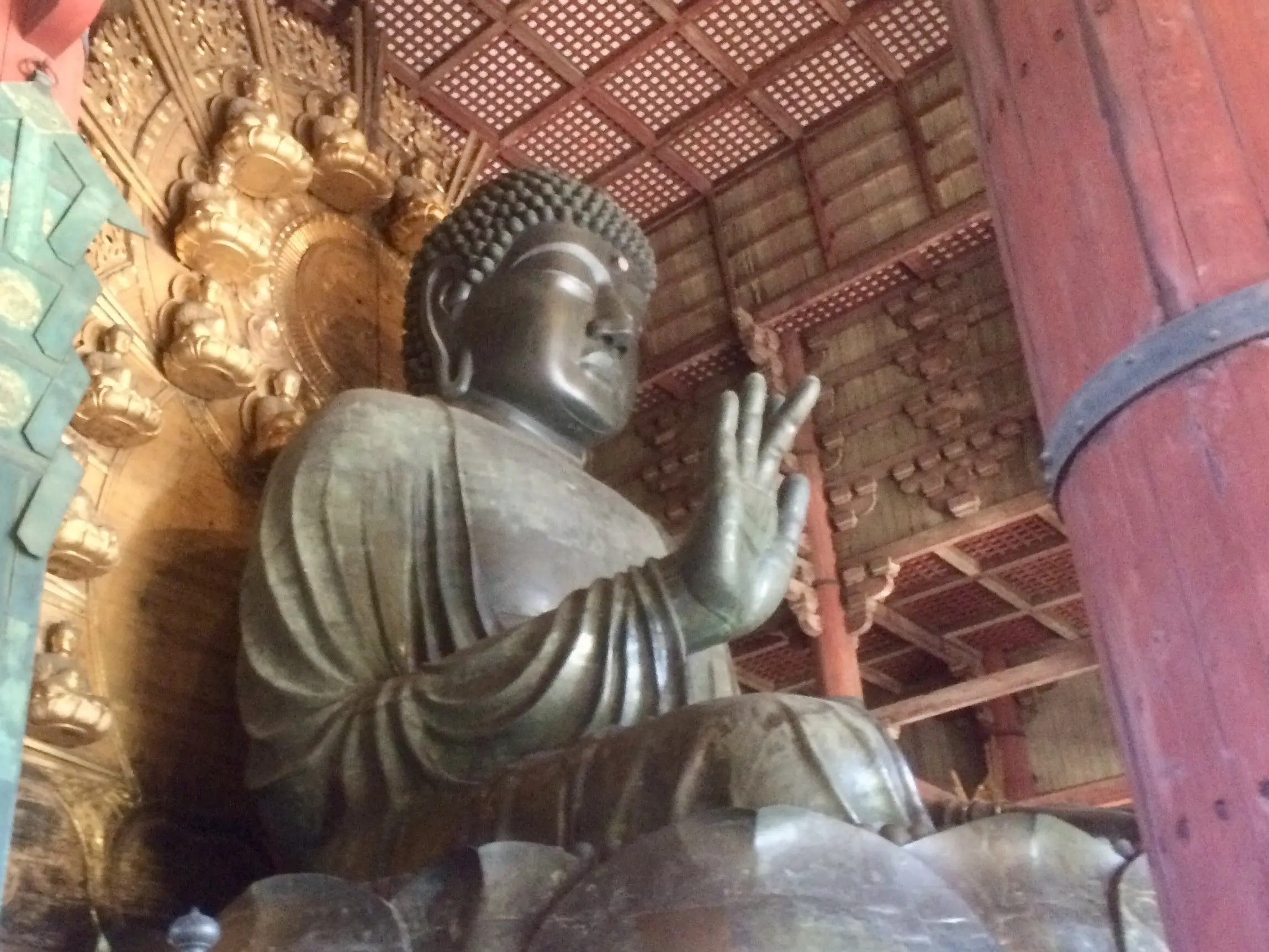
Don’t worry, if you make the effort to get past the cadging deer and the long queues, you won’t miss the Great Buddha — one of the world’s largest bronze statues, ensconced in the Daibutsu-den, one of the largest wooden buildings in the world, at the temple Tōdai-ji. The big fella is 16m high, totally enthralling, made from 437 tonnes of bronze and 137kg of gold. As you circle the giant statue, around the back you’ll find a wooden column with a hole through its base that is the same width as one of the Buddha’s nostrils. Popular belief is that those who squeeze through the hole are ensured enlightenment; helpful pulling and pushing is encouraged.
Kasuga-yama primeval forest
A few years ago, Yuriko and I hiked up into the mountains above the grand shrine Kasuga Taisha in the east of Nara Park. Known as the “Forest of the Gods”, the trails here are through virtually untouched forest as hunting and logging were prohibited from the year AD841 and the forests were only made accessible to the public in 1956.
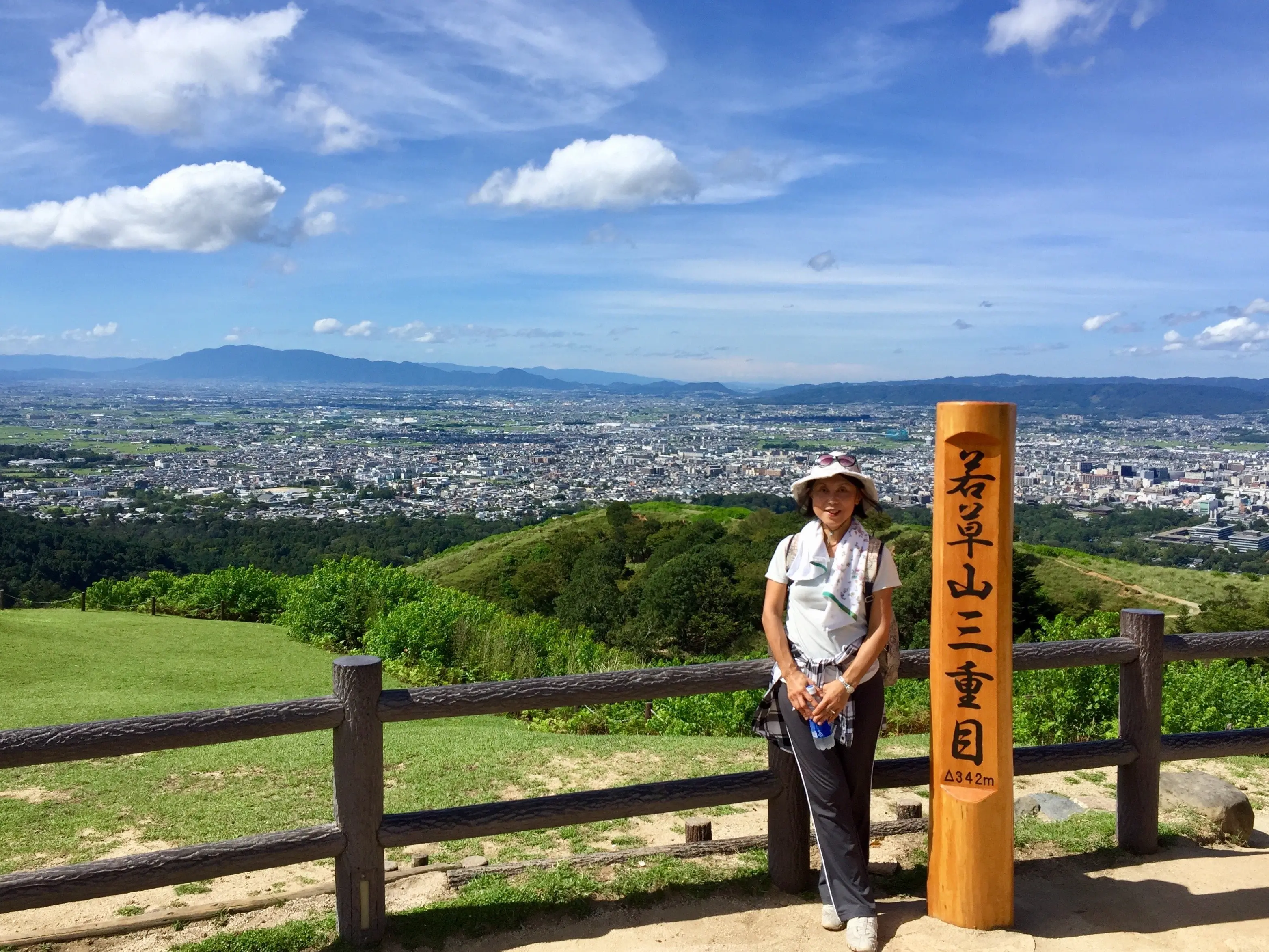
The trail up to the rounded top of Wakakusa-yama (342m) leaves the tourist crowds well behind and on a good day, reveals excellent views out over Nara city and the Nara plain.
Escaping the crowds: Yama-no-be-no-michi
Although it’s only 15 minutes south from Nara by train, Tenri seems like a world away. It’s a great entry point to get on the Yama-no-be-no-michi, the oldest road mentioned in Japanese records. Nowadays it’s a fascinating ramble through the Nara countryside, connecting farming villages, 1400-year-old emperor’s tombs, temples, shrines, family grave sites, through rice paddies and persimmon orchards, past farmers in fields, barking dogs and a vast array of rural aromas.
This is an extremely pleasant way to immerse yourself in historical and rural Japan without the crowds. While Japanese hikers are around in the weekend, you can pretty much have the walk to yourself mid-week, and though the route is pretty easy to follow, it doesn’t really matter (and you won’t care) if you get lost.
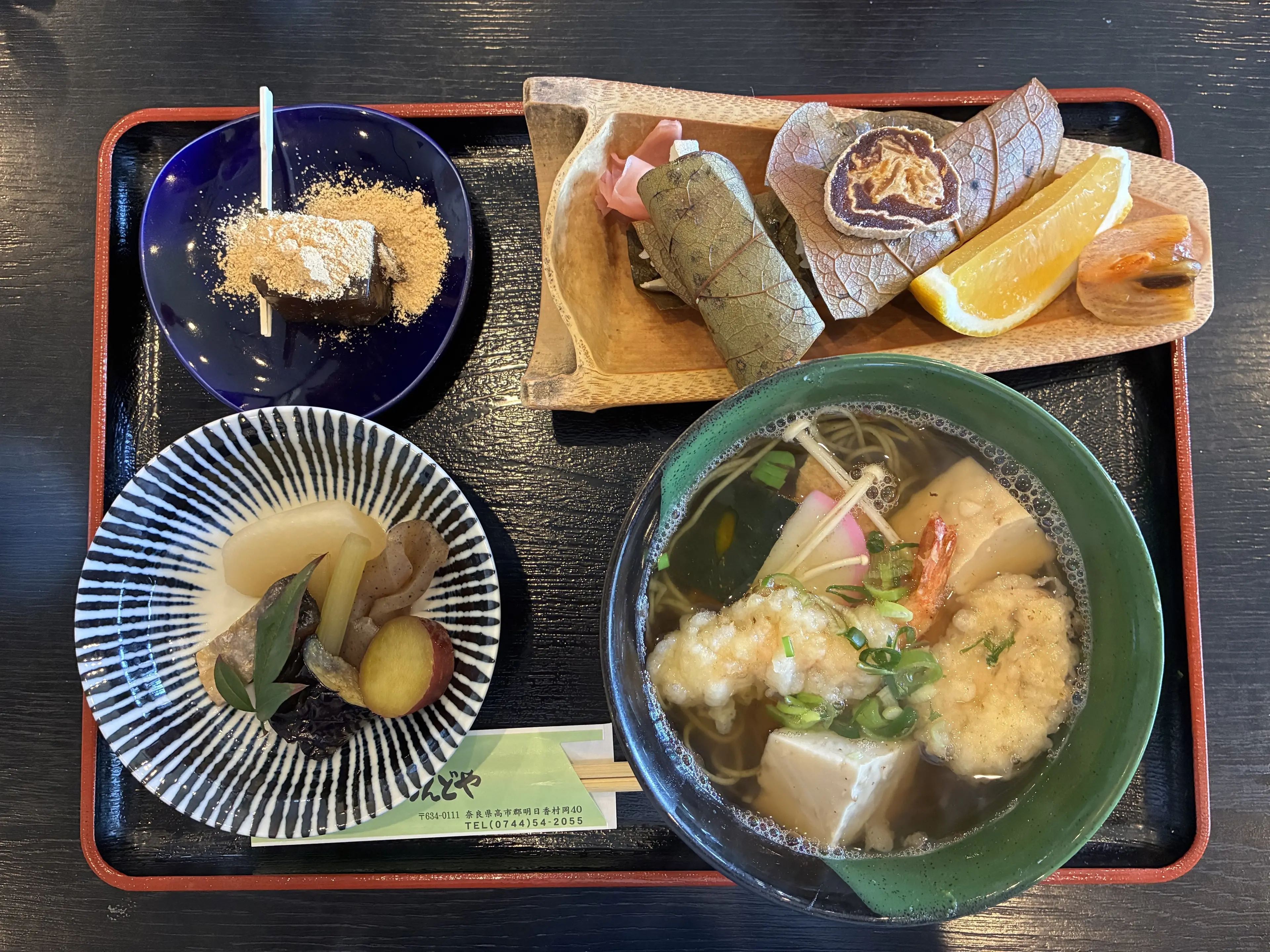
An easy three-to-four-hour ramble will cover around 10km from Tenri Station, along the foot of the mountains on the eastern side of the Nara Plain, then down to JR Yanagimoto Station, two stops south of Tenri. If that sounds too easy, or you’re enjoying yourself too much, just keep walking south on the trail to Omiwa Shrine, then catch the train back from Miwa Station — it’s the fourth stop south of Tenri.
I used to lead tours of Americans along this trail and they always swore that the Yama-no-be-no-michi is one of the most enjoyable outings in Japan.
Where the first emperor ascended the throne
Coming from a country with such a short history in terms of human inhabitation, some of the dates in Japanese history often astound me. The shrine Kashihara Jingū, 45 minutes south from Nara city by train, is said to be at the spot where Japan’s first Emperor, Jimmu, acceded to the throne in 660BC. As such, I was expecting it to be crowded on the blue-sky, sunny day in early April, in the middle of cherry blossom season, that Yuriko and I chose to make a visit.
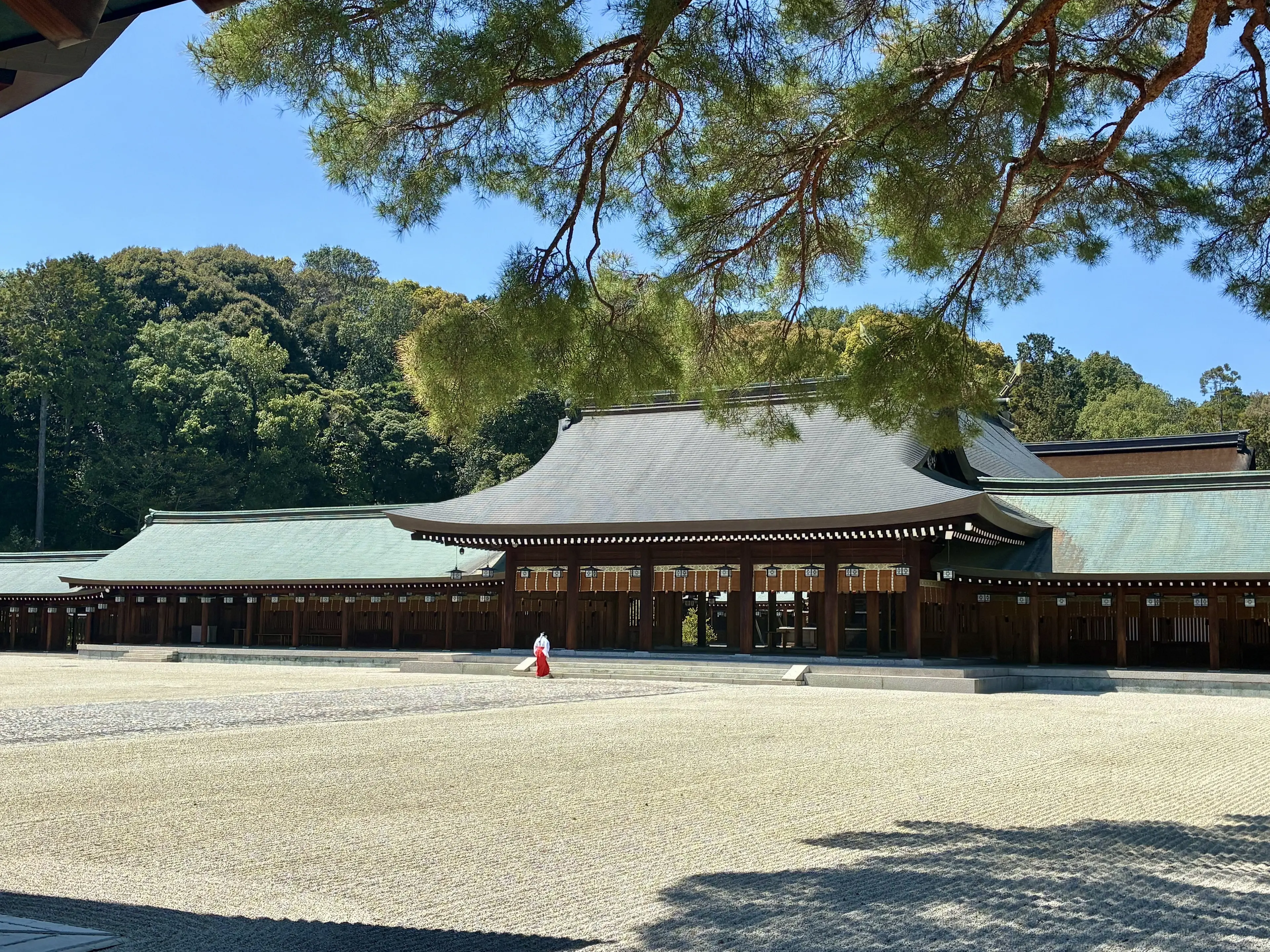
With that dreaded word over-tourism on my mind, we alighted at Kashihara-jingū-mae train station to be pleasantly surprised to find virtually no-one there. Same at Asuka Rental Cycles, outside the station, where a rental e-bike cost us the very reasonable sum of ¥1700 ($NZ20) for the day.
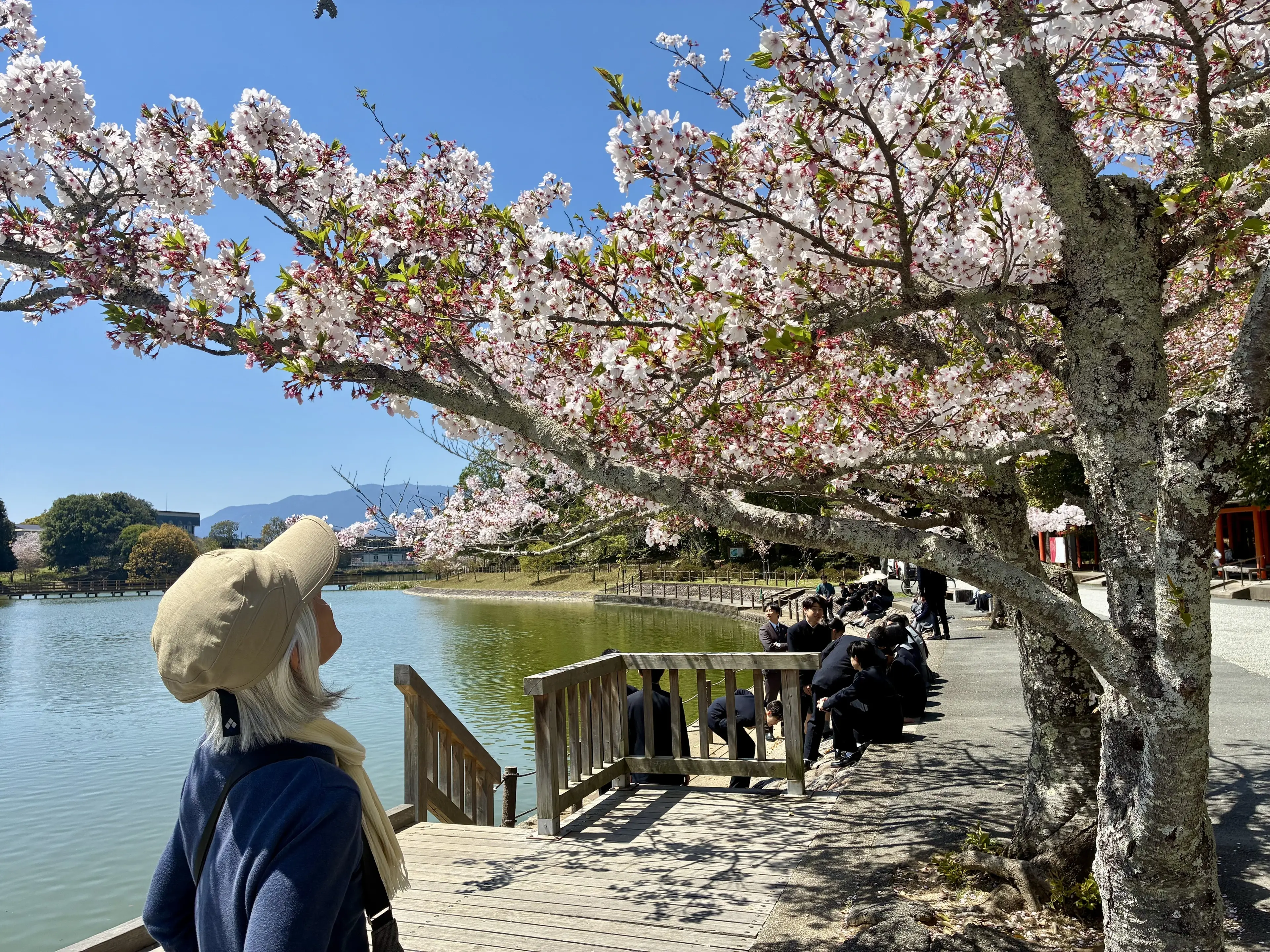
The impressive shrine itself was virtually deserted, basking in the sunshine with an absolutely perfect display of delicate pink cherry blossoms in its surrounding grounds. There were a few groups of school children in uniform, roaming the place and learning about an important part of their country’s history, but that was it.
Asuka Rental Cycles had given us a map for exploring the surrounding area. Considered the cradle of Japanese civilization, this is where the first emperors established their capitals before Nara city became the first permanent capital of Japan (Kyoto came next). Here we found many of the country’s oldest shrines, temples, tombs, and stone monuments.
These days archaeological excavations are everywhere. We spent the rest of the day cycling through rural Nara, stopping at farmers markets and exploring rural villages and emperor’s tombs along the way. Crowded? Hardly anybody out there, despite it being the busy cherry blossom season, one of the peaks for international visitors to Japan.
After visiting Kyoto, with its mind-numbing crowds, it’s very easy to get “templed out” in Japan. That’s not to say that going to Kyoto isn’t an amazing experience, but once you’ve braved the lines to see the Golden Pavilion at Kinkaku-ji, the Silver Pavilion at Ginkaku-ji and the magnificent Kiyomizu-dera, many visitors feel that maybe they’ve had enough of visiting Buddhist temples.
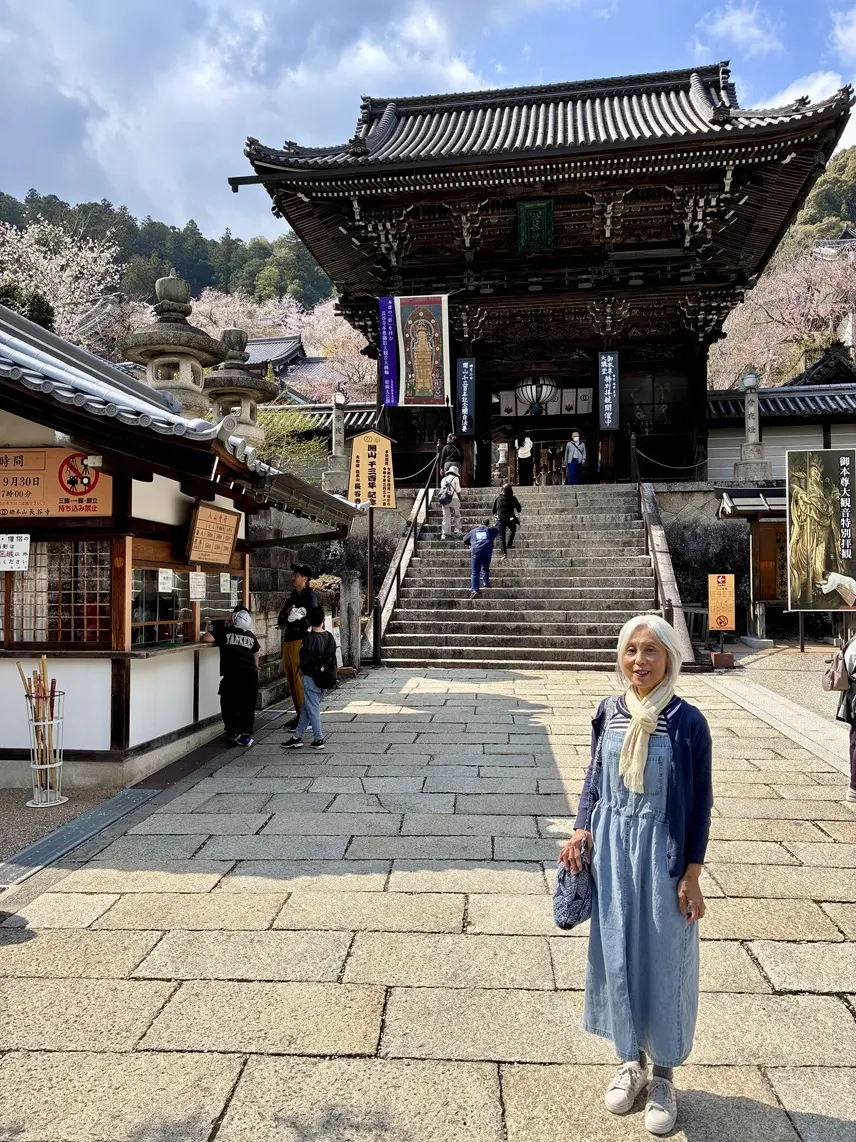
Less than an hour by train south of Nara though, and close to the Yama-no-be-no-michi and Kashihara Jingū mentioned above, Hasedera is a stunning mountain temple that is well worth a visit. After alighting the train at Hasedera Station we walked for 15 minutes or so through the monzenmura, the village that built up before the temple’s main gate — the temple, which was founded in AD686, came first, then the village.
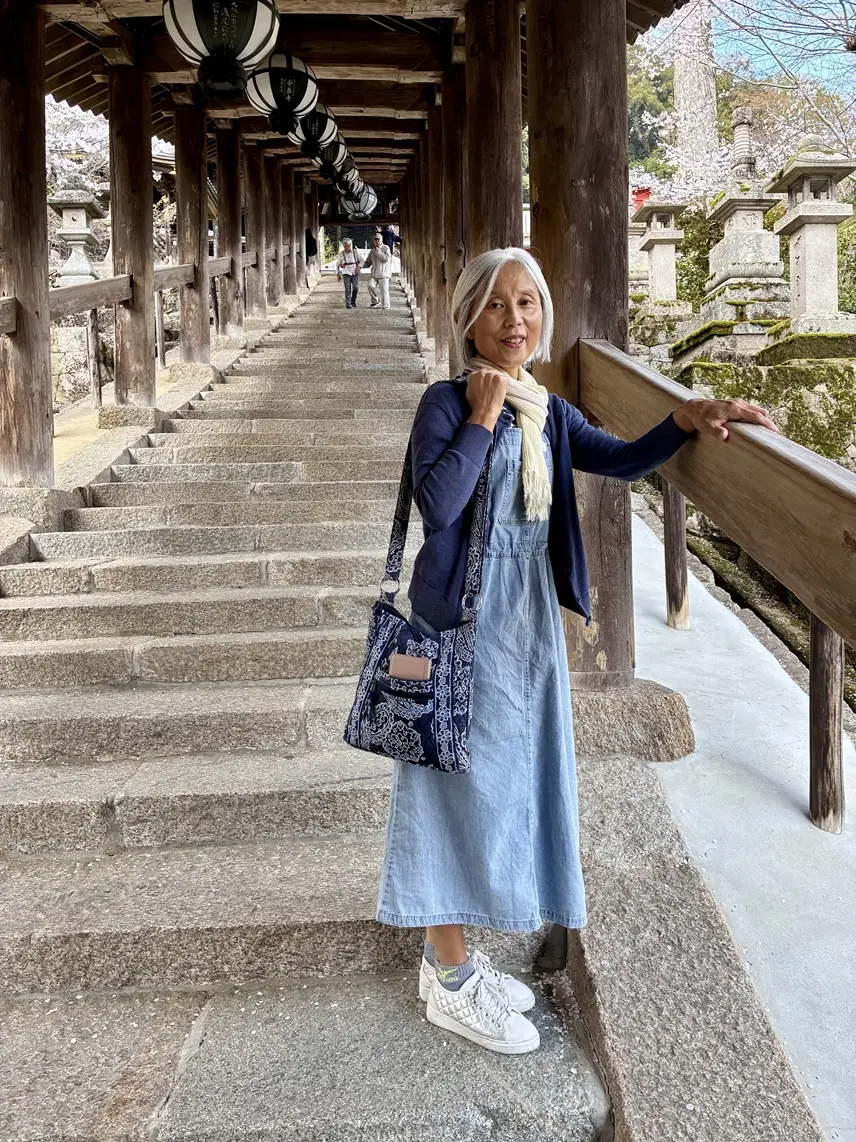
It was a lovely stroll past small inns, cafes and souvenir shops to the temple’s gate, then up through the legendary 399-step covered corridor to the Hasedera’s main hall. Nicknamed ‘the flower temple’, the cherry blossoms were spectacular in early April, but don’t worry if you miss them, as the peonies of May and the hydrangeas of June are just as stunning.
These are just a few of the delights that await those who make the effort to get off the well-worn tourist train in Japan.
— Queenstown travel writer Craig McLachlan has been writing Lonely Planet Japan guidebooks for over 25 years.