
PHOTO
Suffused with a deep sense of cultural pride and tradition, Savai’i’s astonishing archaeological sites, ravishing tropical terrain and laid-back tempo all combine to soon sweep you up into its charismatic embrace.
Curiously, despite being mostly uninhabited, Savai’i is the largest island in Polynesia outside of Hawai’i and New Zealand. In true Samoan spirit, no matter where you roam on Savai’i, this South Pacific paradise is a low-density affair, where you won’t be competing for towel space on its blessed beaches.
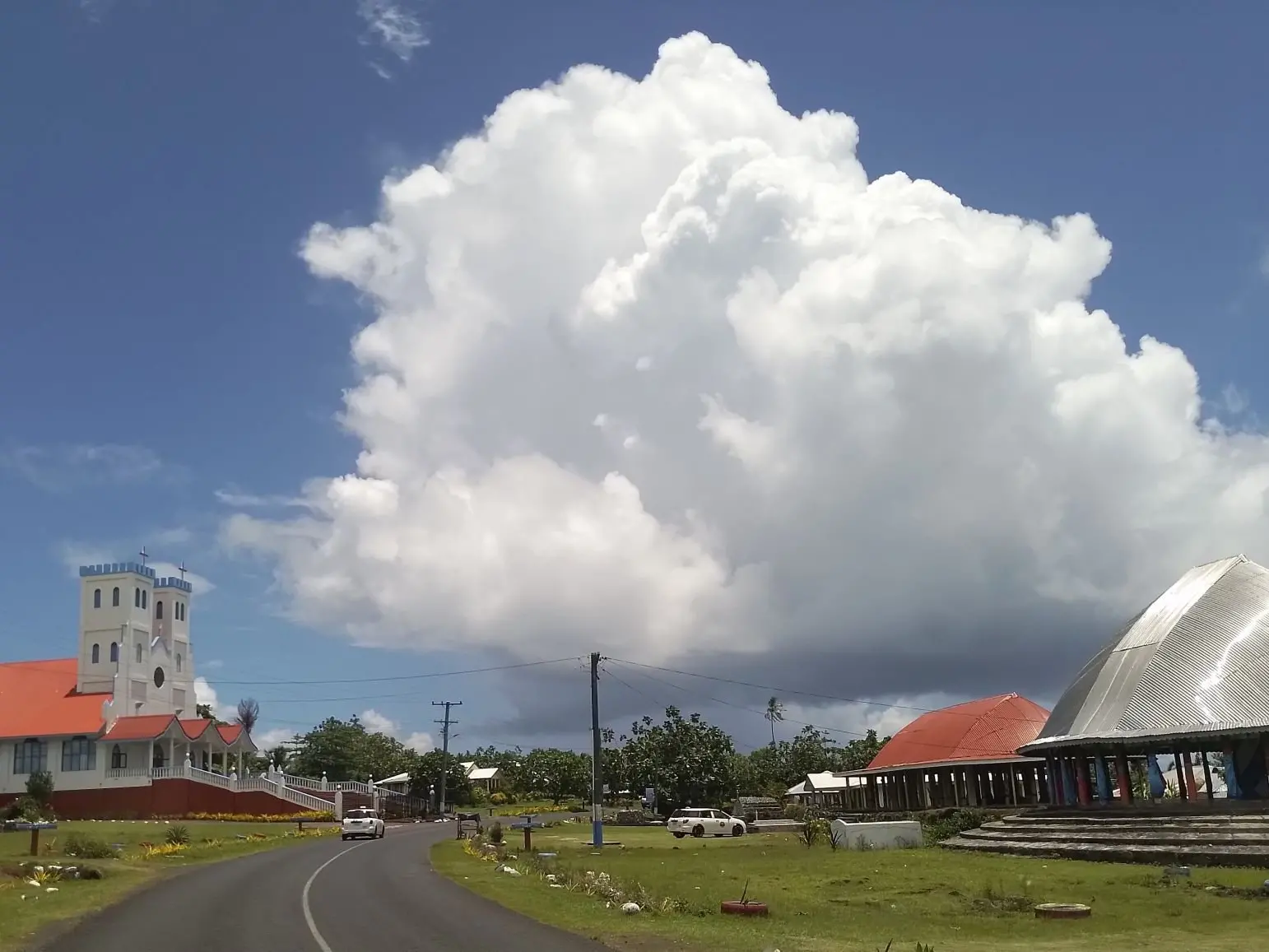
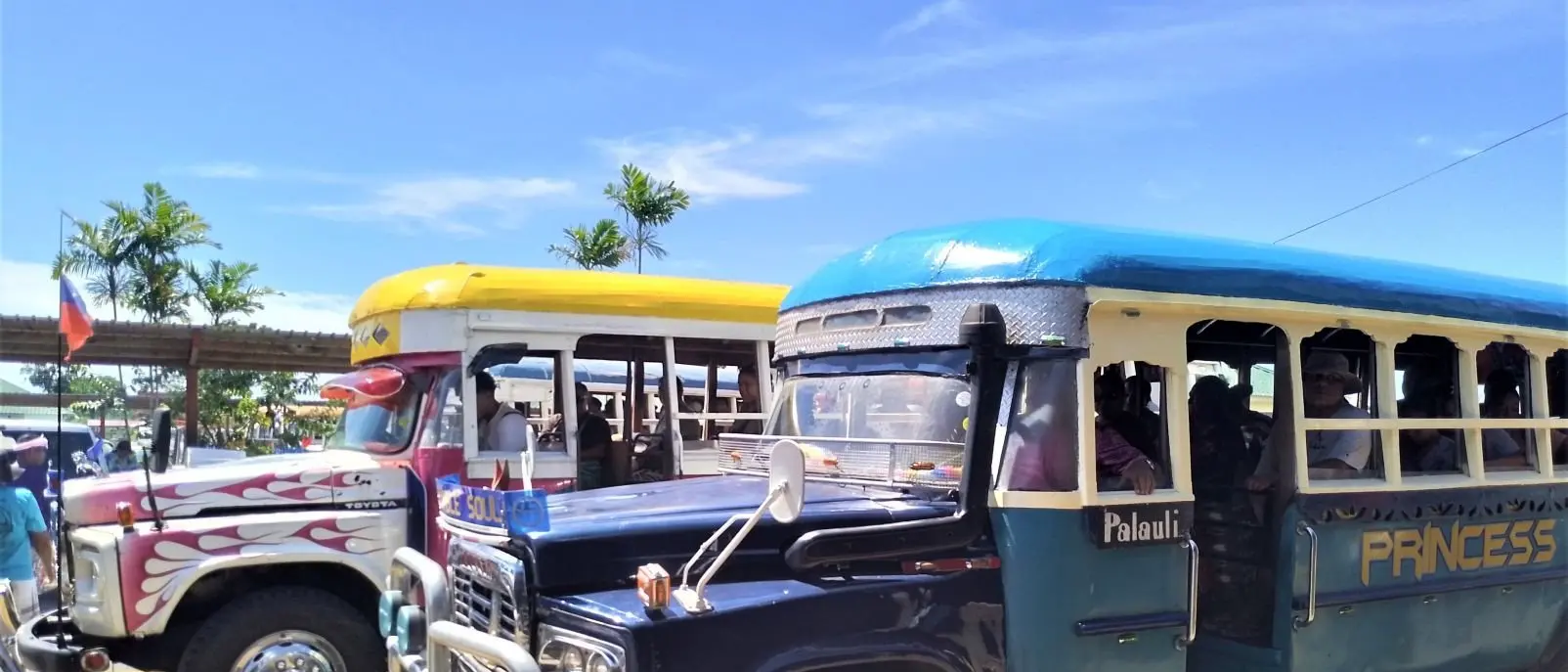
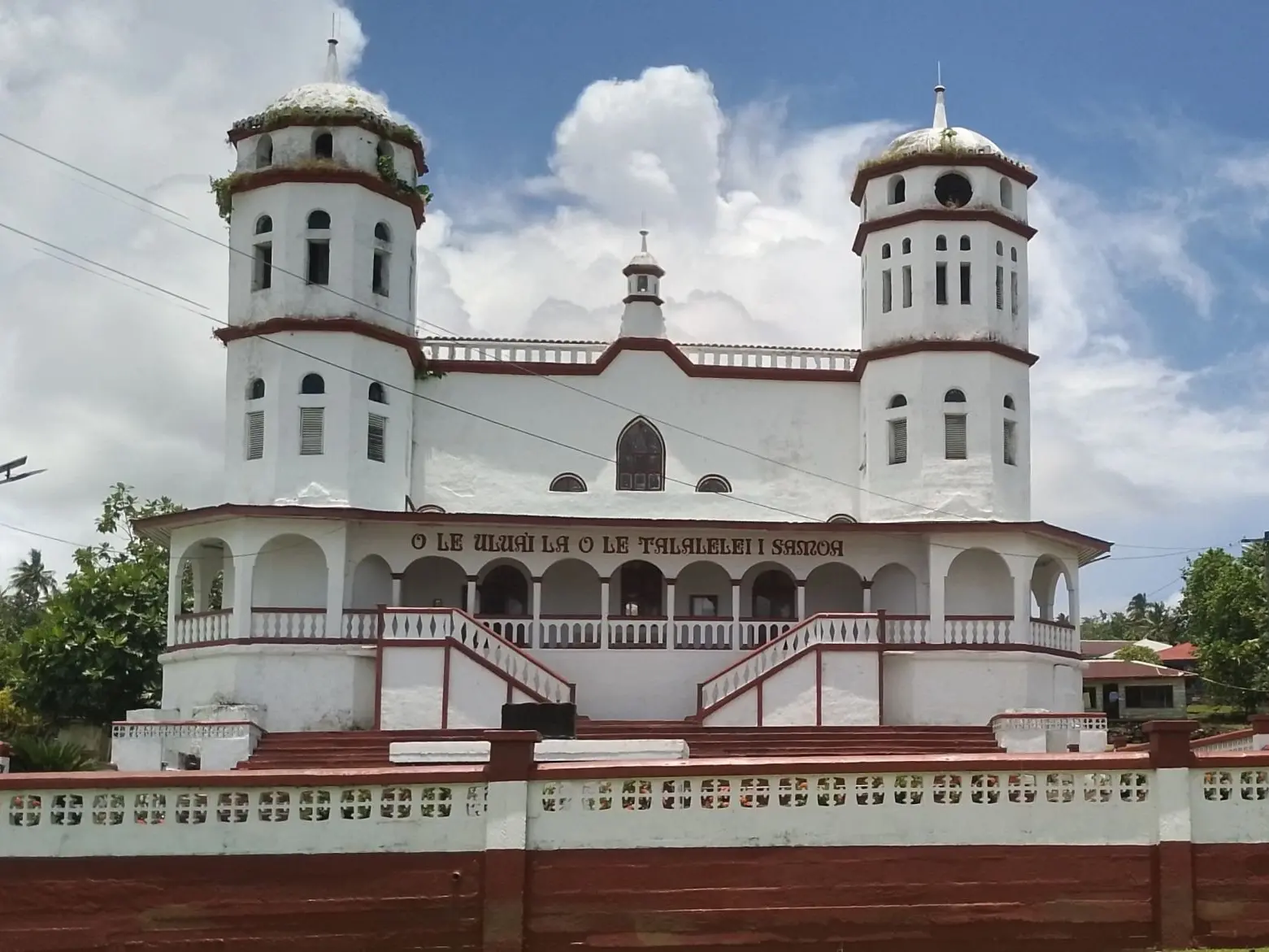
Most of the island’s villages are sprinkled along the main coast road that lassoes Savai’i, where you’ll regularly see locals snoozing or chatting in large fale, or taking a dip in the communal rock pools adjoining the shoreline. The passing spectacle is a visual feast. The rich assortment of venerable churches, ranging from the rustic to show-stopping; the crowded buses brightly emblazoned in a carnival of colours; the playful children waving warmly from the roadside with wide smiles; the piglets and poultry scampering frenetically across the road; and horses being bathed in the sea all vividly paint Savai’i’s picture.
My driver/guide Logo and I set about savouring some of Savai’i’s finest features, in bite-sized chunks. Heading out from the rough and ready straggle of shops that line the main road around the ferry wharf in Salelologa, our first stop was the natural blockbuster, Alofaaga Blowholes, on the southwest coast.
Utterly awe-inspiring, this frothy and ferocious natural spectacle is located near Taga village. The blowholes were created by lava flows that gradually carved out underwater sea caves which became tunnels, connecting the ocean to the rock face above. When the water breaks against the seaward end of one of the tunnels, it rushes into the tube, erupting through the holes above ground in explosive waterspouts.
There were five blowholes puffing, gushing and foaming with flamboyant fury on my visit. The waterspouts soared as high as 20m, but can go higher at high tide. Over the years, locals would regularly throw coconuts into the vent right before the big blow, blasting the coconuts like cannonballs even higher than the water jet. Logo mentioned that this pastime is now frowned upon as a health and safety threat, given the unpredictable trajectory of the coconuts.
Nowadays, the outer husk of the nut is deployed as a safer and decidedly tamer alternative. I would have preferred the edgier version.
Another star attraction on the South Coast, Afu Aau Falls. You’ll struggle to find a prettier swimming hole, or a more searing image of tropical paradise. This hidden waterfall plunges from the dense rainforest into a cool crystalline pool. The water is 3m deep in the heart of the pool, although it’s shallower on the outer rim. As the mercury soared, a conga-line of pleasure-seekers flocked to the swimming hole, eagerly lapping up the chance for a restorative heat-busting dip in this knock-out location.
Further inland lies the Pulemelei mound, Polynesia’s largest ancient structure. This enormous pyramid, as wide as 60m at its base, rises in two tiers of basalt to a height over 12m. Almost squarely oriented with the points on a compass, the original purpose of this enigmatic structure remains open to conjecture. Samoan oral traditions imply that such monuments were used for pigeon snaring or as a watch tower. In contrast, some archaeologists believe the pyramid’s flat top, or platform, reminiscent of the pyramids built in Mesoamerica, was used for religious rituals, while also raising so many questions about age-old migration paths. Sadly, it has been consumed by the jungle and is no longer open to the public.
However, another huge highlight awaited me on the north coast of Savai’i, at the Saleaula Lava Field. This sprawling geological phenomenon is the legacy of volcanic activity, when Mount Matavanu started erupting in 1905. I strolled across the eerie black landscape, surveying the remains of buried villages, where homes and buildings were swallowed up by the lava flow. It kept on belching for a further six years, pouring yet more lava on to the field, covering an area of over 100sqkm. Five villages were buried, although thankfully the lava was slow-moving so there were no fatalities. When you step on to the lava field and its bleak, black canvas, you’ll also notice the beauty in nature’s brutality. Swirling, shapely patterns fan out across the volcanic rock, like the ripples on the surface of a lake.
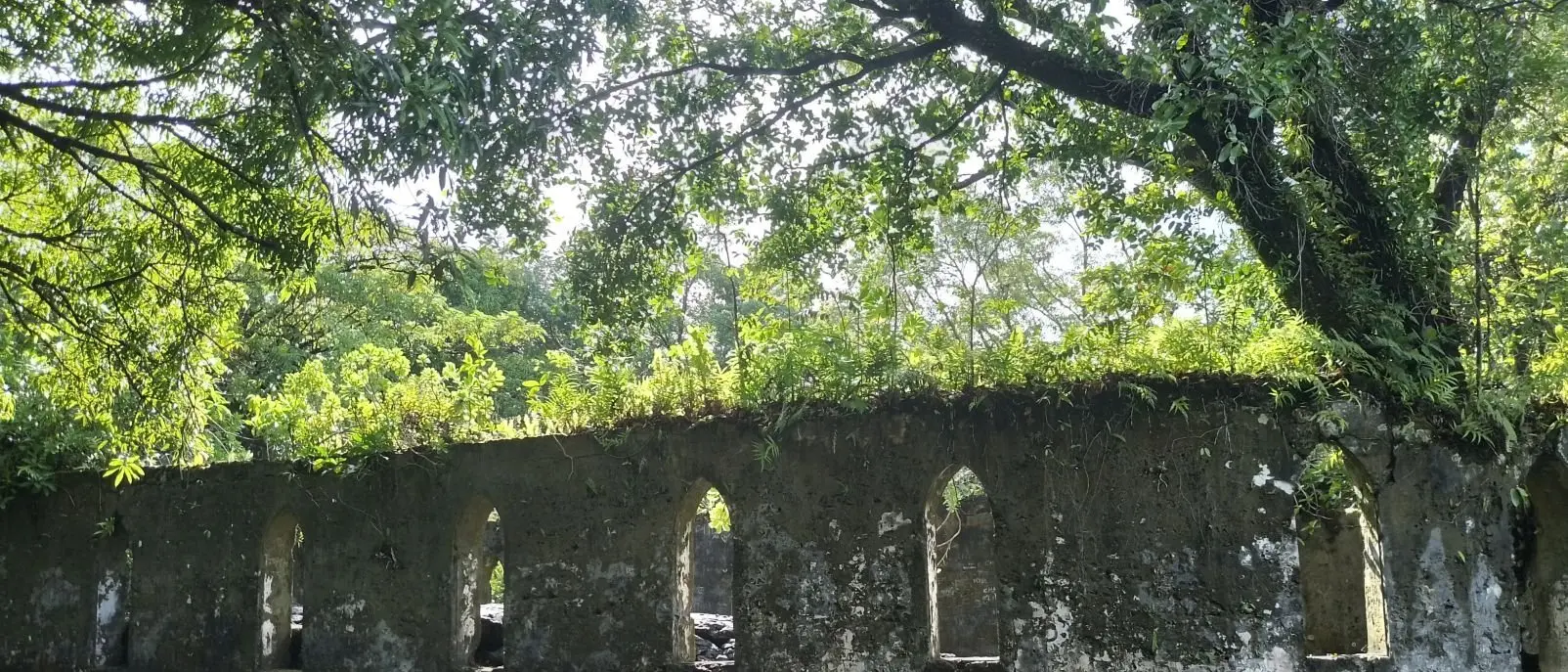
Plant life and trees have assertively regenerated on the fertile ground. Remarkably, some villagers have rebuilt fale and modern homes on the rock. The vivid green of the foliage makes for a striking contrast with the jet-black rocks. I visited the remains of a London Missionary Society (LMS) church that was engulfed by the lava flow. You can still make out the arched windows and the peaked roof, but the inside of the church is filled with layers of black rock, barrelling through the arched door.
To the left of the church, a rocky undulating path shadowed by trees leads you up to a burial site that has been dubbed the Virgin’s Grave. Prior to the eruption, the daughter of the village’s high chief, who had become a nun, died of tuberculosis as a teenager. Locals believe she was so pure that the lava flowed around her grave, not touching it.
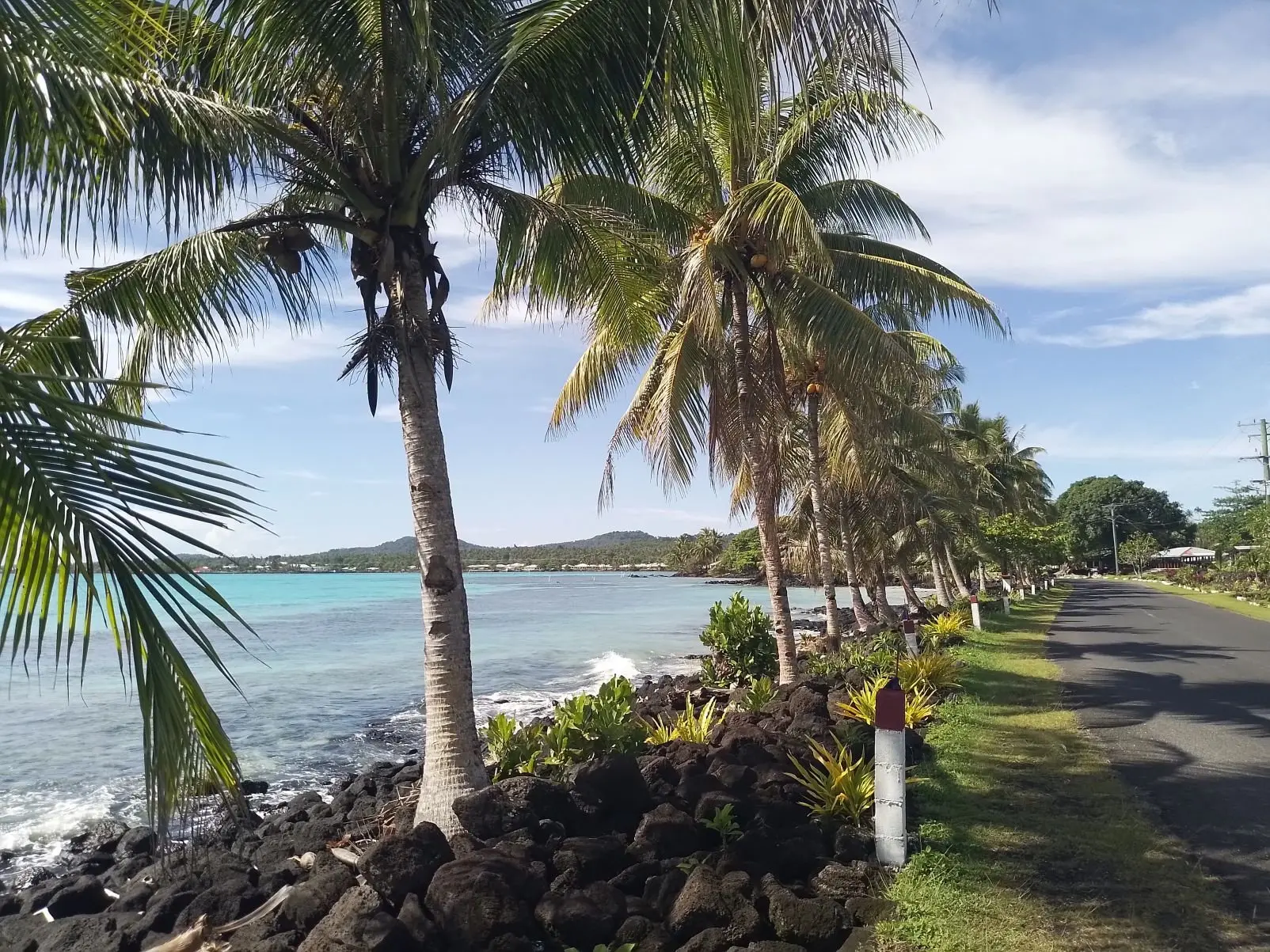
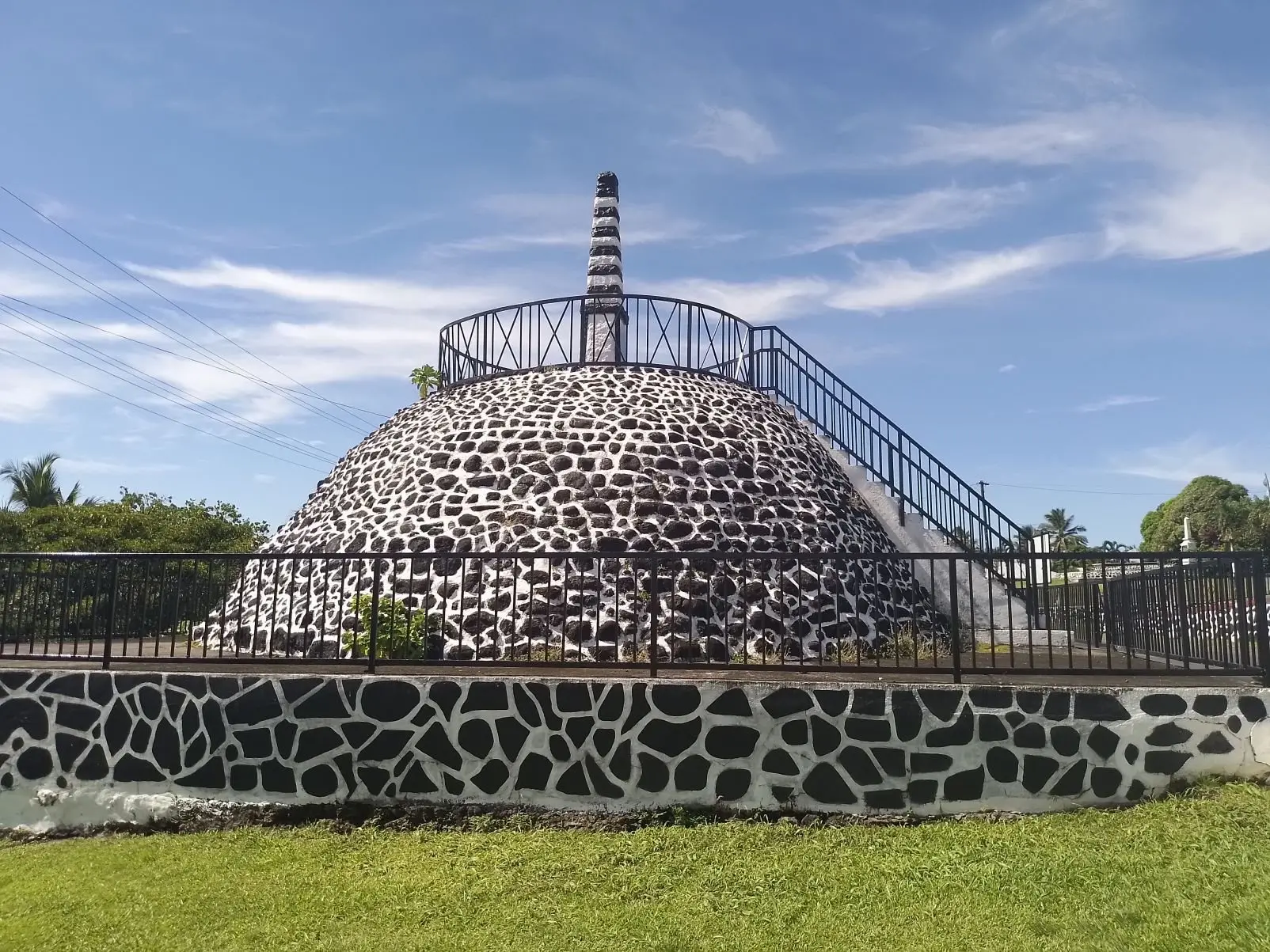
Speaking of the LMS, north of Salelologa on the palm-fringed east coast, there’s a magnificent monument in Sapapali’i commemorating the landing of the first missionary, Reverend John Williams. Arriving on his makeshift vessel, the Messenger of Peace, in 1830, he soon converted a powerful warrior chief which in turn encouraged Savai’ians to embrace Christianity. The LMS was later followed by Methodist, Catholic and Mormon missionaries in the feverish competition for souls.
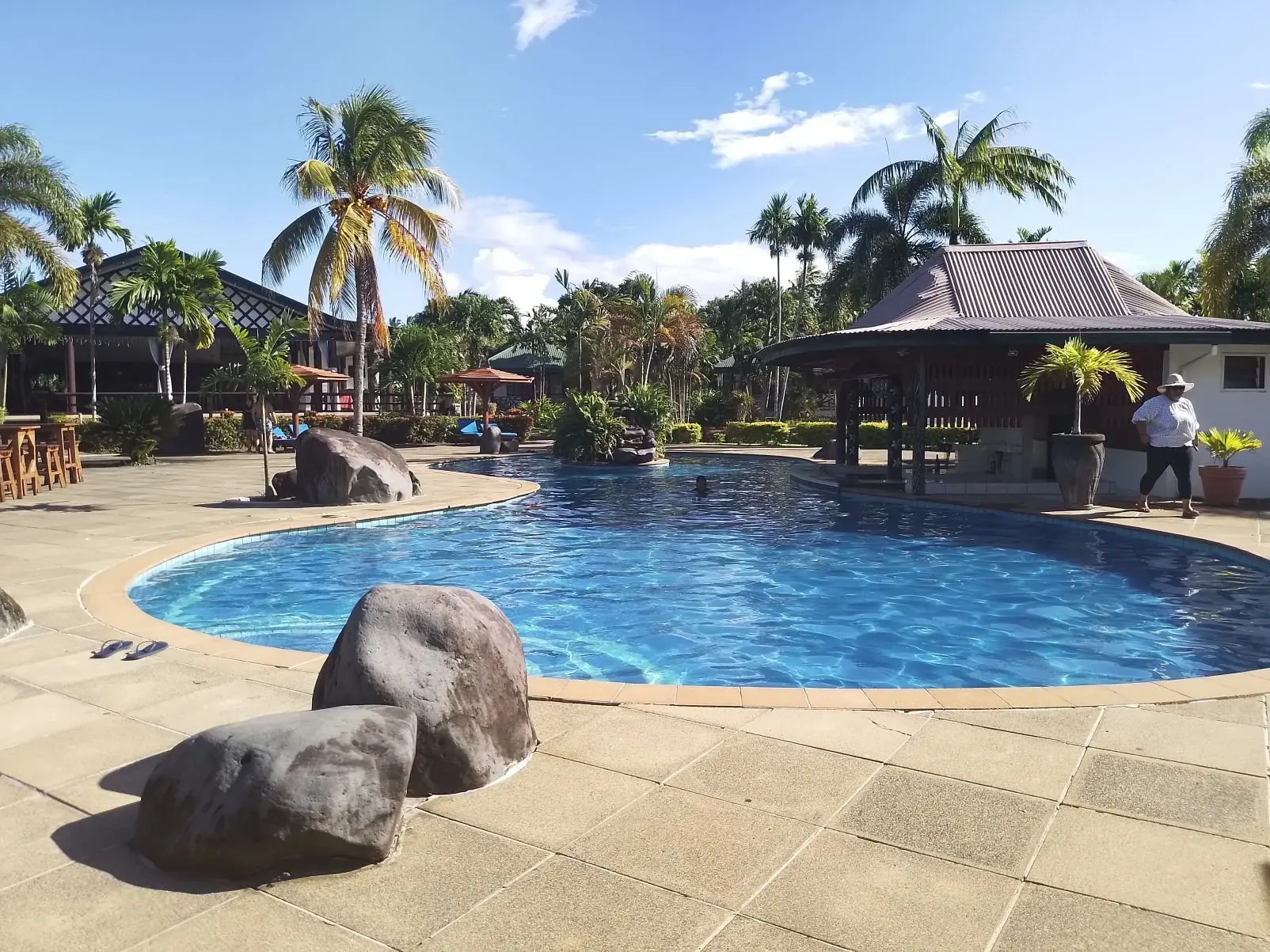
Strung around exotic tropical gardens and fringed by a bejewelled turquoise-blue lagoon, Amoa Resort is a boutique oasis of indulgence and splendid base for your Savai’i explorations. Twenty intimate bungalows, rooms and villas with shady terraces are swaddled in lush tropical gardens, emblazoned with brightly coloured hibiscus blossoms, tropical flowers and swaying palms. My beautifully designed poolside villa, with a feast of authentic artistic touches, felt more like a snug, private house than a resort guestroom. Cross the road and bask in the bath-warm turquoise lagoon, whether you want to have a paddle or snorkel.

The on-site pool is just as alluring, complete with swim-up bar. You can expect a memorable culinary experience, as Amoa Resort specialises in nouveau Samoan/Pacific cuisine. The innovative selection of dishes features locally sourced and organic produce from around Savai’i and Samoa. The extensive menu spans a ravishing array of signature dishes including popo (coconut) crusted chicken, palusami risotto balls, pulled pork and papaya salad, twice-cooked octopus and double koko Samoa cake. I was highly tempted to extend my stay, just to graze my way through the full menu.