
PHOTO
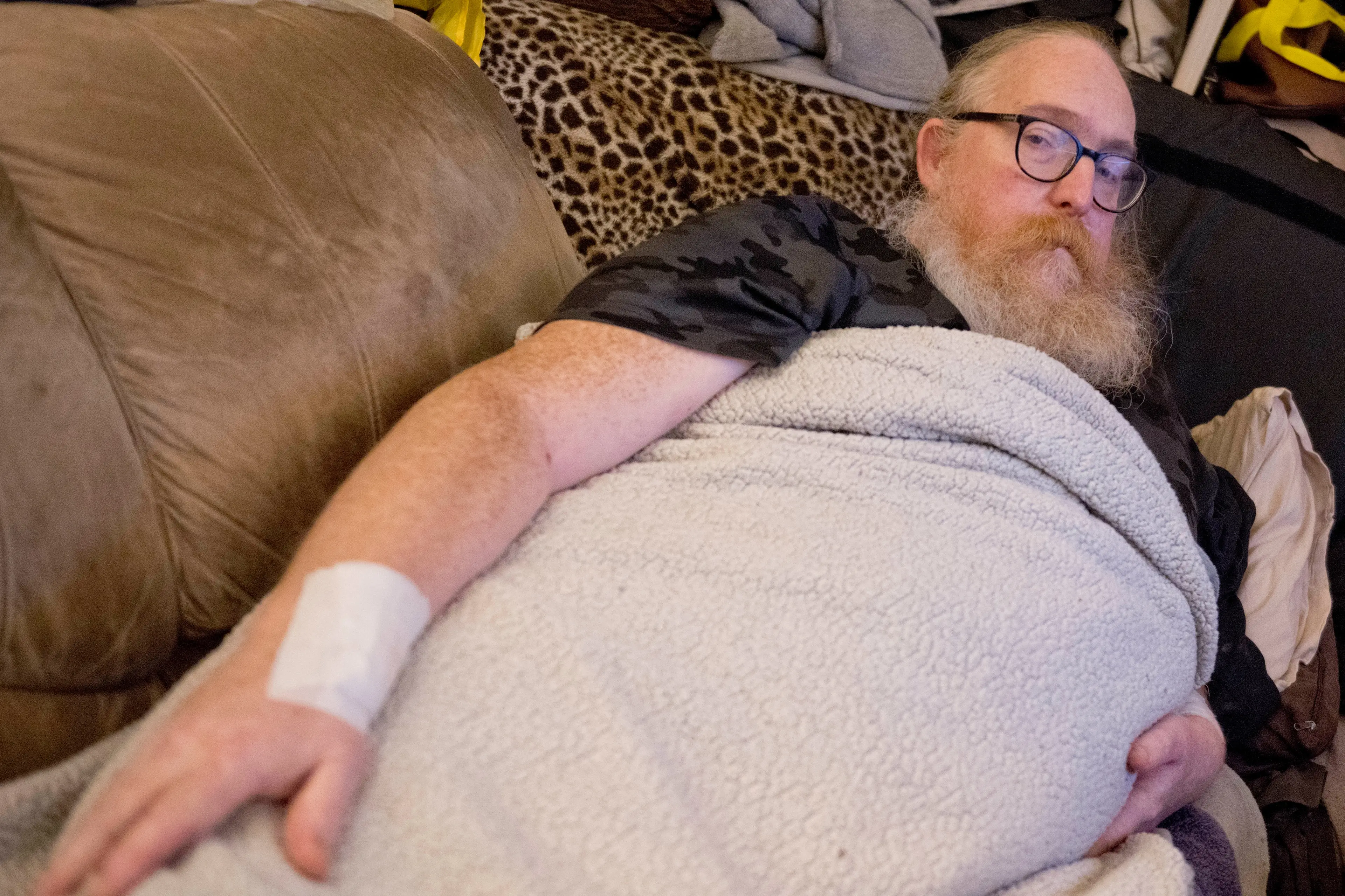
After doctors failed to diagnose his blood cancer for about three years, Mark Baxter is now receiving 24/7 care on a cancer ward, at Dunedin Hospital.
The former Otago University Students’ Association and Otago Polytechnic Students’ Association staff member has a rare T-cell lymphoma blood cancer — multisite (T3) PCALCL lymphoma — which has left him with extremely painful lesions and an uncertain future.
A Givealittle page has been established to help pay for his unfunded treatment and equipment.
His cancer took so long to diagnose because Dunedin does not have a dermatology service — a service he believed would have picked up his condition much sooner.
His symptoms first appeared three years ago when he had blisters on the bottom of one of his feet.
He went to his GP because they refused to heal and they turned into wounds, he said.
“Eventually, bits appeared on other bits of my body and he [the GP] couldn’t work out what it was.
“Nothing bacterial or anything showed up in any of the tests in those three years.”
His doctor wanted to send him to a dermatology specialist, but there was no-one to send him to in Dunedin.
As a final resort, his GP put photos and a description of Mr Baxter’s symptoms out on a medical network, in the hope that a dermatologist would take an interest in it.
It was only in June this year, albeit by good luck, that a dermatologist saw the case and immediately diagnosed him with blood cancer.
Last month, Mr Baxter said it was “disgraceful” the internet was the only option available to people from Dunedin.
He described the city’s health system as “third world”.
“So, yes, I think it would have been picked up much sooner if we had a dermatology specialist here in Dunedin.”
Health New Zealand Te Whatu Ora (HNZ) southern group operations director Craig Ashton acknowledged the problem, saying there had been a nationwide shortage of dermatologists, but changes were being made to dermatology services in the South Island.
HNZ was developing a sustainable, regionally-led dermatology service, based in Christchurch, where referrers across the South Island could access specialist dermatology advice.
It was anticipated face-to-face dermatology clinics would commence in the Southern district within the next month.
Since his diagnoses, Mr Baxter has been receiving chemotherapy and was on morphine for his pain.
But over the past few months, the tumours had continued to grow and spread, and many of them had become infected, causing him a lot of pain.
He is now on a cancer ward at Dunedin Hospital, where medical staff are managing his infection and pain.
However, his family and friends say he is in need of financial support, so a Givealittle page has been set up on his behalf.
About $12,000 has been raised to help manage the day-to-day costs of supporting Mr Baxter’s and his unfunded medical equipment.
If his present treatment does not work, the next step would be an unfunded drug treatment which was expected to cost about $70,000.
Mr Baxter was delighted with the donations and the positive comments left on the Givealittle page.
john.lewis@odt.co.nz