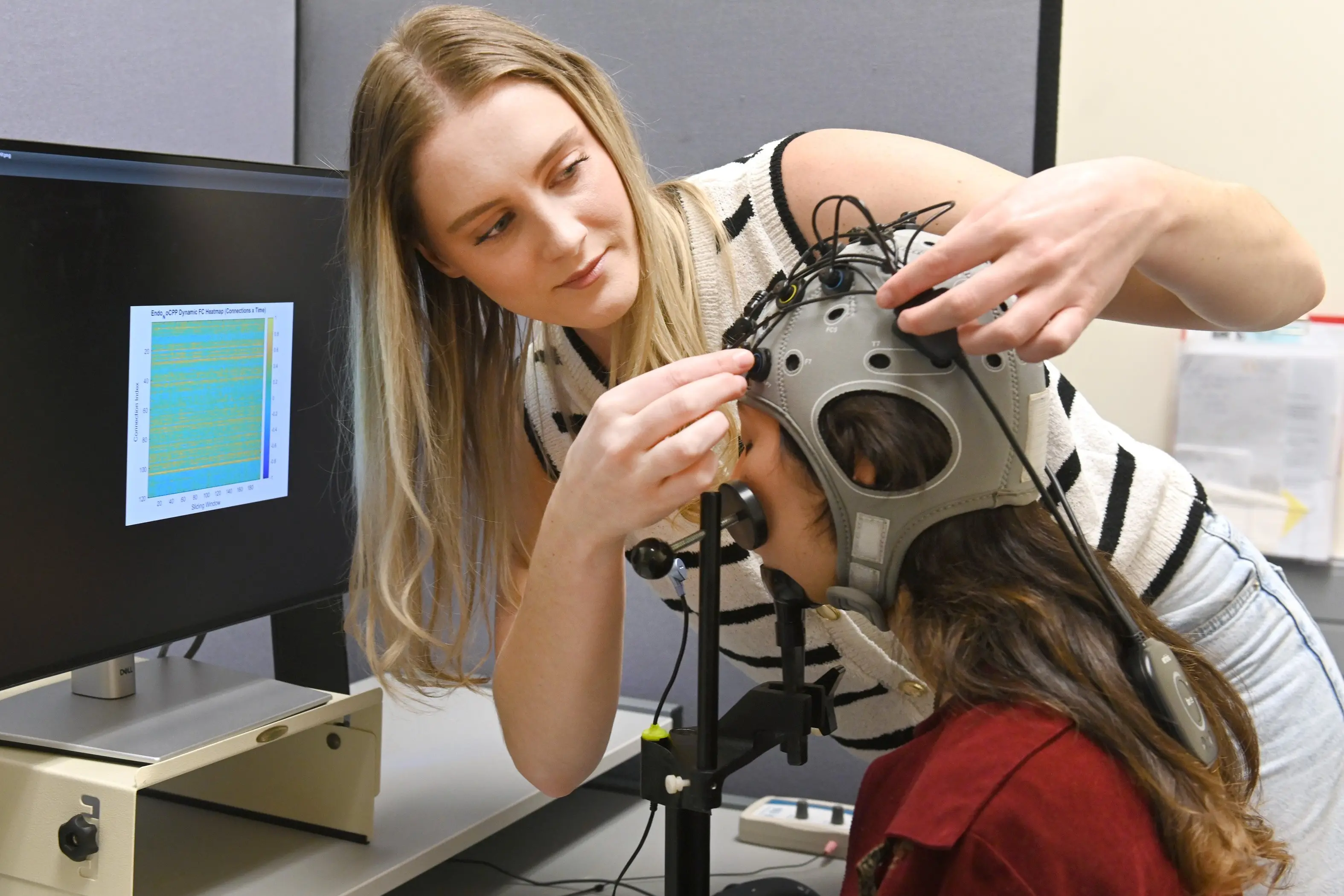
A cohort of more than 70 Otago women with endometriosis are taking part in a new study, which will assess the benefits of an at-home pain management device to see what impact it has on their thinking, memory and focus. Endometriosis is a chronic condition where tissue similar to the lining of the uterus grows outside the uterus, usually on pelvic organs like the ovaries, fallopian tubes the bowel and bladder. This displaced tissue responds to hormonal changes during the menstrual cycle, causing inflammation, scar tissue and severe pain. University of Otago psychology postdoctoral research fellow Dr Ashlee Berryman has received more than $230,000 from the New Zealand Neurological Foundation to conduct the endometriosis research. She said it would be a two-phase investigation over two years. In the first part, she would study the Otago cohort twice in a laboratory — once on a day when they were experiencing low pain, and then again on a day when they were experiencing high pain. “What I’m looking for is whether or not their brain activity and their cognitive performance changes across those pain states. “I’m expecting that they’ll perform worse on the days that they’re in high pain, and what that will tell me is that the pain that they’re experiencing is driving their cognitive difficulties — difficulties with thinking, remembering, performing mental arithmetic, performance at work and school and whatnot.” In the second phase of her investigation, she would give the women a transcutaneous electrical nerve stimulation device to use at home, to see if it could help manage their pain. “It’s worn on the pelvis, on the lower tummy, and what it does is it sends vibrations that are actually able to essentially reduce how much pain these women are feeling. “No-one has used it to date, to see whether or not it improves endometriosis pain in a New Zealand cohort, nor whether or not it has additional benefits for people’s cognitive function.” Dr Berryman wanted to see if the device could provide efficient pain management in the women, and allow them to think and feel better. “The whole premise of this research is to better understand what’s driving their cognitive difficulties. I’m hypothesising pain.” If her research could help reduce the pain, it may help the women to flourish in life. She said it was still unknown what caused the condition. Research had shown about one in ten women were affected by endometriosis, which equated to about 120,000 New Zealanders. But she believed that number was “grossly under-represented”. “Those statistics only come from people who have had their definitive surgery or histology report done on them, so it could be higher.” Dr Berryman said she hoped her research would ultimately show that endometriosis not only caused severe pain, it had an effect on women’s thinking. “Hopefully it will then be recognised in a clinical setting — so actually taken on board when they visit their GP. “And I’m also hoping to have another option for people to manage their pain at home, like the electrical nerve-stimulation device, rather than relying on analgesics and opioid medications which aren’t good long-term and not very cost effective. “I want other options for these people.” john.lewis@odt.co.nz