
PHOTO
A DNA study of Otago blue-eyed shags has revealed the humble seabirds originated in pre-Ice Age South America.
University of Otago zoology researcher and study lead author Dr Nic Rawlence said there were 17 different species and subspecies of the bird, including the extinct Kohatu shag, and among others the living King, Otago and Foveauxshags.
"Many New Zealand birds trace their ancestry to Australia. So to find linkages to other parts of the world is quite rare and fascinating."
He said the group of birds expanded from South America to the Antarctic, and then into the high-latitude sub-antarctic islands and the New Zealand region around 2.5million years ago, where they survived in New Zealand throughout the Ice Age.
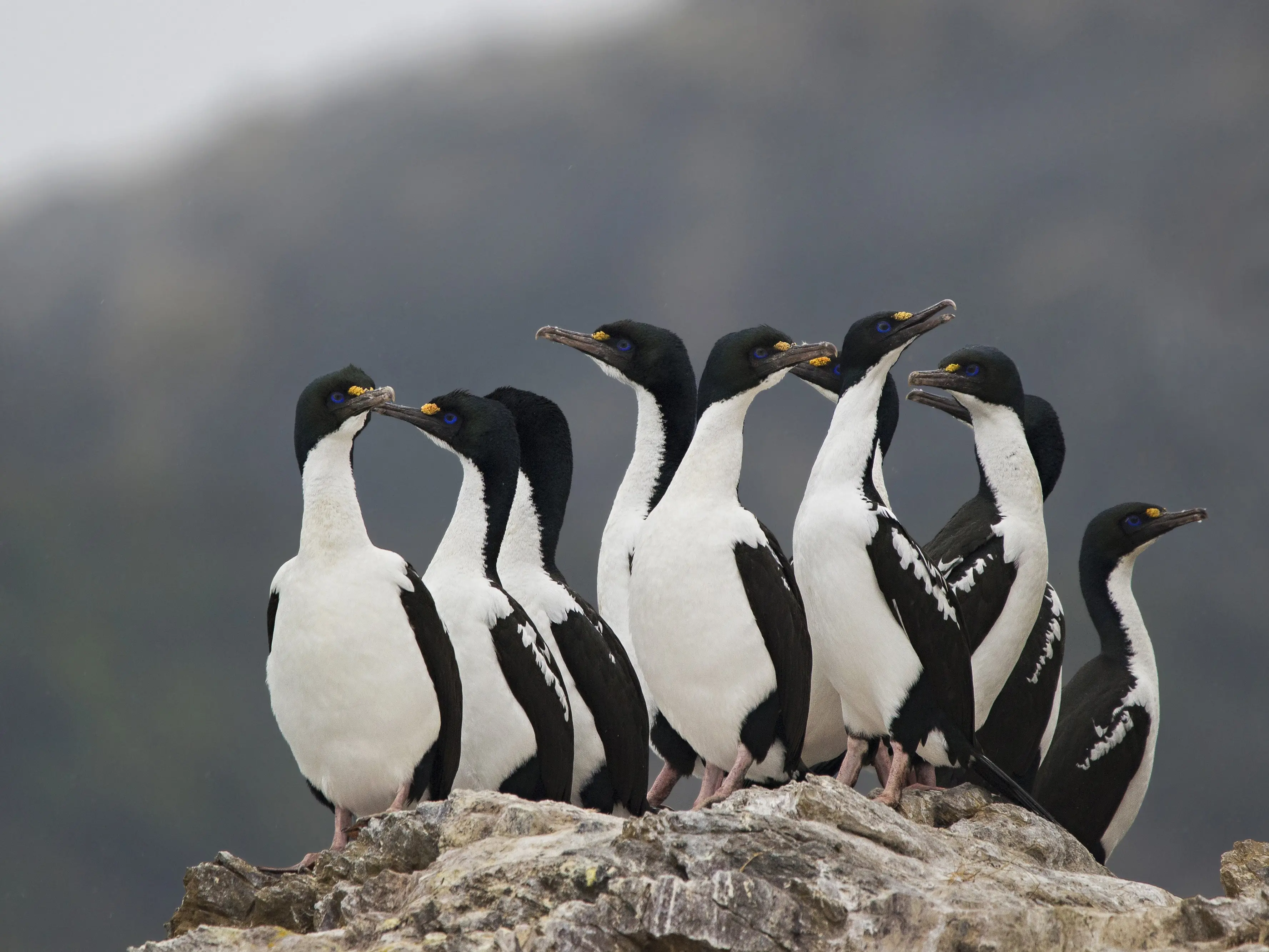
"In contrast, any blue-eyed shags on the Antarctic Peninsula and subantarctic islands outside the New Zealand region — like South Georgia, South Orkneys, Marion, Crozet, Kerguelen, Heard, and Macquarie — got knocked out repeatedly with each cold glacial cycle, followed by rapid recolonisation from South America during each warm interglacial cycle," Dr Rawlence said.
He and fellow researchers were surprised by how these extinction-recolonisation processes played out across such a large area, and the speed with which they occurred.

"While the first wave of blue-eyed shags out of South America survived in the New Zealand region, and their South American homeland throughout the Ice Age, those in the intervening areas were no doubt repeatedly knocked out with each glacial cycle by sea ice and ice-snow cover.
"The speed with which these high-latitude areas were recolonised surprised us all.
"While we know a lot about how animals responded to the Ice Age in the northern hemisphere, such as contracting into and expanding out of glacial refugia, it is great to now know how one group responded in the Southern Ocean.
"The distribution of different blue-eyed shags across the Southern Ocean makes them a great natural laboratory to study rapid evolution, much like the famous Darwin’s finches in the Galapagos Islands."
With more understood, and with increasing temperatures, a close eye would be kept on the birds like "a canary in a coal mine" to see what happens as climate change and human disturbance continues.