
PHOTO
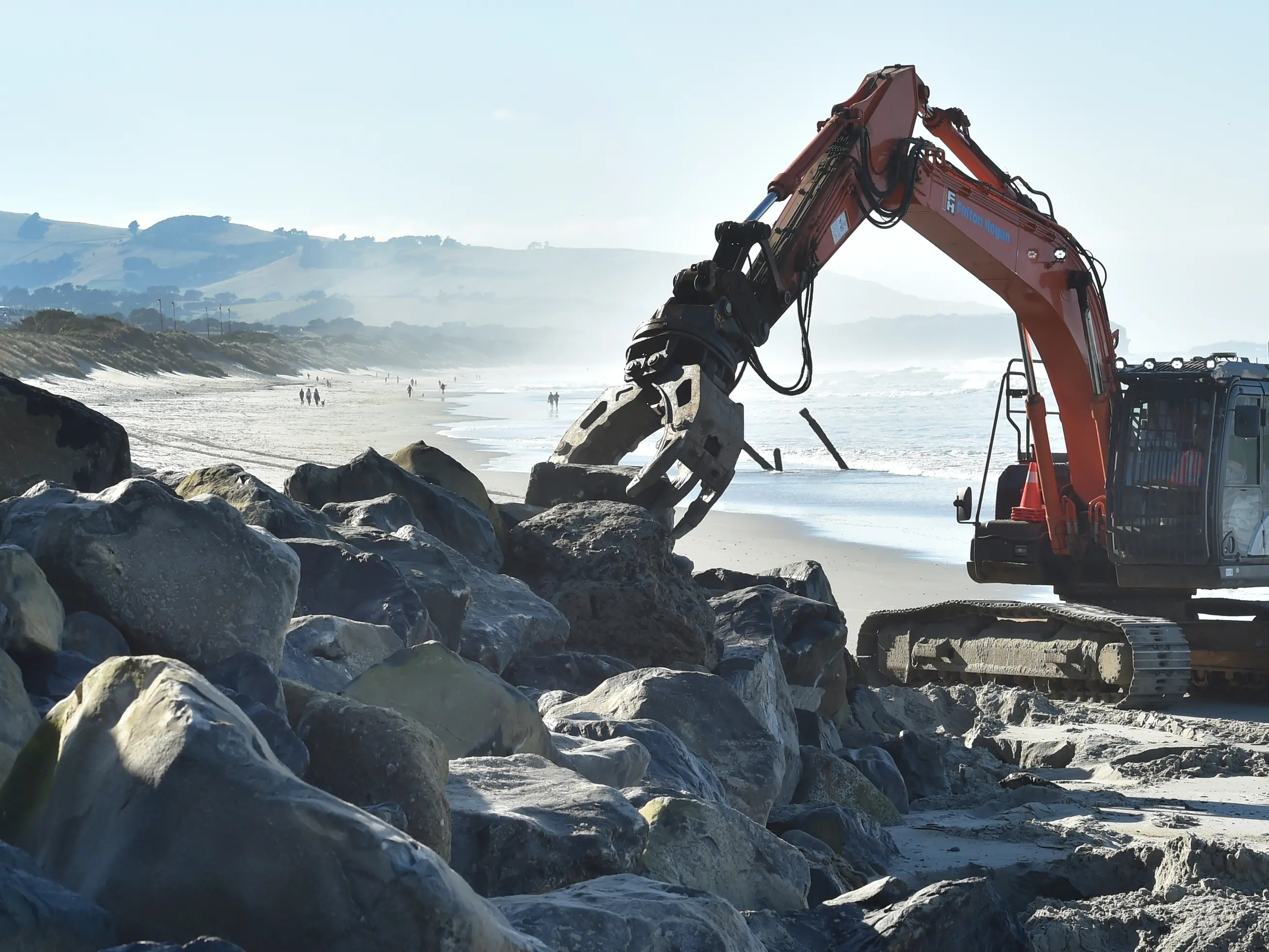
There is little evidence groynes retained sand at St Clair Beach, in Dunedin, a consultant says.
Such structures could be effective when sediment moved primarily along the shore, but those were not the conditions driving erosion at the St Clair to St Kilda beaches, eCoast oceanographer Ed Atkin said.
Erosion there was largely because of sand moving directly offshore during storms and it was not sustainable to consider a groyne as a long-term solution for episodic erosion, he said.
However, Dunedin city councillor and groynes advocate Jules Radich said historical evidence clearly pointed to the effectiveness of the loosely planked wooden structure.
The Dunedin City Council is developing a plan for management of the coast from St Clair to St Kilda and eCoast submitted reports about sediment movement patterns off the Otago coast to help council staff and the public formulate a holistic approach.
The consultant, commissioned by the council, discussed various techniques such as reshaping dunes, building breakwaters, bringing in sand and creating groynes.
A groyne, on its own, ‘‘does little in retaining material on this beach’’, Mr Atkin said.
Cr Radich has called for the old groyne at St Clair to be repaired, arguing the approach was demonstrably effective at building up the beach during the 20th century.
Mr Atkin said his firm did not want to get into a war of words with Cr Radich and decisions should be based on scientific fact and physical principles.
‘‘There is little, if any, evidence that the old groyne had a positive impact on sediment transport and sand retention at St Clair,’’ he said.
Cr Radich pointed to historical photographs, Ocean Beach Domain Board reports and the findings of a series of engineers, including Charles Turner, who concluded in 1955 groynes had been well proved in the previous 50 years.
Cr Radich focused on 1902, 1921 and 1955.
‘‘Groynes were built each time to mitigate the scouring effects of the Esplanade sea wall and each time they were successful,’’ he said.
‘‘It is only through lack of maintenance that their effectiveness diminished.’’
Mr Atkin said historical photos indicated times of both high and low beach volumes, likely associated with seasons and storm events.
The consultant concluded the broad sediment transport system in Otago was currently in deficit.