
PHOTO
A Dunedin cancer patient has described the city’s health system as “third world” after doctors failed to diagnose his blood cancer for about three years.
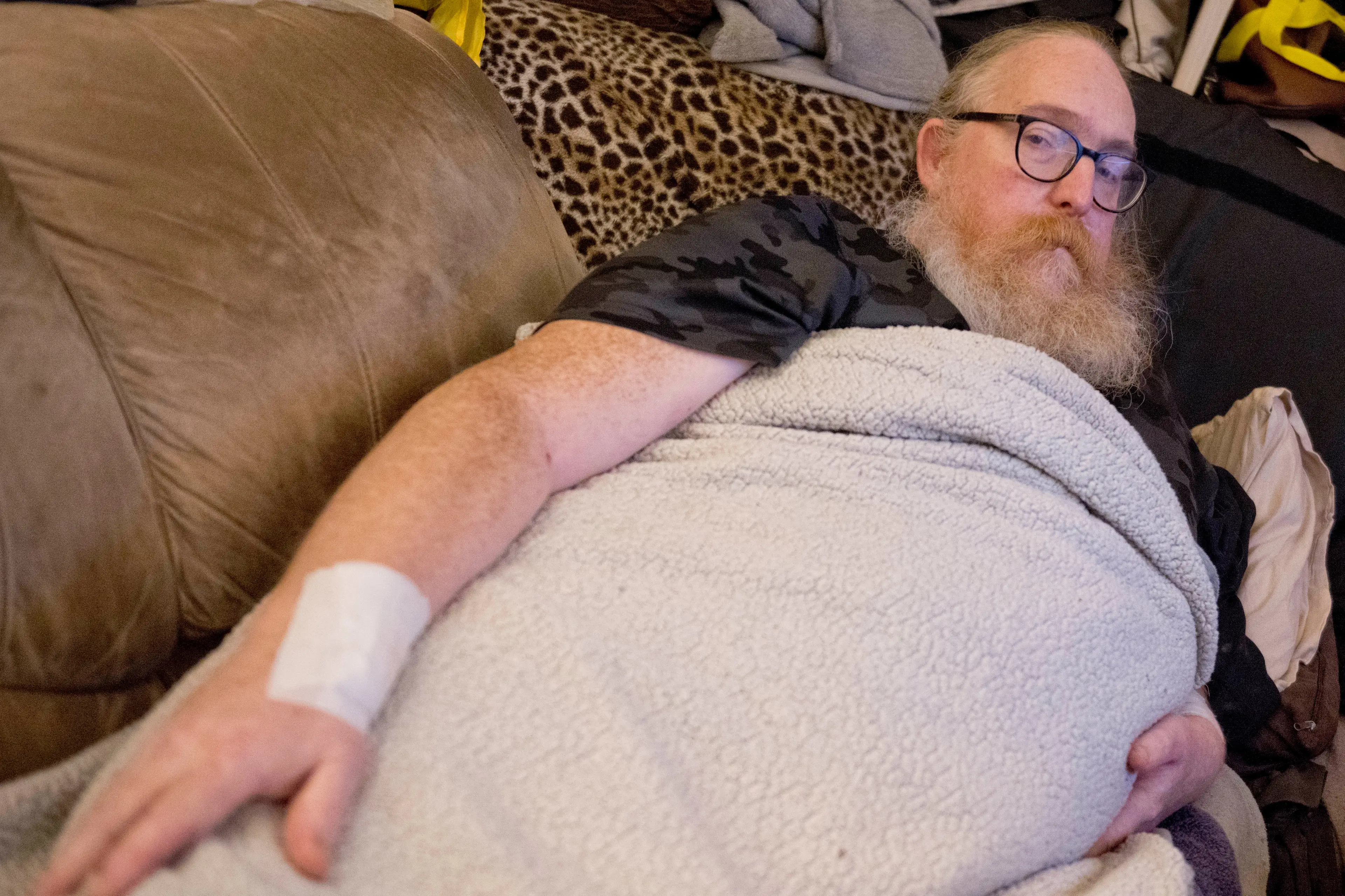
Now former Otago University Students’ Association and Otago Polytechnic Students’ Association staff member Mark Baxter has extremely painful lesions and an uncertain future.
He said if the city had a dermatology service, his blood cancer would have been picked up much sooner and he would not be in the situation he is in now.
Health New Zealand Te Whatu Ora (HNZ) acknowledged the problem, saying there had been a nationwide shortage of dermatologists, but changes were being made to dermatology services in the South Island.
Mr Baxter said his blood cancer was similar to that of the late Sir Sam Neill.
“So what happens is, the blood goes mad and overproduces white blood cells in some areas and that causes the lesions on my skin.
“To be graphic, it’s like I’ve got burns or cuts all over my bum and groin, and they’ve been like that for months.
“That seems to be a typical place. It’s also under my arms and behind my knees, so it’s pretty debilitating.”
His symptoms first appeared three years ago, when he had blisters on the bottom of one of his feet, Mr Baxter said.
He went to his GP because they refused to heal and they turned into wounds.
“Eventually, bits appeared on other bits of my body and he [the GP] couldn’t work out what it was.
“Nothing bacterial or anything showed up in any of the tests in those three years.”
His doctor wanted to send him to a dermatology specialist, but there was no-one to send him to in Dunedin, he said.
“He couldn’t refer me to Christchurch, because that’s just not the way our system works.
“I was literally at the point of faking my address at a friend’s place in Christchurch, just so I could get to be seen by a dermatologist.
“It was then that he said, ‘our strategy now is I’ll put these photos and the description of your symptoms out on this network, and our hope is that a dermatologist takes an interest in it because it’s an interesting case’.”
It was only in June this year, albeit by good luck, that a dermatologist saw the case and immediately diagnosed Mr Baxter with blood cancer.
“So, yes, I think it would have been picked up much sooner if we had a dermatology specialist here in Dunedin.
“As soon as an actual dermatologist saw it, he clocked it straight away.”
It was “disgraceful” that was the only option available to people from Dunedin.
“My other concern is, how many other people are in the same position and haven’t had a dermatologist look at their images because they didn’t find it an interesting case?
“They could have the same thing, or worse, and be undiagnosed to this day.”
He believed it had been a longstanding issue that HNZ had been struggling to place a dermatologist at Dunedin Hospital.
“Obviously, my solution is offer more money, because that’s obviously what it costs.
“But, that aside, they should also focus on what they could do as a backup, because it seems to me to be totally lacking.”
Despite having open wounds “bleeding everywhere, all day and night”, he said no-one in Dunedin’s healthcare system had given him any bandages or antiseptic to stop them from getting infected.
“I imagine most third-world hospitals literally offer better wound care services than that.”
He was now receiving chemotherapy and was on morphine for the pain, but it was still too early for his medical team to say what his prognosis was, Mr Baxter said.
HNZ southern group operations director Craig Ashton said health services across New Zealand had faced ongoing challenges recruiting specialist clinicians, including dermatologists.
“There is a nationwide shortage of dermatologists in New Zealand.
“In response, we have been developing a sustainable, regionally-led dermatology service, based in Christchurch.
“This model is designed to strengthen access to specialist advice and care for all South Island communities, while creating a more stable and resilient service.
“Referrers across the South Island can access specialist dermatology advice, and we anticipate face-to-face dermatology clinics will commence in the southern district within the next two months.”
Mr Ashton acknowledged navigation of the health system and referral processes could be “challenging and frustrating” for patients and their whānau.
“We recognise the issues that have been raised, and welcome the opportunity to speak directly with Mr Baxter to review the clinical details and referral pathway involved to better understand his experience and any concerns about the care he received.”
john.lewis@odt.co.nz