
PHOTO
Dunedin has New Zealand’s richest heritage building legacy, but holding onto that heritage is not easy.
Dunedin Mayor Sophie Barker has a spring in her step–she’s talking about one of her favourite subjects, Dunedin’s extraordinary heritage buildings.
Barker grew up in arguably the city’s most famous building–Larnach Castle. She leads Frank Film on a walking tour; from the Octagon, down Princes Street to the Exchange, once the heart of the city’s business district.

On all sides, grand heritage looks down – the Savoy restaurant, the glorious former Bank of New Zealand building and the former Exchange Court facade.
Saving these buildings is a personal crusade for the first-term mayor.
“Part of what I'm trying to do,” she says, “is to recreate the partnerships, rebuild the livability, and attract people to live in the city who want to invest in our special things.”
But as Frank Film discovered, holding onto heritage is not easy.
In the 1860s and 1870s, the stream of gold coming out of the Otago hinterland made Dunedin the richest city in New Zealand.
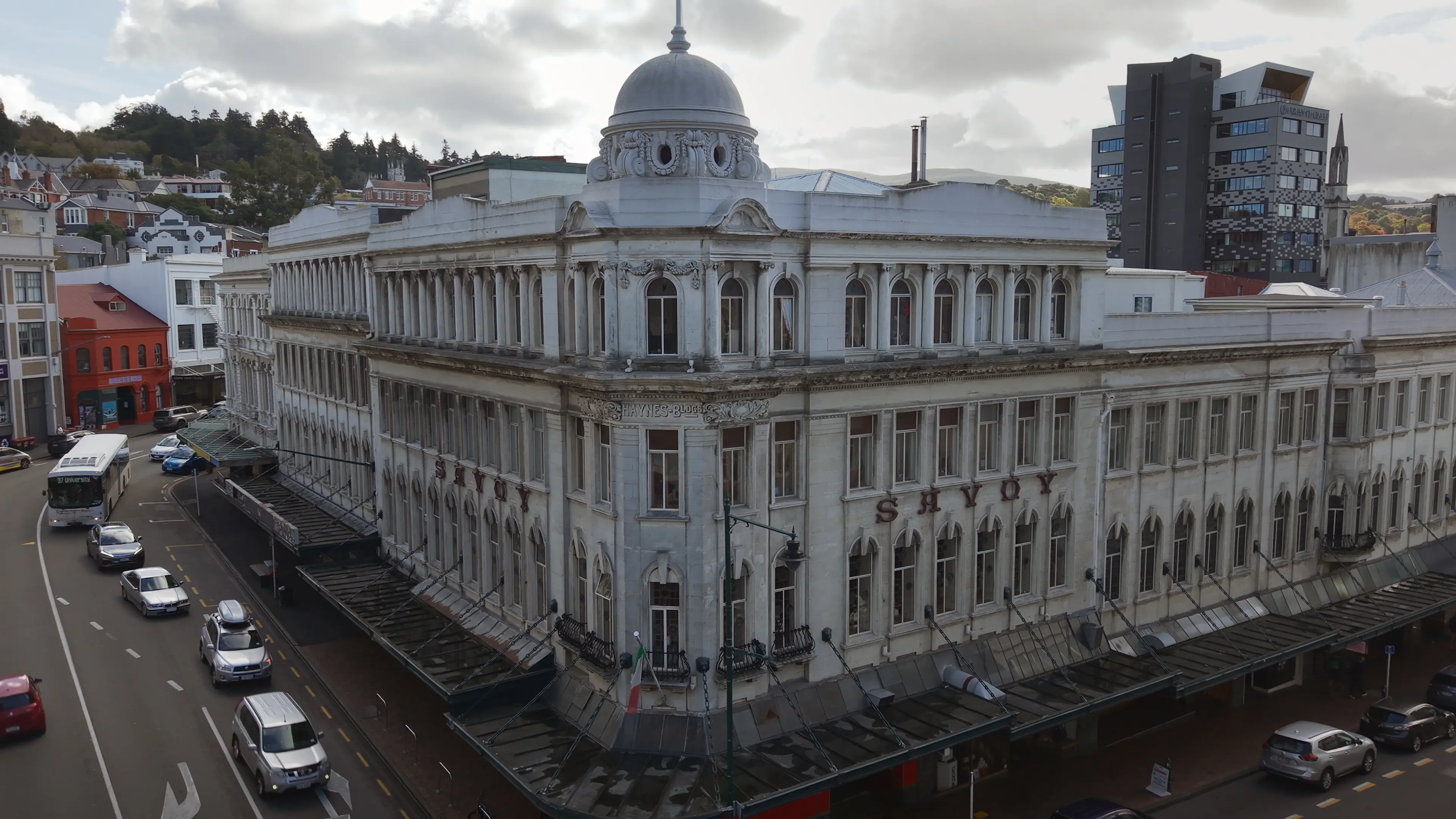
In the lavish decades of the late 19th and early 20th centuries, many of Dunedin’s extraordinary buildings went up, but by the mid-20th century, the country’s economic centre of gravity had shifted northward–to Christchurch, Auckland and Wellington.
As those other cities were tearing down their heritage buildings to make way for modern structures, Dunedin retained many of its stunning Gothic Revival, Flemish Renaissance, and Italianate building facades.
Now, this extraordinary collection of buildings is internationally revered, and something the southern city takes immense pride in.
Dunedin’s railway station, built in 1906, is often said to be the finest building in New Zealand, but that’s just the tip of the iceberg–there are nearly 800 other heritage-listed buildings in the city. Many are concentrated in the area south of the Octagon known as the warehouse precinct.
This was the heart of Dunedin’s industrial activity in the late 19th and early 20th century and many big businesses maintained their grandiose headquarters here. This end of town also held the city’s banks, as well as glorious hotels like the Excelsior and Wain’s, which hosted visiting businesspeople drawn to the city’s hum.

By the 1980s, however, the area had fallen into disrepair, and a number of these buildings were lost. For Barker, reusing heritage is the key to saving it.
“In Dunedin,” she says, “We've got a lot of people who are committed to saving heritage buildings and finding ways to make them useful in a modern society.”
People like property investor Lawrie Forbes. Forbes, who is also managing director of engineering company Zeal Steel, started out as an apprentice boilermaker at Dunedin's Hillside workshops.
When the building he trained in came up for sale, he convinced his mother to put up her house as a surety, and bought it.
Forbes has since owned many heritage buildings in the city. He’s stripped them out, strengthened them and refurbished the interiors–turning them into apartments, offices and cafes.
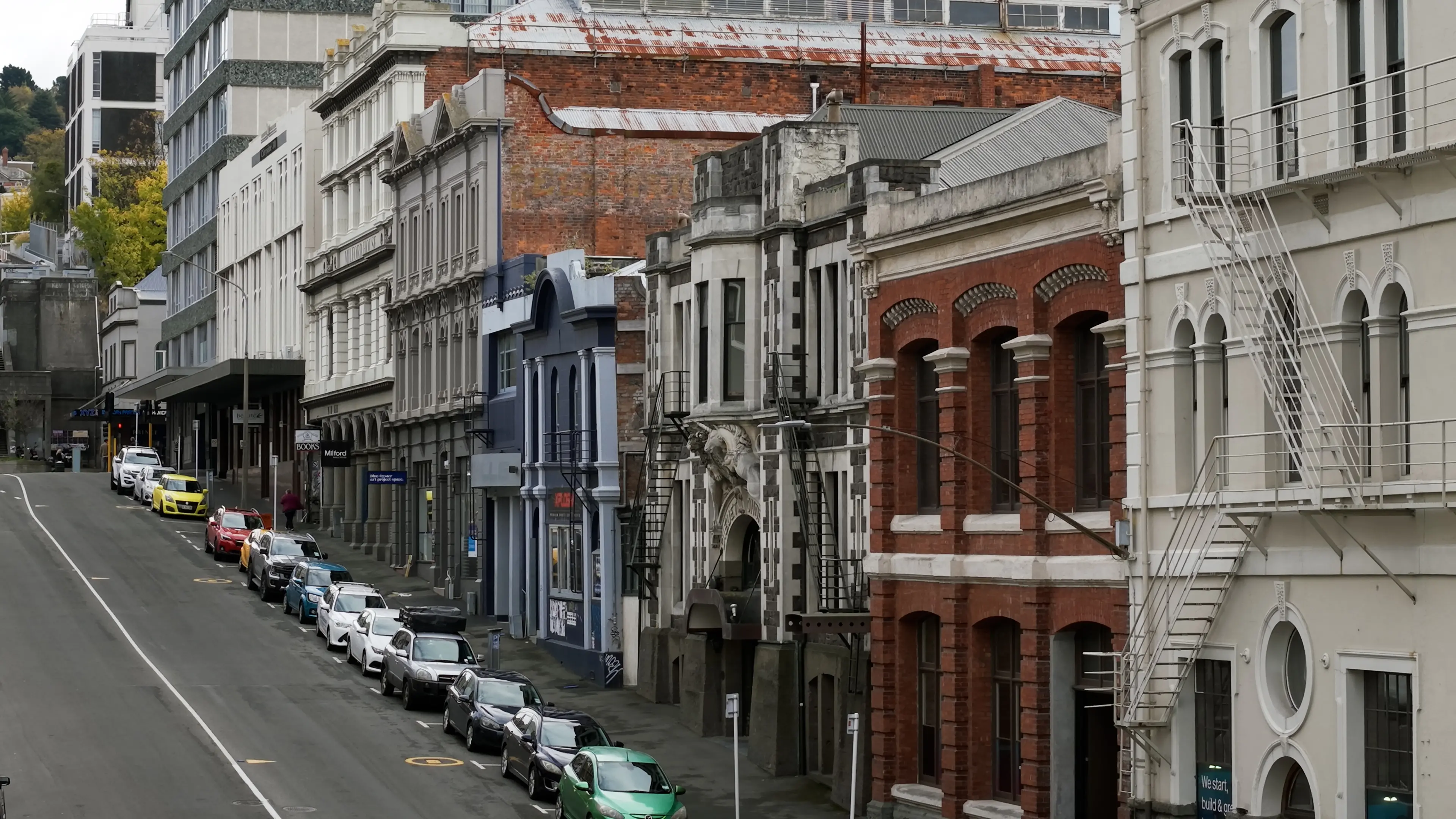
“I get pleasure out of seeing other people reusing them,” he says. Forbes’ efforts, alongside those of others who have seen the potential of the warehouse district, have turned this once dilapidated area into a thriving urban scene.
But owning heritage buildings can be extraordinarily expensive. Under a recent government shakeup of building laws, Dunedin has been upgraded from “low” earthquake risk to “moderate,” and that comes with a swag of added requirements and costs for building owners.
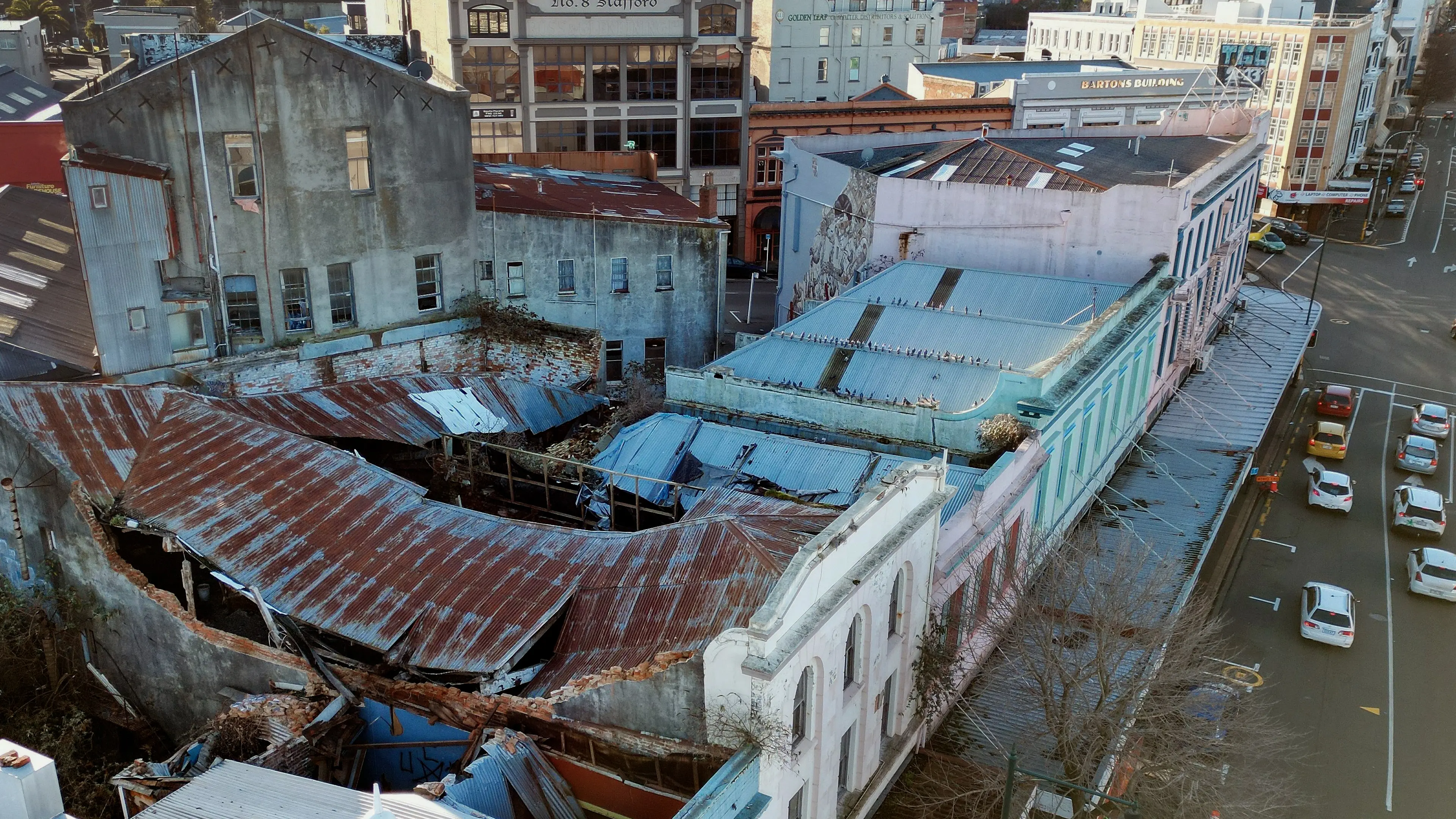
The risk is that building owners will decide it's too expensive to restore their heritage buildings, and instead let them fall into disrepair, until such time as they become dangerous and have to be torn down.
Dunedin already has a disturbing number of what Ann Barsby, founder of the Southern Heritage Trust, calls “heritage carparks” –empty sections where an unloved heritage building has been demolished, and which now await a new development.
“It's so important to not have gaps in these streetscapes,” she says. “There should be tighter regulations to prevent ‘demolition by neglect.’”
Now, a new threat looms.
The government’s proposed changes to the Resource Management Act include a controversial provision for “regulatory relief,” which would require councils to compensate heritage building owners.
“Basically,” explains Barker, “you've got to pay people for the devalue in their building that the council has put on it by making the building a registered heritage building.”
As well as a potentially enormous cost to councils, Barker says regulatory relief might also dissuade councils from giving buildings heritage status in the first place. “
Do we stop registering those buildings and stop protecting them to try and save our ratepayers?
“Those changes are not going to make it as easy for communities to protect the things they value.”