
PHOTO
Dunedin is riding a wave as the city's population surges past 130,000 for the first time, new figures show.
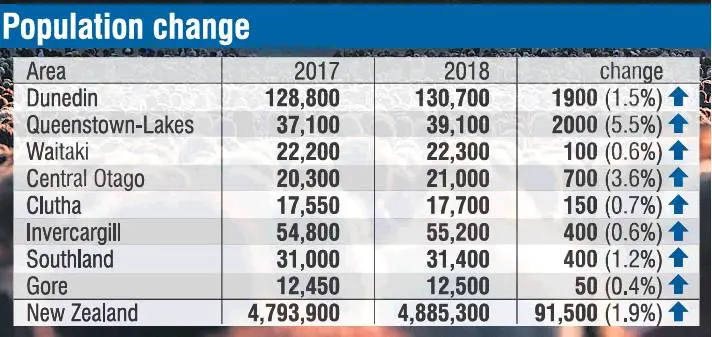
The latest estimated resident population figures, released by Stats NZ yesterday, showed Dunedin's population had jumped by 1900 people, or 1.5%, to 130,700 in the year to June 2018.
That was on top of a similar increase, of 1800 people, in the previous year, and meant Dunedin's population has now grown by 7200 people since 2013, the figures showed.
Even higher growth was recorded in Queenstown-Lakes (up 5.5%), making it the fastest-growing region in the country, and Central Otago (up 3.6%), in the year to June.
In Dunedin, Mayor Dave Cull said the increases were ''considerable'' and ''very positive'' for the city.
They underscored the value of new city-wide strategies and investments designed to make the city more attractive and liveable, from the arts and culture sector to the environment, Mr Cull believed.
''I think it's very positive and it vindicates our emphasis on focusing on what attracts people - what kinds of things people want.
''Some of the things we've been doing in this city are obviously working.''
The fact many of the new arrivals were younger, in the 15-39 year age bracket, also helped put the city on a more sustainable footing, he said.
Without the new arrivals, the city would have fewer and fewer people supporting an expanding number of older people, he said.
''That's not sustainable. I think the age cohort we're attracting, and the number of them, bodes very well for the sustainability of our community and of our economy.''
Otago Chamber of Commerce chief executive Dougal McGowan said the increases were ''great news for the city''.
Dunedin's liveability, its work environment, its educational institutions and the price of housing were all factors fuelling the rising population, as was the arrival of hundreds of refugees mainly from Syria, he believed.
That showed the city was ''starting to understand who and what we are'', and the message was getting out, he said.
''We are Dunedin and we're proud to be Dunedin.''
The influx meant more customers for existing businesses, and more start-up ventures being launched, both of which helped stimulate the city's economy.
But success brought its own challenges, from rising traffic congestion to pressure on the price, quality and availability of housing for buyers and tenants alike, he said.
With major construction projects expected over the next decade - such as the Dunedin Hospital rebuild - the city would need to plan well to manage the effects of growth.
''People are starting to find some of the traffic issues frustrating, which is quite ironic isn't it.
''I think that's going to be really important into the future, that all of that stuff is managed and planned really well.''
Mr Cull said the pressure on housing was a major challenge, but one the Mayor's Taskforce on Housing was already considering ''so we can try to be proactive and get ahead of this''.
''Some people say it's a great problem to have, but we don't want it to get away on us.''
The Stats NZ figures showed most areas of New Zealand experienced growth, which across the country averaged 1.9%, fuelled largely by internal and international migration.
The increases pushed New Zealand's population up by 91,500, to 4,885,300. .