
PHOTO
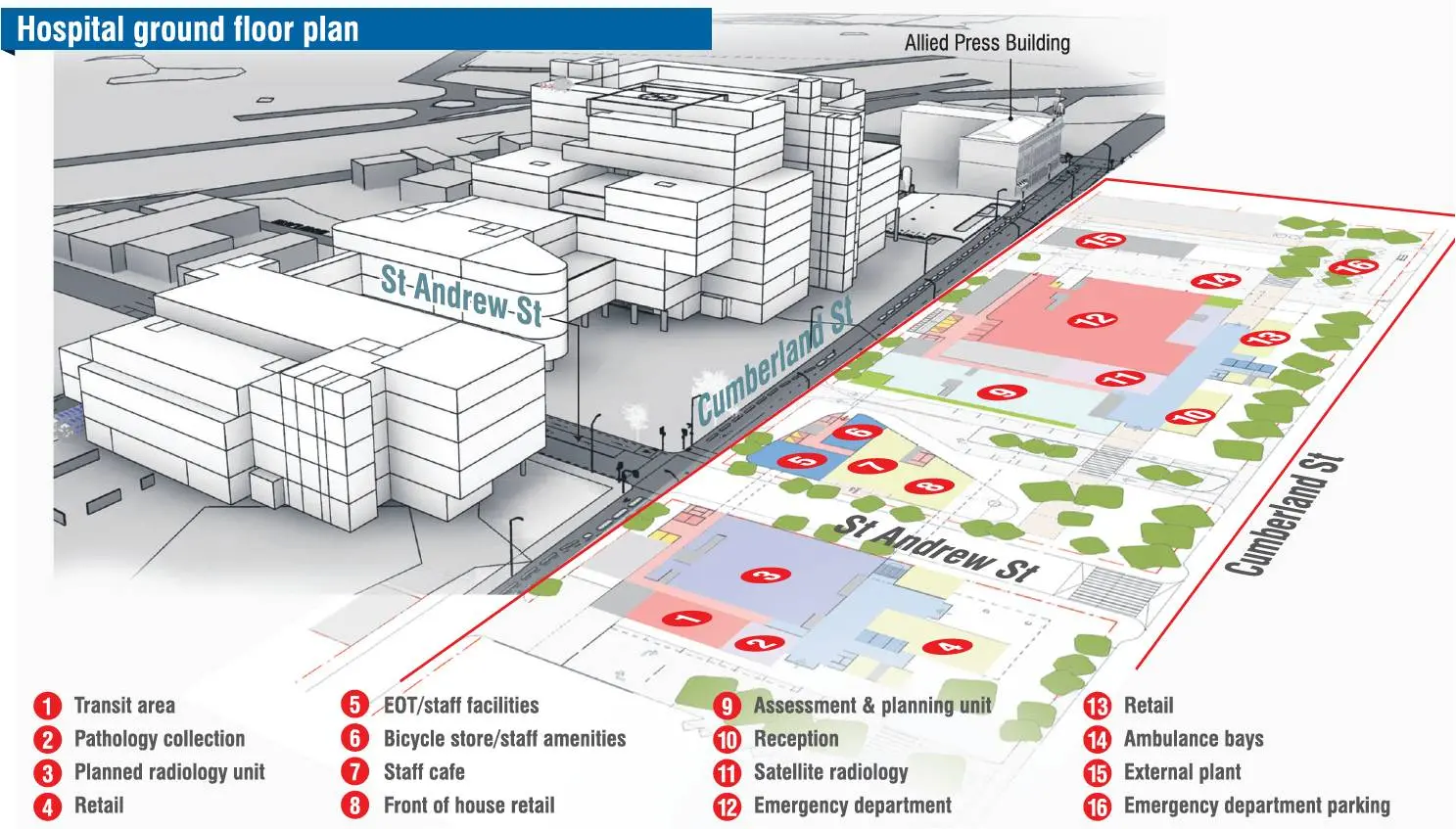
A glimpse of what Dunedin’s new hospital might look like has been offered in documents supporting the Ministry of Health’s application to demolish the former Cadbury factory.
Included in the appendices of the ministry’s consent application are streetscapes and "block and stack" depictions of how the proposed twin buildings could be configured on the central city site.
The drawings, by architectural firms Warren and Mahoney and McCoy Wixon Architects, are indicative as Cabinet is still to receive and approve the detailed business case for the $1.4billion project, a document which will set out much of the detail about the scale of the buildings and the services within.
The designs suggest the emergency department entrance will be at the Stuart St end of Cumberland St and the main pedestrian entrance further north.
A bridge across St Andrew St will link the two buildings.
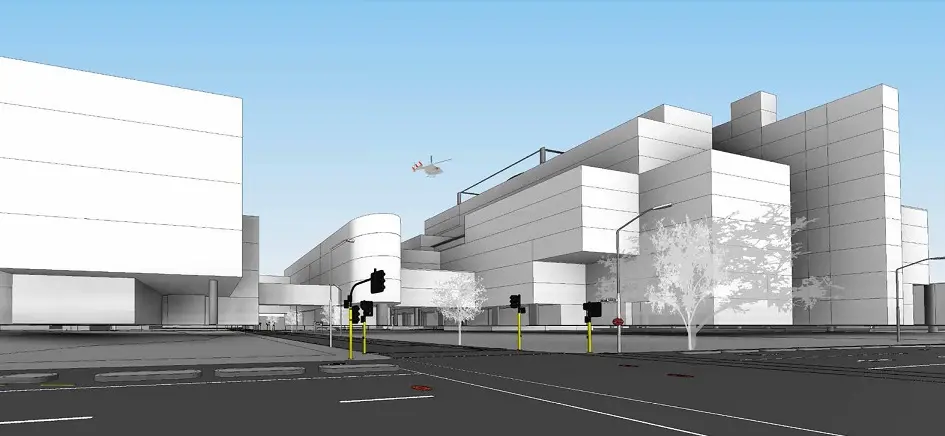
"Access points are a key matter for consideration in the planning and design of hospitals," the architects said.
"For safety reasons, the public vehicle access corridor has been separated from the emergency vehicle corridor (which includes separate access for ambulances) that is located on the southern end of the Cadbury site."
The architects said that their initial concept designs showed the planned floor levels for
the hospital buildings did not align with the window heights in the heritage buildings on the site.
"These challenges would again have adverse consequences for the clinical performance of the building and the overall design outcome."
The ministry cited those concerns, as well as the cost and inconvenience for both the public and construction teams, as reasons for demolishing the Cadbury facades.
The complex has a category 2 historic places rating — a classification which means the ministry must notify its demolition consent.
The hefty consent application document outlines eight different options for retaining the Cumberland St facades, regarded as the most historically significant parts of the complex.
"The various options demonstrate that, from a structural engineering perspective, it is possible to retain the facades or replicate them," the ministry said.
"However, there are a number of engineering challenges."
Those included the need for temporary support works, which would be substantial and "would add significant complexity to construction, cost, and time".
The brickwork of the facades was in poor condition due to age and damp, and getting them up to the seismic strength required by law for the new hospital would be difficult.
"The site is potentially susceptible to liquefaction," the ministry said.
"The brick facades of blocks 1 and 2 have no reinforcing to tie them together and are very vulnerable to ground movement, and so the foundations of these facades will require strengthening which could include underpinning."
The cheapest option identified by the ministry, a glass-reinforced concrete replica of the facades, would cost about $32million, while the most expensive option, building an independent base isolation system for the facades, could cost $74.6million.
Temporarily bracing the walls would pose difficulties, either blocking access to utilities if built inside the complex or obstructing Cumberland St if outside the complex.
"Overall, while the preferred configuration allows for the retention of the dairy and machine house building, it cannot practically accommodate retention of any other buildings or the facades," the ministry said.
"Retention of the existing facades would severely compromise the optimal design and clinical performance of the hospital."
Once the Dunedin City Council processes the demolition application, there will be a submission period of 20 working days.