
PHOTO
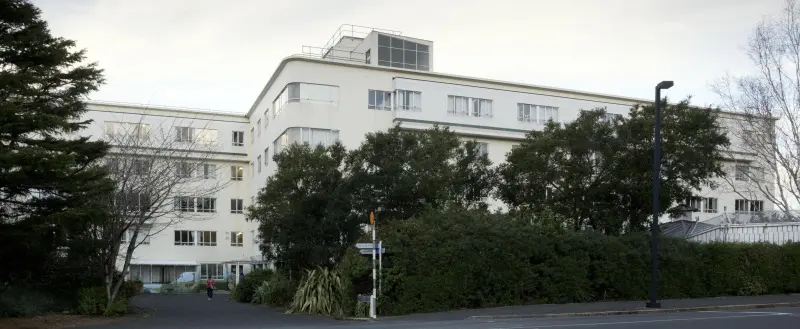
Conditions uncovered during a visit to a Wakari ward were among the worst officials have seen and included a patient being secluded in their room for 18 months and others being blocked from using the toilet.
The examples are listed in a provisional release by the Ombudsman John Allen, who led a health inspectorate of the institution in March this year and in particular the troubled ward 10a.
In his provisional release, Mr Allen said it was some of the worst conditions of a ward they had ever witnessed.
“I am disturbed by what our inspectors found. What they observed at Ward 10A are some of the worst practices we have observed anywhere.
“We found compelling evidence of punitive and coercive treatment of people in the ward. Some were subjected to prolonged environmental restraint and/or long-term seclusions.
“In one instance, a person was being tied down on a bariatric or ‘EVAC’ mat to move them around the ward. This was causing physical and mental harm to the person who suffered carpet burns as a result.”

Health New Zealand have confirmed that ward 10a is no longer taking admissions, but there is some uncertainty about where the patients would be sent to.
Staff have complained to the ODT about long hours and potential burnout, while others have asked their bosses for more transparent decision-making.
Wards 9a and 9b are going through restoration, but not 10a, which has been paused.
Public Service Association have said a complete overhaul rather than a piecemeal solution was needed.
Mr Allen said that there were too many incidents in Wakari’s ward 10a to ignore.
“Inspectors also found that one person had been secluded in their bedroom for around 18 months with an almost complete lack of meaningful human contact and no access to the outdoors.
“Other instances of ill-treatment included restrictions on dental care and people being denied access to their own money.
“Staff were observed incentivising ‘good’ behaviour by rewarding people with access to basic necessities including dental treatment or the use of a toilet.”
Inspectors also noted that treatment of people may have extended to the unlawful administration of medication.
"These are allegations of serious and significant failures that amount to potential human rights abuses. This punitive and coercive approach to the care of people in Ward 10A is unacceptable."
This is not the first time the Office of the Ombusman has made a notable visit to the hospital.
In 2022, a report for the office by then chief-Ombudsman Sir Peter Boshier described ward 10a as not fit for purpose and a “volatile” environment for patients and staff.
Mr Allen said it was disappointing there had been little improvement since then.
"It is also very concerning that there has been next to no improvement to the physical structure of Ward 10A despite ongoing concerns.
"Infrastructure, facilities and the physical environment must be fit-for-purpose. This is critical to the health, safety and well-being of people in the ward and for staff. This applies not just to Ward 10A but across the system."
The inspection, between March 17 and 20, was carried out under the Crimes of Torture Act 1989. It was part of the Ombudsman’s role under the Optional Protocol to the Convention against Torture and Other Cruel, Inhuman or Degrading Treatment or Punishment.
"We chose to raise our concerns directly with the Ministry of Health and Health NZ.
"They have both acknowledged our concerns and the importance of ensuring that all people in Ward 10A are treated properly."
The Ministry of Health had accepted his recommendation to undertake an independent investigation into the treatment and conditions of people at Ward 10A and have closed the ward to new admissions.
"It is very important now that they make sure the same number of beds are available across the structure to avoid putting more pressure on the system.
"Health New Zealand says they have taken these matters very seriously. I will be closely monitoring the progress and actions taken by both Health New Zealand and the Ministry of Health."
Mr Allen said the inspections at Ward 10A are an example of a critical function performed by his office
“The issues at Ward 10A are a stark reminder that much more needs to be done to make sure the very vulnerable in our community, like people with intellectual disabilities, are kept safe and treated with dignity and respect."