
PHOTO
Releasing two hand-reared kākāpō back into the wild is incredibly rewarding, but Theo Thompson says it can also feel a bit like a parent sending their first-born off to school for the first time.
The Department of Conservation ranger and Whenua Hou (Codfish Island) site leader said Tia-A3 (affectionately nicknamed T-Bear) and Tiwhiri-A4 (Shadow) were found injured in the wild earlier this year, and had spent the past four months being hand-reared, rehabilitated and taught how to be wild again at the Dunedin Wildlife Hospital.
Recently the duo were deemed fit and healthy again, and they have been released back into the wild on Whenua Hou.
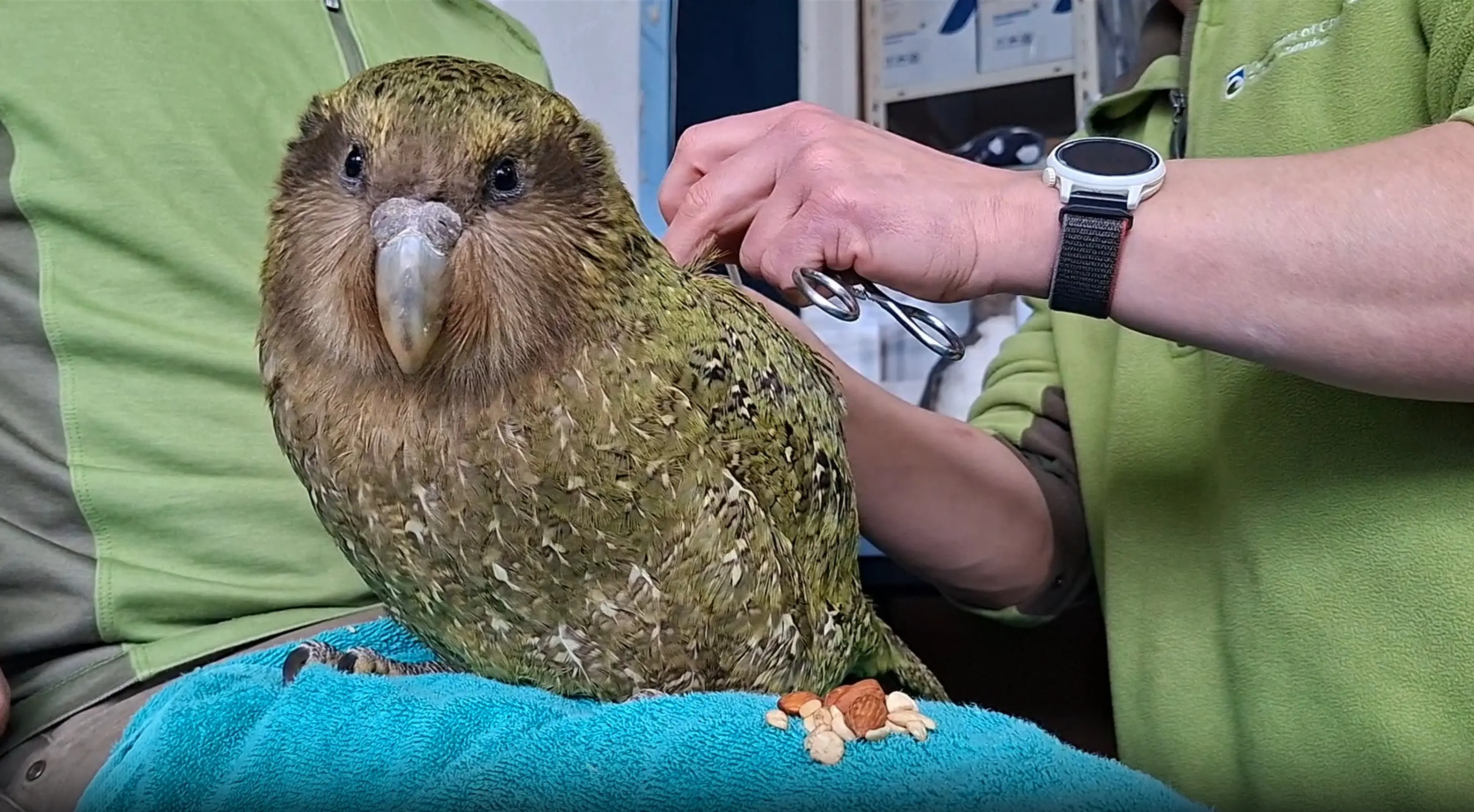
“It’s a really happy part of the season, actually. They’ll go on to become perfectly wild kākāpō.
“But there is a little part of you that’s a little bit nervous because they are a bit, um, they’re not the smartest or as clued up as an adult bird at that age.
“They tend to make some silly decisions, and you just hope they test the depths of the puddle before they go jumping into it, you know.
“So we’re keeping a close eye on how they progress.”
Mr Thompson said the kākāpō were initially released into “soft release pens” with supplementary food hoppers, which allowed Doc rangers to do “a final little bit of training” before they were sent off to fend for themselves.
“It’s where we make sure that they are capable of eating from our supplementary hoppers and it also just helps get them used to rain and stuff like that.”
He said they had now been released into the wild, next to a couple of supplementary food hoppers.
“We do try to give them a helping hand, by providing a bit of supplementary food when we release them, but it’s then up to them whether they eat that or not.”
Surprisingly, the duo did not stick together when they were released.
Tia-A3 had stayed close to where she was released and was regularly eating the supplementary pellets; Tiwhiri-A4 had done “quite a classic hand-reared chick thing” and “just taken off”.
“They probably were really good friends at the hospital, but then when we put them out in the wild, there’s other kākāpō there, and maybe one of them gets spooked by an adult and they can just move apart.”
Mr Thompson was looking forward to seeing them add to the kākāpō population in the future.
john.lewis@odt.co.nz