
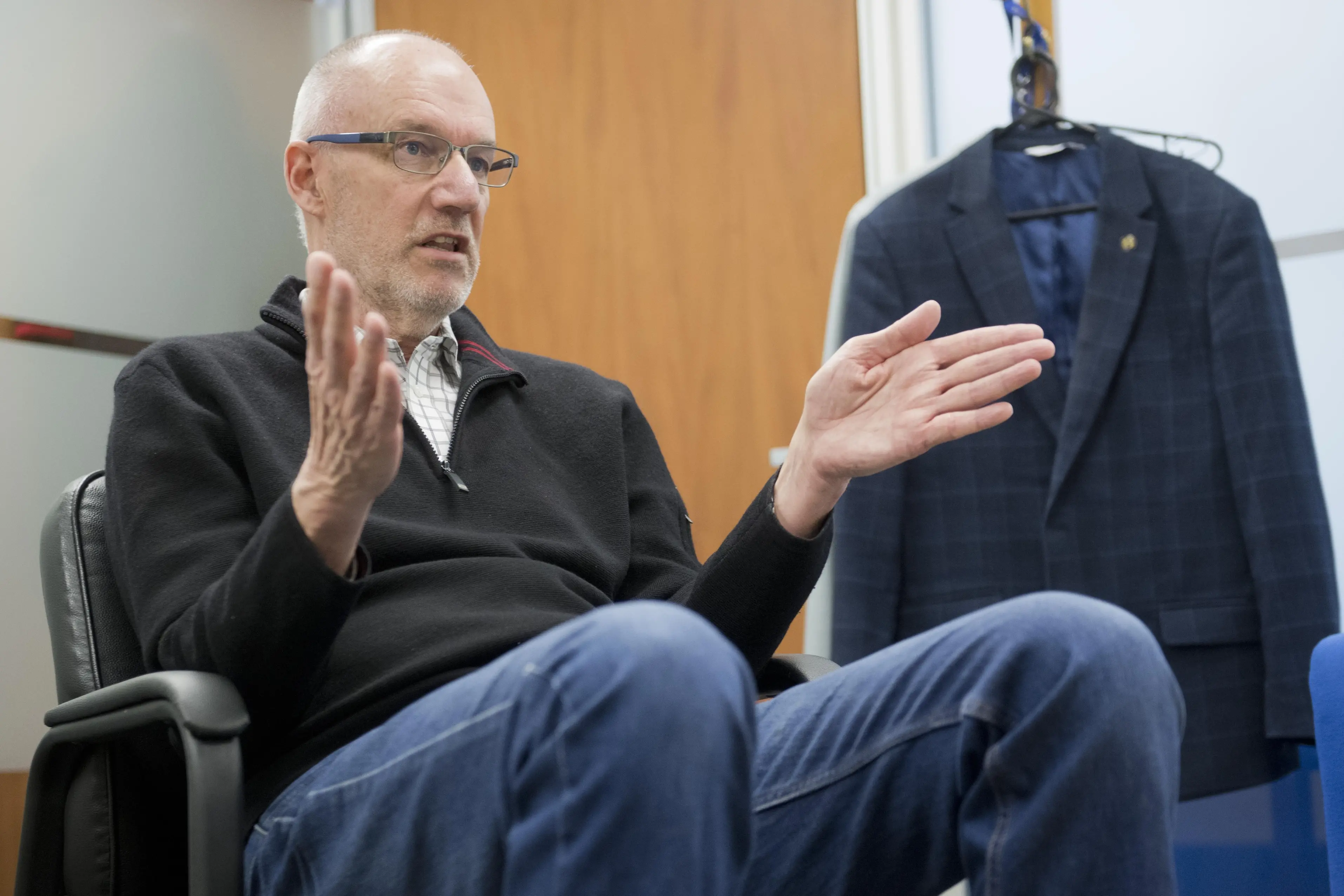

PHOTO
When Martin Jones was born he immediately needed a full-body blood transfusion.
Almost 65 years later, and after more than 100 blood donations of his own, he took his donating schedule a step further and donated his hip bone.
Next week, University of Otago operations manager and blood drive organiser Mr Jones is hoping to draw students and staff to the Union Hall to donate a pint of blood and begin their own donation journeys.
On Tuesday, Wednesday and Thursday next week, a mobile New Zealand Blood Service unit from Christchurch will setup and take an estimated 230 blood donations from tertiary students.
Mr Jones hoped it would be the start of 230 people’s donation journeys which could carry on through their lives.
“Generally, if we get 200 collections three times a year, then that’s 600 collections in a year, so that’s saving 1800 lives potentially.”
The cause was close to Mr Jones’ heart as without blood donors he would have died at birth in 1962.
When his mother, who has an Rh negative blood type, had her first child all was well — however, it was clear her first baby had a positive blood type from his father.
That led to his mother developing antibodies which attacked Mr Jones’ red blood cells while he was in the womb.
Nowadays, a plasma-derived anti-D injection is given to Rh negative mothers after their first baby to prevent that, but in 1962 when Mr Jones was born, the treatment was a full blood transfusion.
“So I survived … and here I am today.
“That’s why I’m a big proponent of people giving blood because I wouldn’t be here.”
Since age 17, Mr Jones has donated wherever he was living, however he was barred from donating in New Zealand for many years due to the “mad cow” blood donation restriction.
However, since that restriction was scrapped in 2024, he had started donating again with vigour.
He was recently stood down from donating due to a hip replacement surgery in March, however he found he could still find a way to donate.
“So I donated my hip bone to NZ Blood … the bone’s no good to me now.”
NZ Blood collected approximately 800 donated hip bones from patients all around the country every year.
They are used by orthopaedic surgeons as bone cement for spinal surgery, or for packing holes in redo hip replacements.
They were also used to chisel a femoral head into a particular shape, such as a wedge, to realign a joint.
Mr Jones is hoping more young people take up regular donations.
NZ Blood was always short of blood and always needed more donors, he said.
“There’s 20,000 students here on campus … how many lives could they save? They’re not all eligible, but even if you’ve got 10% of them, that’s 2000.
“Now, we’re lucky to get 200 donors.”
He said the student population was generally healthy and fit, and made great donor candidates.
When there was a large disaster like a plane crash, people flocked to donate blood.
“But we shouldn’t have to wait until there’s a plane crash to donate blood because somewhere, a woman who’s just given birth and bled out and needs three whole units of blood — you want to make sure she’s okay too.”