

PHOTO
A Dunedin whānau refuge facing “unprecedented demand” has marked 50 years of supporting some of the South’s most vulnerable.
About 50 people gathered to commemorate Ōtepoti Dunedin Whānau Refuge’s anniversary last week, which also marked the beginning of a fundraising appeal to build a refuge community hub.
Board chairwoman Zoe Bristowe said in 50 years, understanding and awareness of family violence had grown, matched by stronger legislation.
“But we sadly have not ended the need for refuge,” she said.
“We’re seeing unprecedented demand, with whānau navigating increasingly complex circumstances, compounded by housing challenges, financial hardship, the cost of living and trauma.”
Planning was under way for the refuge’s community hub — “a place of warmth and dignity and belonging”.
A major fundraising campaign was set for early next year and Ms Bristowe urged the community and businesses to support it if they could.
Refuge general manager Simone Claire said the it triaged upwards of 90 referrals a month but in September, the figure was 149.
Family and intimate partner violence took many forms — including physical, sexual, financial or emotional, she said.
The abuse of animals as a means of coercion was on the rise.
“We have someone that we’ve worked with very recently who has had their dogs threatened to be set on fire in front of them,” Mrs Claire said.
She asked people to “hold in your heart” those who had been killed by family violence.
“Our hope is that each generation will experience greater safety than the one before.
“Until that . . . becomes a reality, we will continue to stand.”
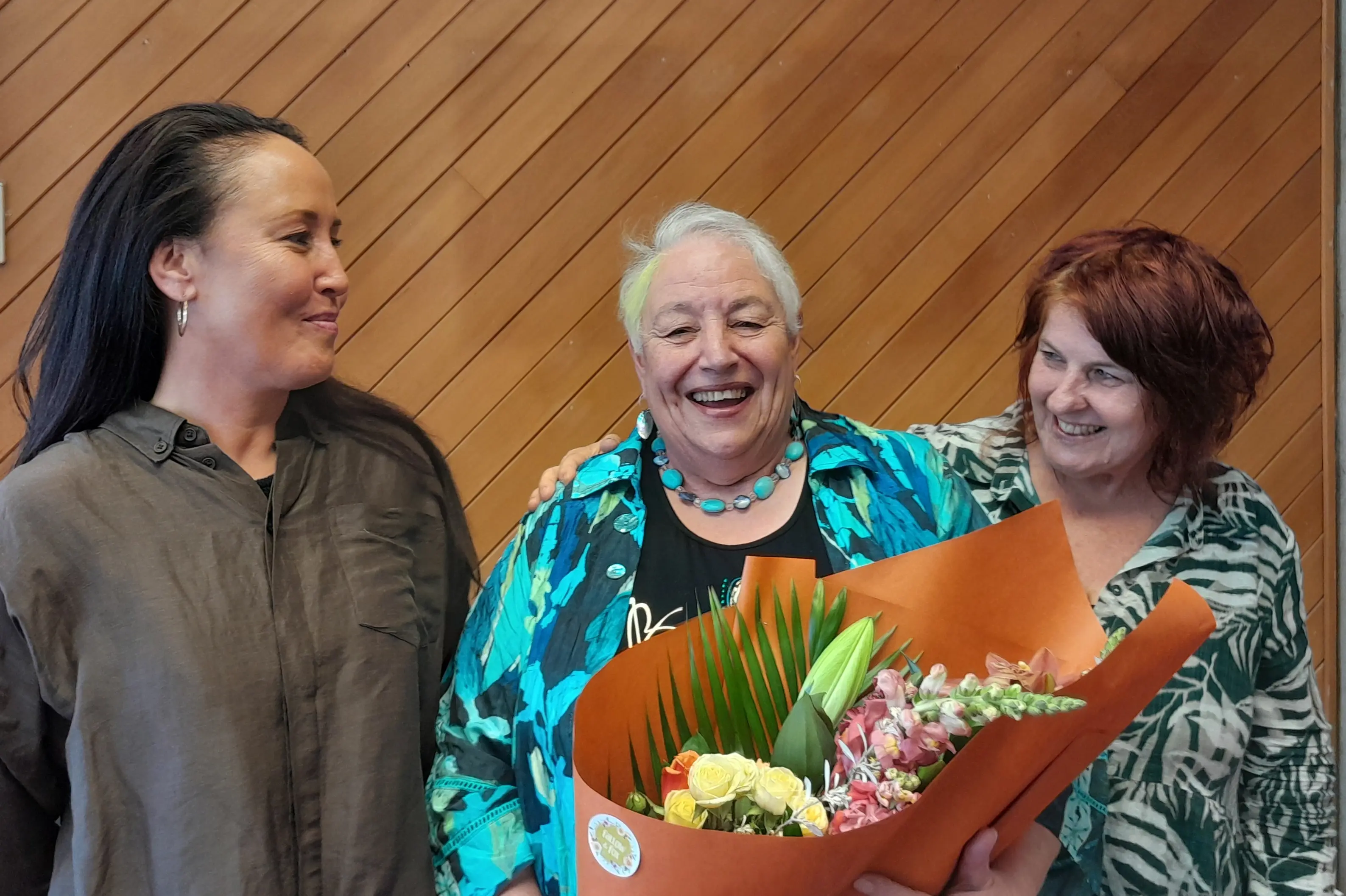
Suzanne Menzies-Culling, a founding member of Dunedin Women’s Refuge, Ōtepoti Dunedin Whānau Refuge’s predecessor, said she had “mixed feelings” about the anniversary.
She was particularly impressed by the refuge’s skills and its “up front” discussions about family violence.
“But the distressing thing is that it’s so much worse than it was.”
She and the late Yoka Neuman, both staunch feminists, founded the refuge in February 1976, after a public meeting in the lounge of a Dundas St flat.
Calls for support came immediately.
Both hosted women and children in their homes while the refuge was being established.
“There was so much stigma attached to feminism, and also ‘a man’s house is his castle, so how dare you destroy a man’s family’,” Ms Menzies-Culling said.
“They used to ring me up and abuse me . . . the police, the churches, lots of people.
“My father thought I needed mental health treatment.”
Ms Neuman was a “hard case” who used to collect donations for the refuge at pubs — “shaking [a can] down the noses of some of the men”.
“We even went and saw the manager at Lion Breweries and said, ‘most of this happens because of alcohol, we think you should provide some money’,” Ms Menzies-Culling said.
“He laughed.”