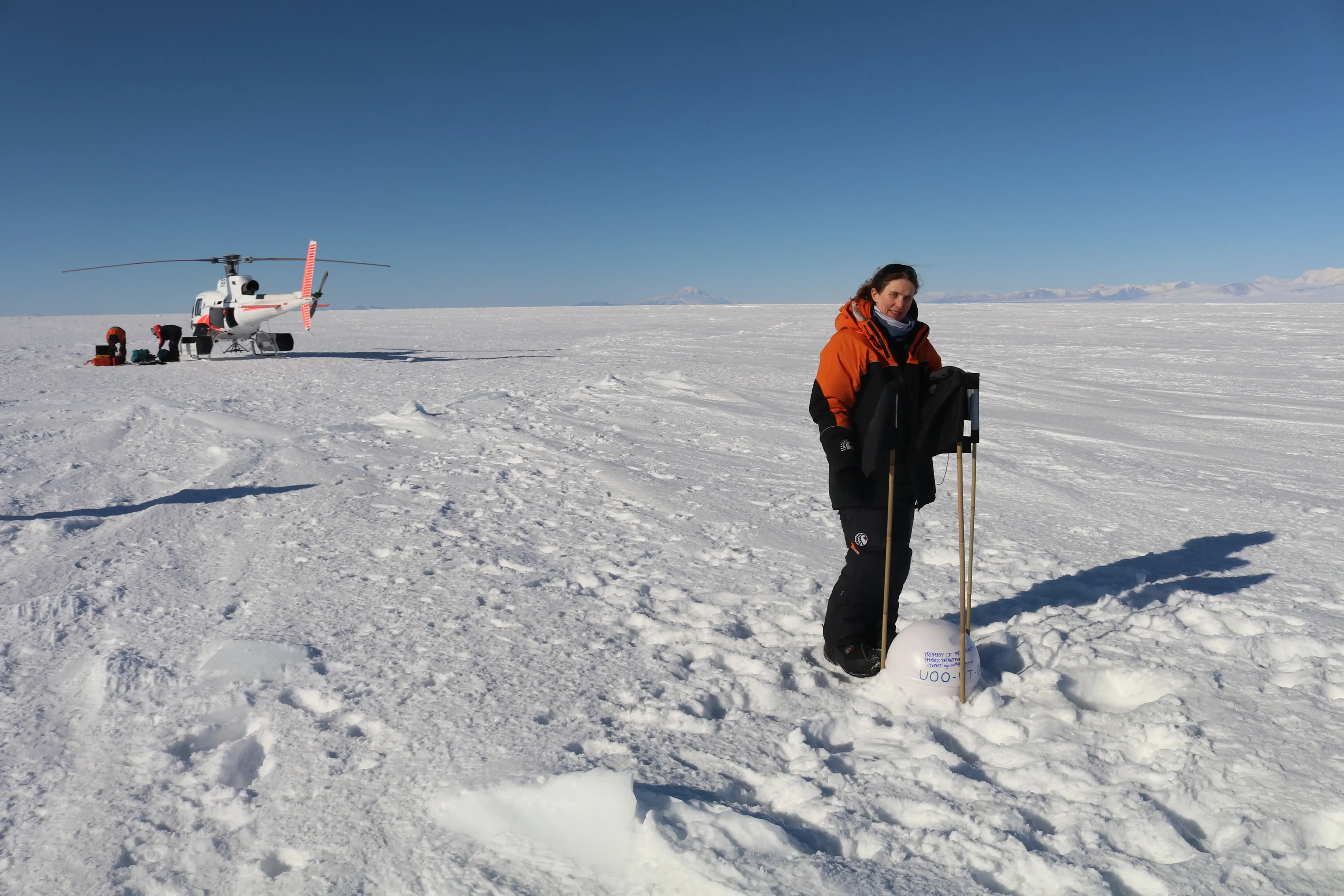
A bid to predict climate and ecosystem changes around Antarctica has brought together scientists from 27 global institutions, including a University of Otago physicist. The Synchrony project — led by the Alfred Wegener Institute, in Germany — will conduct co-ordinated observations in Antarctica and combine the data to create a new system for observing the Southern Ocean. It aims to contribute to a better understanding of the rapid changes taking place in the complex Antarctic system, comprising the ocean, ice and atmosphere in the Southern Ocean and around the Antarctic ice shelves, as well as their impacts on the global climate and biodiversity. Ultimately, it aims to improve scientists’ ability to predict climate and ecosystem changes around Antarctica. The European Union is funding the project to the tune of about $NZ16.7 million over the next four years. University of Otago physicist Prof Inga Smith is one of just two New Zealanders involved in the project. “It is exciting to be part of the Synchrony project and contribute to the Antarctica InSync initiative’s efforts to synchronise observations from Antarctica and the Southern Ocean.” Prof Smith said she would be involved in the ‘‘observatory implementation’’ part of the project, and one of its main objectives was to “compile, harmonise and enhance” historical datasets across sea ice, ocean, atmosphere, ecosystems and biogeochemistry, to build a coherent foundation for Antarctic “shared essential polar variables’’. As part of the task, Prof Smith will lead the delivery of systematically compiling sea ice and pack ice observations from various scientific organisations. She will also work closely with team members in Germany, Norway and other countries, to host and disseminate autonomous ice-tethered platform data through the Alfred Wegener Institute’s existing Sea Ice Portal. “My team and I are looking forwarding to facilitating research to answer urgent questions on rapid sea ice changes.” Synchrony project principal investigator Prof Alexander Haumann, of Germany, said the Southern Ocean and the Antarctic shelf seas had been undergoing massive changes for several years. “Sea ice cover, for example, is declining dramatically, large parts of the West Antarctic ice sheet are being lost, and deep-water formation appears to be declining. “The full implications of these abrupt changes for the local and global climate and the ecosystems remain unclear. “We are currently unable to predict these changes.” He said this “knowledge gap” was largely due to insufficient observational data and the inaccurate or missing representation of processes in Earth system models. “Urgent action and enhanced international co-operation are therefore required, not only to better observe and understand the complex changes in the coupled ocean-ice-atmosphere-biosphere system, but also to provide the basis for political decision-making that will protect this region in the long term.” The Synchrony project was launched on Saturday. john.lewis@odt.co.nz