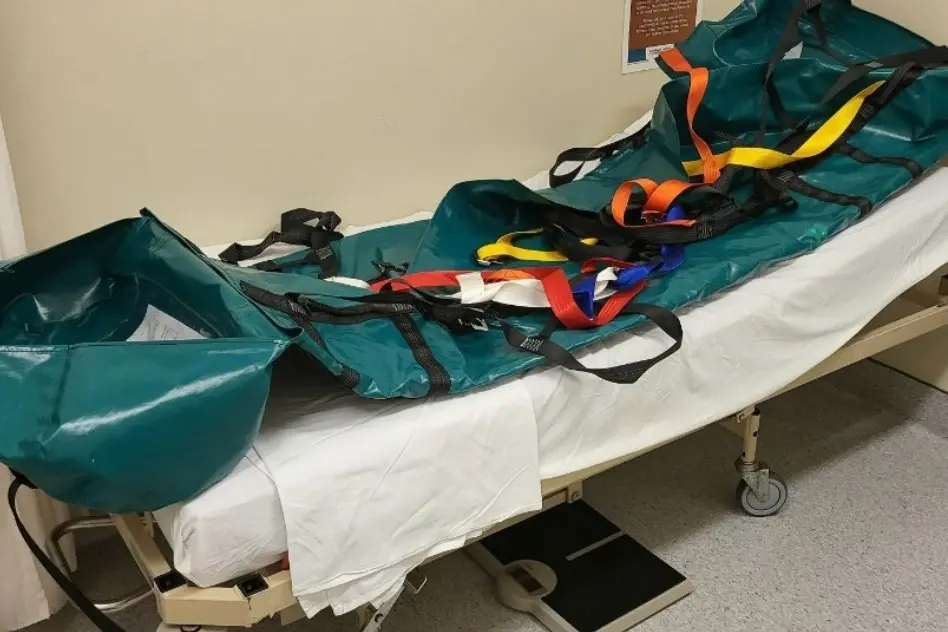
The way patients were restrained and moved in a troubled Wakari ward breached UN guidelines on torture, a bombshell report has found. The Office of the Ombudsman released its full and final report into Wakari Hospital’s Ward 10a on Thursday, after releasing its initial findings in early July. The final report takes into account the two most recent visits by the Ombudsman’s office in December 2025 and May this year, as well as Health New Zealand’s response to the initial findings, which was to move to shut the ward down. One of the most damning aspects of the final report was its section on patient restraint. “We were deeply concerned about the use of a bariatric Evac mat to restrain and move a patient on the ward. “The proper use of Evac mats is to move physically disabled people, with their consent, in emergency situations such as fires. It was unclear how the Evac mat was formally approved for use as a restraint mechanism.” [Missing Credit]John Allen. Photo: supplied The United Nations’ Special Rapporteur on Torture had raised concerns about the use of similar restraint equipment, the ombudsman’s report said. It also appeared that a patient had received friction burns from being dragged along the floor with the Evac mat. The report recommended staff at Wakari Hospital and HNZ “immediately cease” using the bariatric Evac mat to restrain and move patients. After consultation, HNZ officials told the Ombudsman the use of the Evac mat had stopped, and a review would be undertaken to assess the authorisation process for the Evac mat and its previous use. The Evac mat had been physically removed from Ward 10A, HNZ said. It was still in the process of shutting the ward down. Ward 10a was a medium secure hospital ward with 12 bedrooms, and was funded for five patients at the time of the inspection. As well as issues surrounding patient restraint, the Ombudsman expressed concern about putting patients into solitary confinement, how patient medications were delivered and how staff responded to patient concerns. “We were concerned that some medication may have been unlawfully prescribed and administered to patients. “Inspectors reviewed patient records and noted several instances of sedatives … the Intellectual Disability (Compulsory Care and Rehabilitation) Act does not permit the prescription and administration of enforced medical treatment except in limited circumstances.” The report also slammed HNZ for placing a patient in solitary confinement for 18 months, with very limited attempts to “gradually expose this patient to the general ward environment”. While the report had some sympathy for staff in that it noted the building was “never fit for purpose”, the Ombudsman’s office was highly concerned about the potential use of “punitive, coercive and unlawful practice on the ward”. HNZ has said a wider review of forensic intellectual disability services nationally would be undertaken in partnership with the services’ funder, the Ministry of Social Development. The Ministry of Health will soon begin an independent investigation concerning Ward 10a. Chief Ombudsman John Allen declined to comment on the final report, saying the findings spoke for themselves.