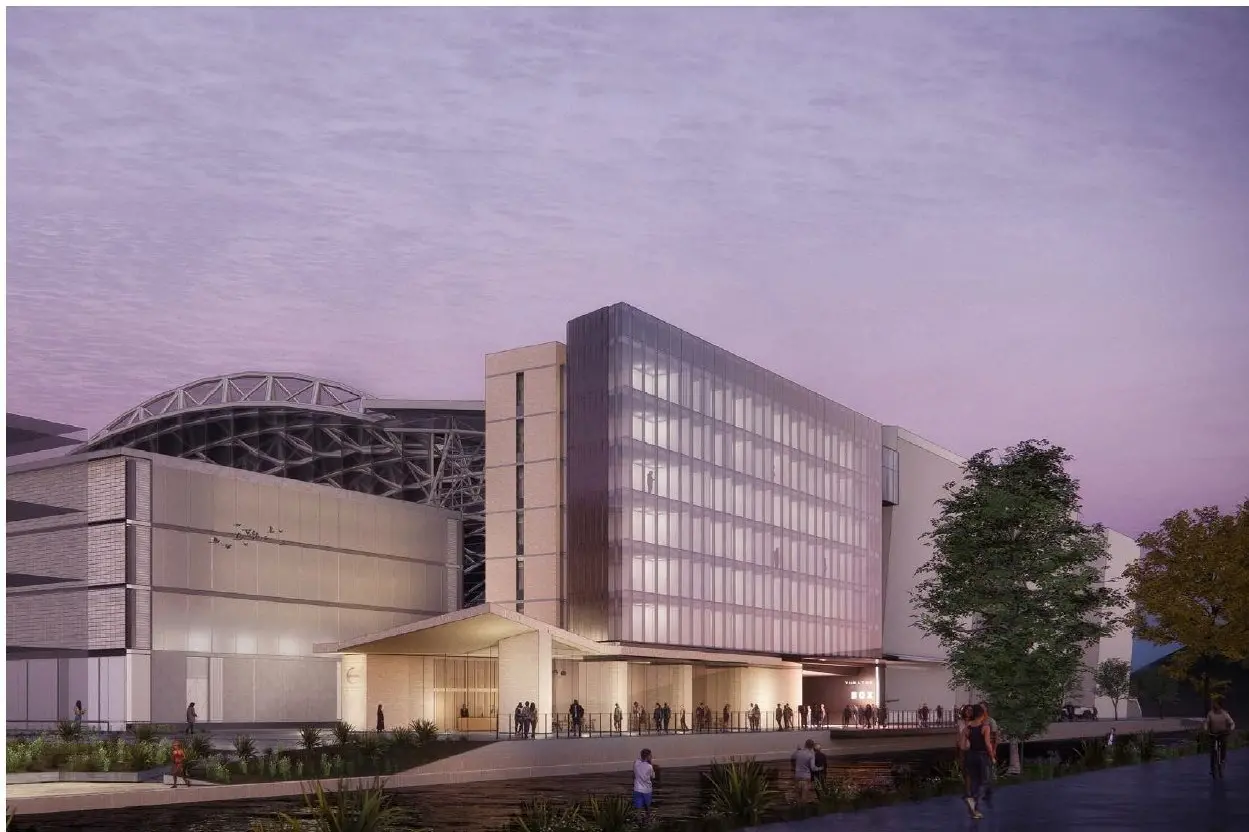
The Dunedin City Council spent more than $120,000 on a stadium hotel proposal, despite assurances ratepayer money would not be used for the development. Money was also put in by council companies, but funding directly from the council was the lion’s share — covering costs related to developing the concept. Their combined spend to try to get a hotel built beside Forsyth Barr Stadium was almost $164,000. A hotel has yet to materialise and remains unconfirmed. The $120,000 bill for ratepayers followed the project initially being framed as an exploration of commercial possibilities that was led by council companies, principally Dunedin Stadium Property Ltd (DSPL). The council did not respond to questions about whether there was a change of heart about ratepayer money, what councillors were told about council costs and how the project was shaping up now. In 2021, when the stadium and Dunedin Venues Management Ltd (DVML) presented their vision for a hotel and multi-storey carpark, the Otago Daily Times was told there would be no cost to ratepayers from the development. Dunedin Mayor Sophie Barker said she could recall around 2021 it was stated the stadium hotel would not cost ratepayers any more money. The 2022 election brought a new council and mayor (Jules Radich) she considered “very supportive of working on a positive future for the stadium precinct”. DSPL owner Dunedin City Holdings Ltd had worked hard in the past five years to “find useful options for the stadium’s future” and look for partners to help, she said. Ms Barker said $120,000 was well within the council’s chief executive delegations for spending. Former city councillor Andrew Whiley’s recollection was no council money was approved by councillors and he had concerns about unplanned funding for the project coming out of the council’s economic development budget, he said. Information about costs was disclosed under the Local Government Official Information and Meetings Act. The ODT’s request for invoices was declined, but the council provided a summary. Initial work was undertaken in 2019 to 2022 to explore potential for a hotel in the stadium precinct — this cost $25,390 and the invoice was issued to DSPL. In 2023, there was an agreed scope of work, funded by the council, to develop a concept and design. That cost $120,650. This year, work has been carried out to refresh the concept and update the feasibility assessment, costing $16,780. DVML was the invoicee for that. Sundry other costs from 2019 to 2026 were $1119, assigned to DVML. The groups of costs had been incurred with various third-party suppliers, including design, concept and engineering consulting — they were engaged by the Russell Property Group and on-charged, the council said. Cr Jo Galer said if the council provided assurances the hotel concept would not be funded by ratepayers, the reality showed “a deeply concerning disregard for public accountability and transparency”. “We need answers from the mayor detailing how the public was misled in this way, who approved the funding and when and what other costs were involved.” Ms Barker said it was clear councillors needed more granular detail about budget items and reporting for each department. “I will be asking for more depth of transparency on operational budget lines and reporting.” Costs incurred by the council would pale in comparison to economic returns for the city should such a development go ahead, she said. “That would be a great result for the stadium and the city.” Any development was expected to be worth tens of millions of dollars. Cr Russell Lund said he believed a relatively small three-star hotel at the stadium would be “a steaming financial turd”. He felt no developer would build it “unless they are given massive incentives such as being given the land at a massively discounted price or an ongoing underwrite from council”. Cr Lund said if the ODT’s information was true, this implied ratepayers were regarded as a never-ending financial font and the elected arm of the council was treated as “an irrelevance”. “This culture has to stop,” he said. “There must be accountability for this.”