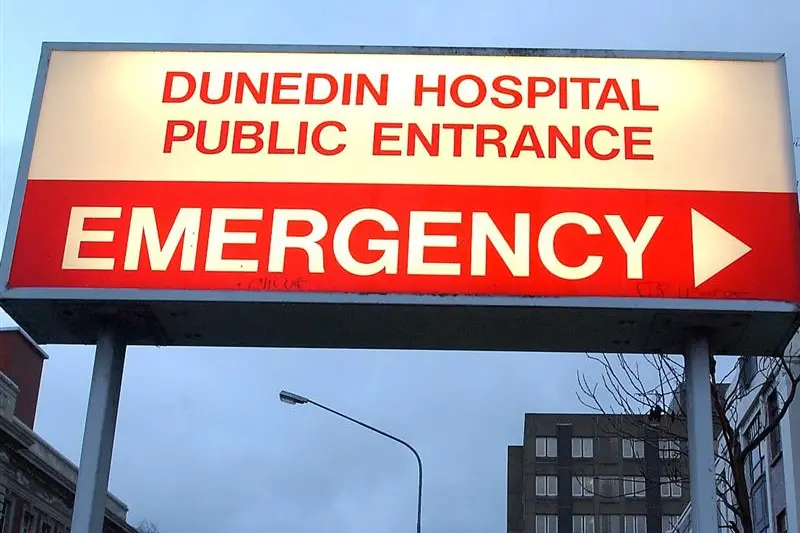
People in the South still appear to have a long wait for first specialist assessments and elective treatment, but the doctors’ union says there is a lack of information. Health New Zealand (HNZ) published the latest health targets at the end of last month. They reveal that although the Southern district performed strongly against the targets in some areas, such as responses in the mental health sector, the time waiting for first specialist assessments or elective treatment is still among the worst in the country. In the section “shorter wait times for first specialist assessment”, HNZ’s figures showed the Southern district met its one-month target only 53% of the time, while waiting for elective treatment was also about 53%. HNZ has said by 2030 it wants 95% of all patients to receive their first specialist assessment within a month of the request, with similar demands for elective treatment. Association of Salaried Medical Specialists (ASMS) policy researcher Harriet Wild said there were far too many “gaps” in the data to make clear conclusions, but something was clearly not right in the Southern district. “In the context of ASMS's research on first specialist assessment (FSA) and elective treatments, we know that a substantial proportion of FSAs are declined. “And of course, there'll be a range of the proportion that are declined, depending on speciality. "But Health New Zealand don't report that information.” The ASMS wanted more demographic information in the results to get a broader idea of how the health system was working for people. “It's really hard to tell how our health system is performing for different groups, and particularly groups with higher health inequity and comorbid health challenges. It's difficult to make an assessment.” Other targets, such as shorter stays in emergency departments, had barely moved over the past year. Presently, the target results said the Southern EDs process 76% of patients within six hours; the target is 95% by 2030. The Dunedin and Southland Hospital EDs were under the media microscope last year after members of the public talked about increasingly long wait times. A further breakdown of ED by types of complaint would be appreciated, Ms Wild said. Previously, HNZ used to provide elective services patient flow indicators (ESPIs) data. “You could tell at a glance how your district was performing and your speciality. “Health New Zealand stopped updating the information sometime last year. “And they [told us they] were moving to a new system.” Ms Wild said the present situation meant there was not a way to easily “deep dive” into the facts and figures. “It's really hard to tell how our health system is performing for different groups, and particularly groups with higher health inequity and comorbid health challenges.” HNZ has been approached for comment.