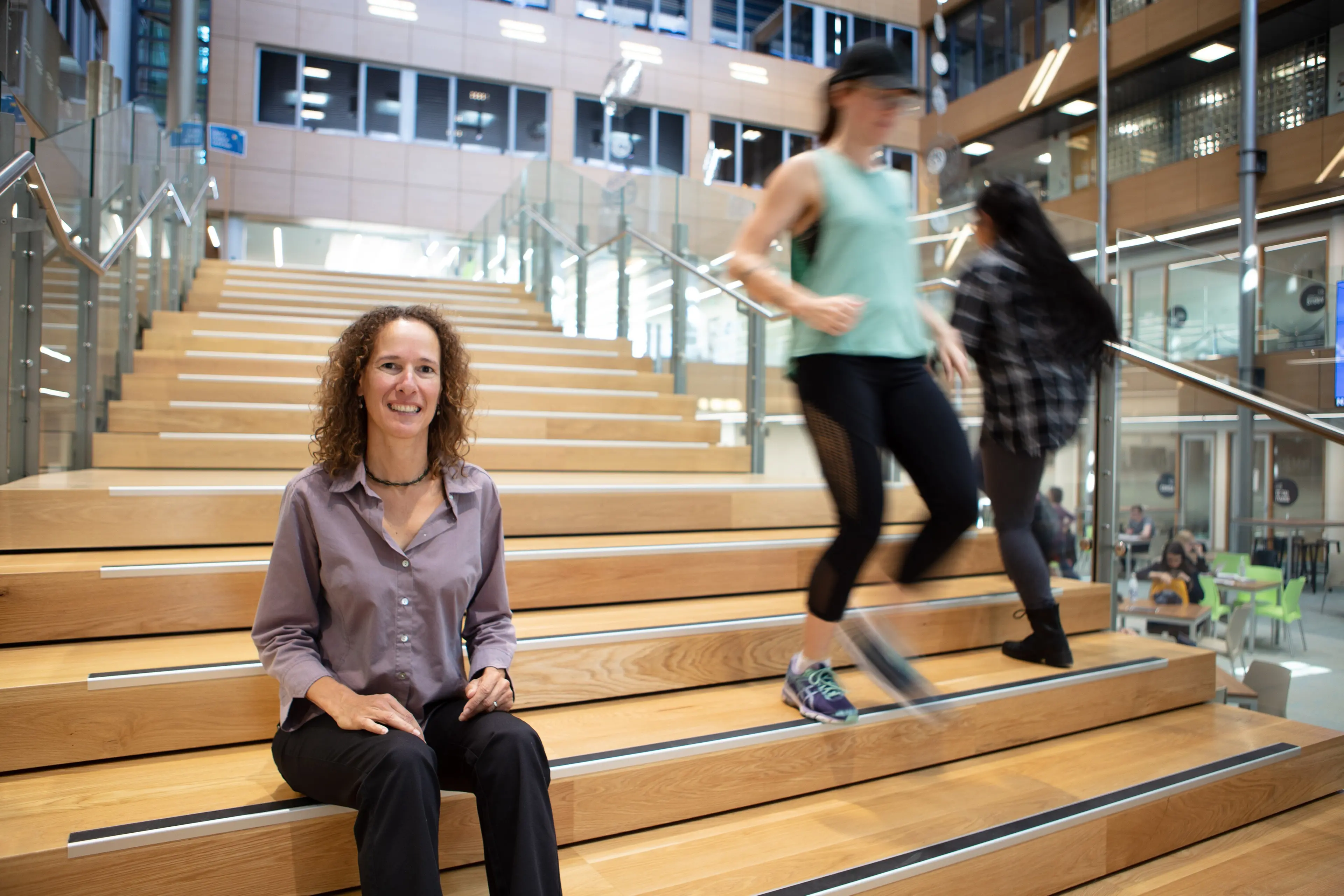
There is a certain irony in some new research, which shows if you want to be “sharper upstairs”, you actually have to climb stairs. University of Otago Brain Health Research Centre psychologist Prof Liana Machado has led a study which found that if you walk up and down stairs for about a minute, six times a day, it will improve your cognitive health. She said many people strived to improve their cognition, so having a fast and simple way to do so was highly beneficial. “Effective cognition is something that we all rely on throughout our day. “Whether you are trying to navigate a busy intersection without incident or engage in complex dynamic thinking at work, the effectiveness of our cognitive functioning can make a big difference.” Her study involved about 50 people, aged 18-36, who were asked to walk up and down a set of stairs for one minute, six times a day, at a “relatively intense” pace. They then completed a neuropsychological test which featured three cognitive assessments and six visual analogue mood scales. The findings revealed their cognition was better after the stair climbing, because they were able to give faster correct responses, compared to separate sessions when they did not climb stairs. “When you are sharper upstairs, you can get things done quicker, that’s for sure. “And it’s actually not stair climbing directly. These short bouts of exercise have been linked as well to better creative thinking, and a number of other things that tend to come out as better progress when you are in a work context.” Interestingly, climbing the stairs had no impact on the participants’ mood. Prof Machado said the results were somewhat unexpected. “When we embarked on the research, we had anticipated that we would see brain blood flow changes alongside cognitive enhancement. “However, influences on brain blood flow appear to have dissipated by the time of measurement, which commenced about 20 minutes after the stair climbing. “This suggests that other mechanisms support the ongoing cognitive gains.” She hoped the findings would benefit people going about their everyday lives. “These findings could provide motivation to students to engage in periodic bouts of physical activity during study sessions. “Similarly, people with desk jobs might want to try interspersing periods of stair-climbing in an effort to enhance their cognitive functioning. “I like the idea of using stairs, because so many people have easy access to them at work or home, which makes it easier to insert into your normal daily activities.” john.lewis@odt.co.nz