

PHOTO
A new exhibition taking people back to the dinosaur age holds special meaning for a museum staff member whose early fossil fascination sparked her love of science.
“Dinosaurs: Surviving Extinction” opens at Tūhura Otago Museum on Saturday.
The exhibition will feature large dinosaur models, including an 8m-long tarbosaurus, a juvenile oviraptor and a t-rex skull.
Alongside the exhibition, a series of displays will delve into the prehistoric past, tracing the evolutionary link between dinosaurs and modern birds and highlighting one of New Zealand’s most significant fossil finds.
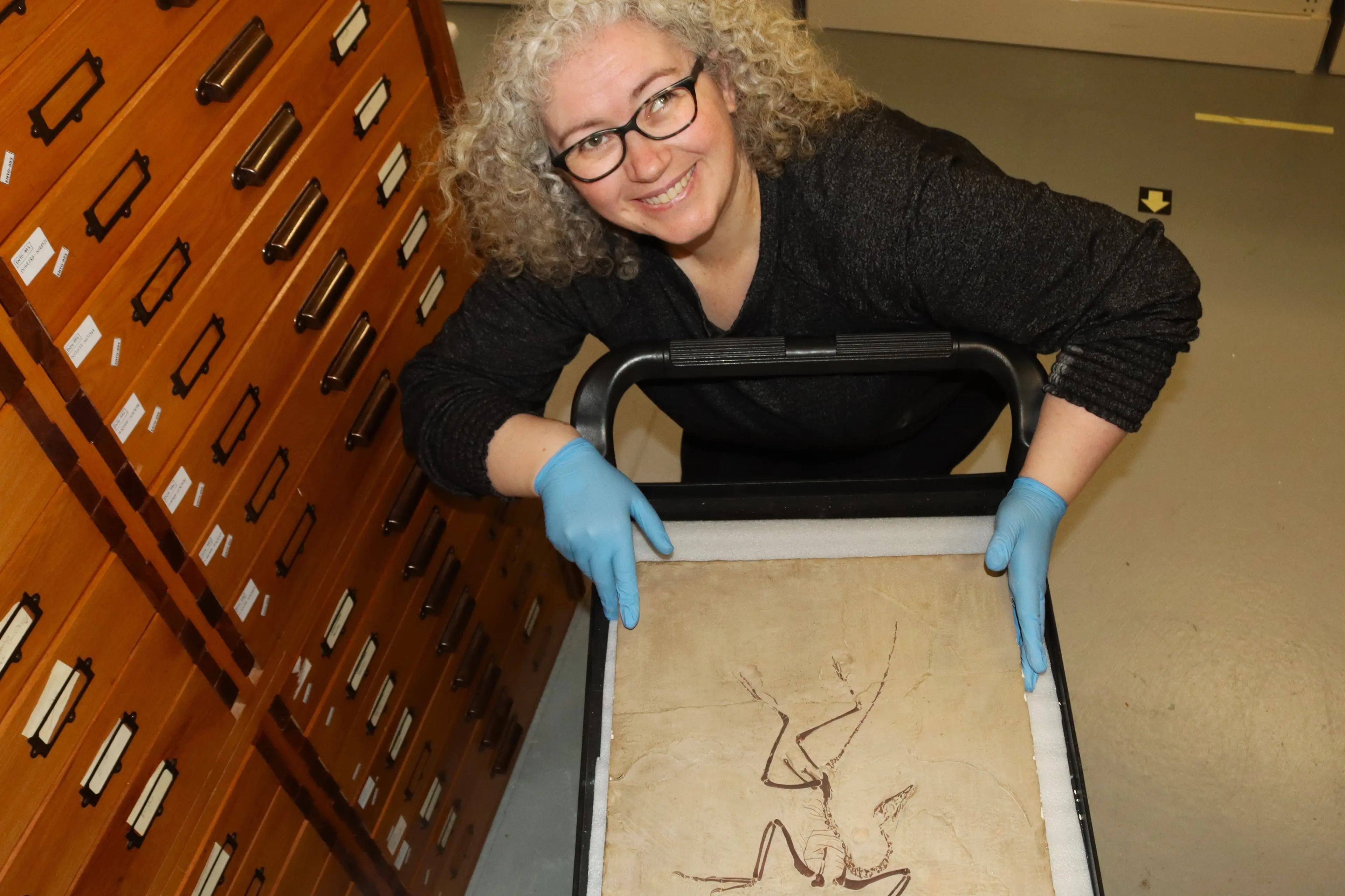
Visitors to Dunedin Airport from about September 20 will be able to discover the cast of an archaeopteryx.
The cast was first made in the early 1800s from a 150-million-year-old fossil, within the Late Jurassic epoch, discovered in Solnhofen, Germany.
Tūhura Otago Museum natural science collection manager Cody Phillips said seeing a cast of an archaeopteryx when she was young had inspired her lifelong passion for palaeontology.
“This species is the one that made me go ‘oh my goodness, science!’ and made me really care about evolution in a way I hadn’t before,’’ Mrs Phillips said.
Her early interest led her to complete a “mixed bag” degree at the University of Otago that included zoology, evolution and ecology.
She also studied anatomy, motivated by thinking how an archaeopteryx had similarities to humans, the bones of the arms and legs resembling human skeletons.
“That is what I used to do when I was a kid … put myself in the position and go ‘I could be the dinosaur’.”
A cast of a compsognathus fossil, also discovered in Solnhofen, will be on display at Tūhura Otago Museum.
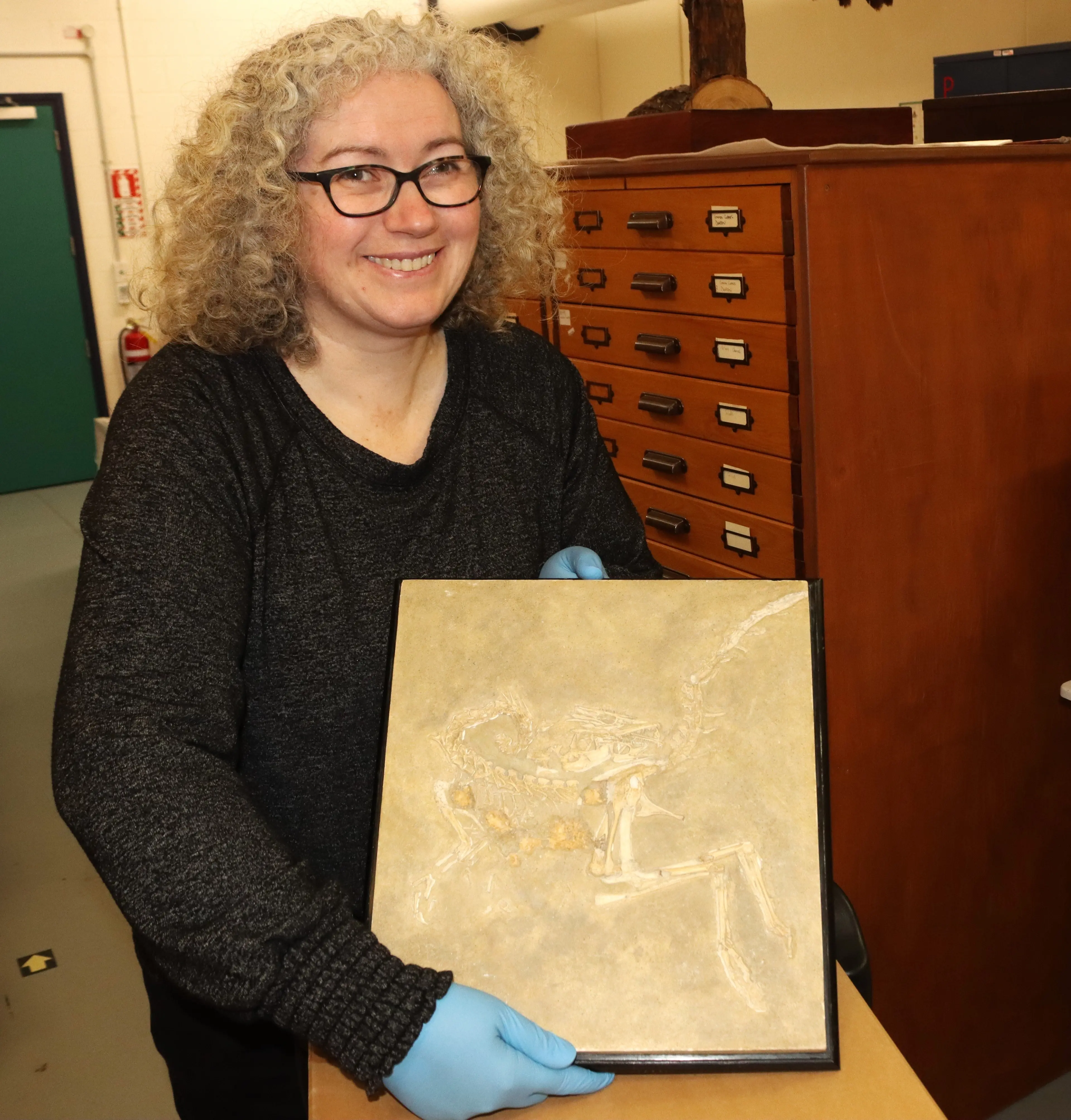
Compsognathus was a small carnivore measuring about 1m in length, from the Late Jurassic Period.
“This is a little reptile … not one that you would see wings on.
“You can see the bones in the legs, it’s fantastic,’’ Mrs Phillips said.
Another display at the museum will showcase a fossil vertebra discovered by pioneering New Zealand palaeontologist Joan Wiffen.
For more than 150 years, scientists had searched the country for evidence of dinosaurs without success.
Then in 1975, while still an amateur fossil hunter, Dr Wiffen discovered the tail vertebra in the Mangahouanga Stream in Hawke’s Bay.
This was later confirmed by dinosaur expert Dr Ralph Molnar to be the first non-avian dinosaur bone formally identified in New Zealand.
The fossil proved dinosaurs roamed the country between 70 million and 85 million years ago.
A reconstruction of what this dinosaur may have looked like will be shown next to a display of the vertebra cast.
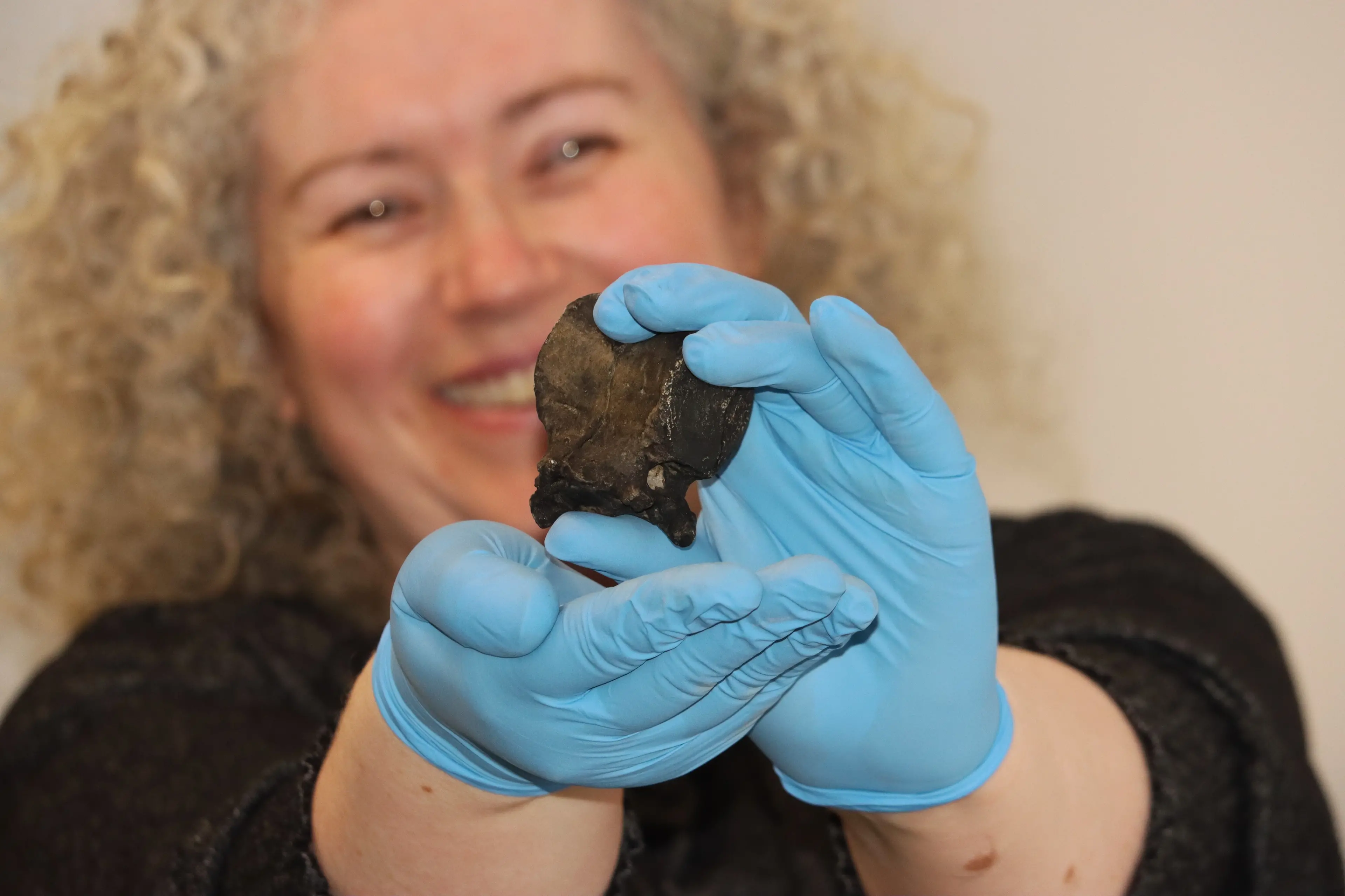
Mrs Phillips said she was thrilled to handle the exact replica of the bone discovered by the self-taught scientist, who did not formally study palaeontology at a university, instead simply attending geology night classes.
“I love that it’s an amateur that did something amazing.’’
The displays are a collaboration between Tūhura Otago Museum’s natural science team and the University of Otago’s Geology Department.
“We are all excited to share the knowledge.”
She hoped the exhibition and displays would encourage a new generation of citizen scientists to pursue their own prehistoric discoveries.
“All you have to do is bring your excitement and you could potentially do amazing things and become part of history.”