

So the Accident Compensation Corporation has teamed up with Water Safety New Zealand and is urging holiday-makers to stop and take a moment to consider the risks before hitting the water this summer.
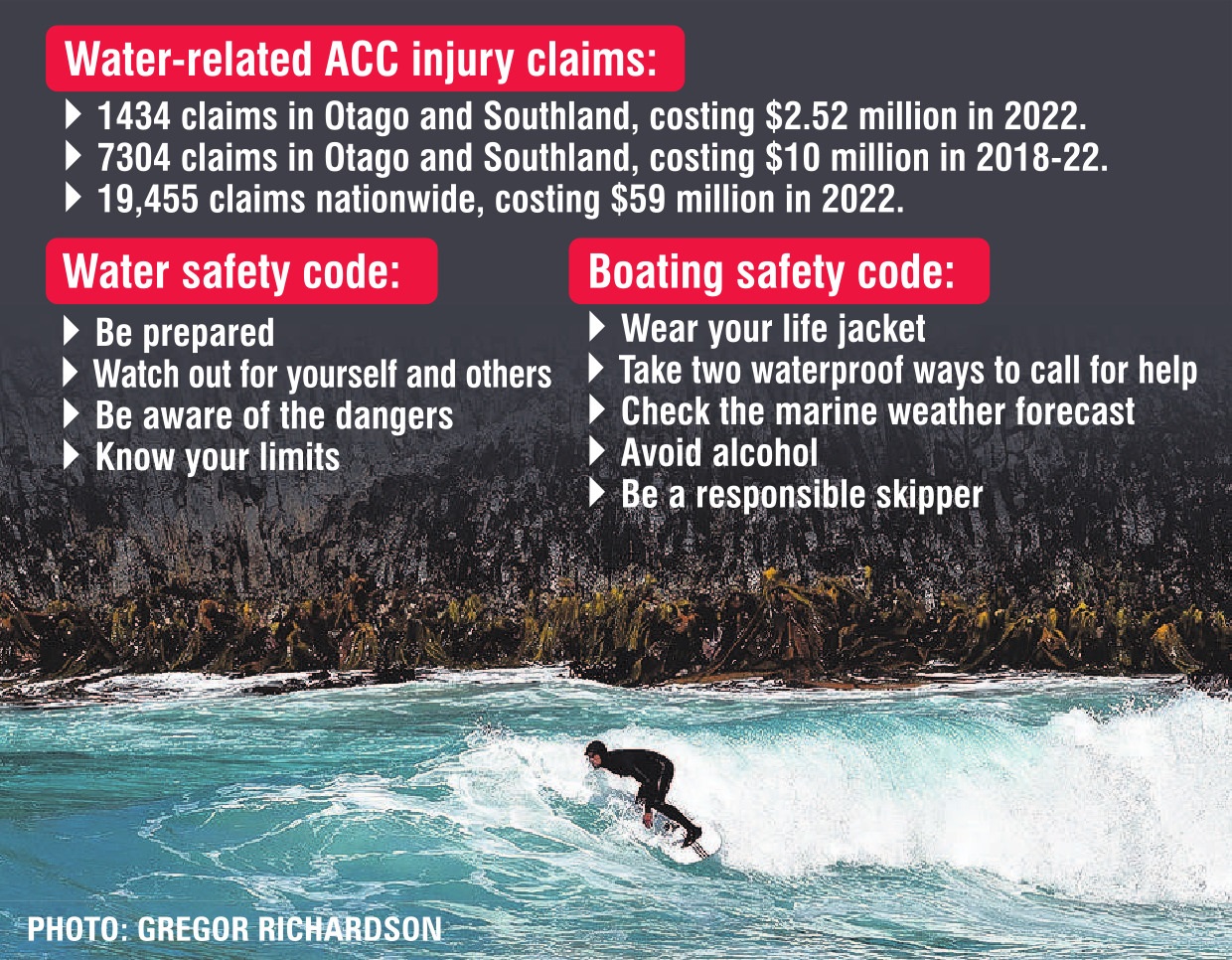
In 2022, ACC accepted 1160 water-related injury claims in Otago — from people getting hurt while swimming, fishing, surfing, water-skiing or boating.
About $1.97 million was spent to help people recover, the highest cost the region has recorded over the past five years.
In Southland, ACC accepted 274 water-related injury claims last year, costing $550,000.
And nationwide, ACC accepted 19,455 water-related injury claims at a cost of $59m to help people recover.
This was the highest number of water-related injuries since 2019 and the highest cost in the past five years.
ACC injury prevention programme lead James Whitaker laid down a challenge to all New Zealanders.
"Think about the risks relating to the activity you’re about to do.
"Think about the best ways to avoid those risks, do things safely, and you can keep doing what you love."
He said it was also timely to remind people about the high risk of death surrounding water.
WSNZ projections show the nation is expected to experience another devastating year for preventable drownings.
Last year, New Zealand recorded its worst drowning year in a decade, 94 people losing their lives.
Predictive modelling has forecast 95 lives will be lost to drowning in 2023.
WSNZ chief executive Daniel Gerrard said all New Zealanders must remain vigilant and committed to reducing these numbers over the summer period.
"A drowning is a devastating event for any whānau and community.
"These incidents are preventable if you stop and take time to assess the risks."
Mr Gerrard said most people underestimated the risks and overestimated their ability.
He said adults needed to ensure their children were safe at all times because the vast majority of children who drowned were alone, unsupervised or in the care of other children at the time.
"Collectively, we all have to make better decisions around water this summer."


