

PHOTO
Some Opposition politicians have been infuriated by the National Party attempting to make the election campaign entirely about tax.
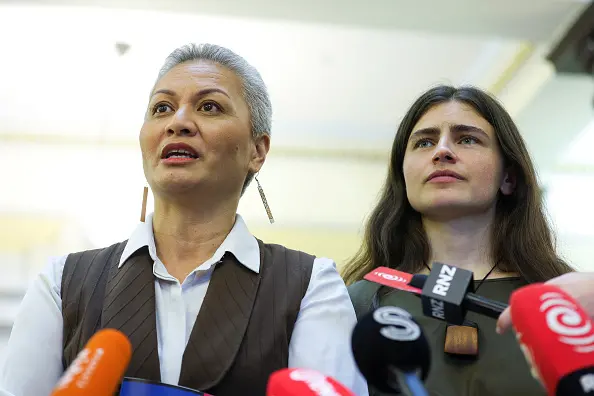
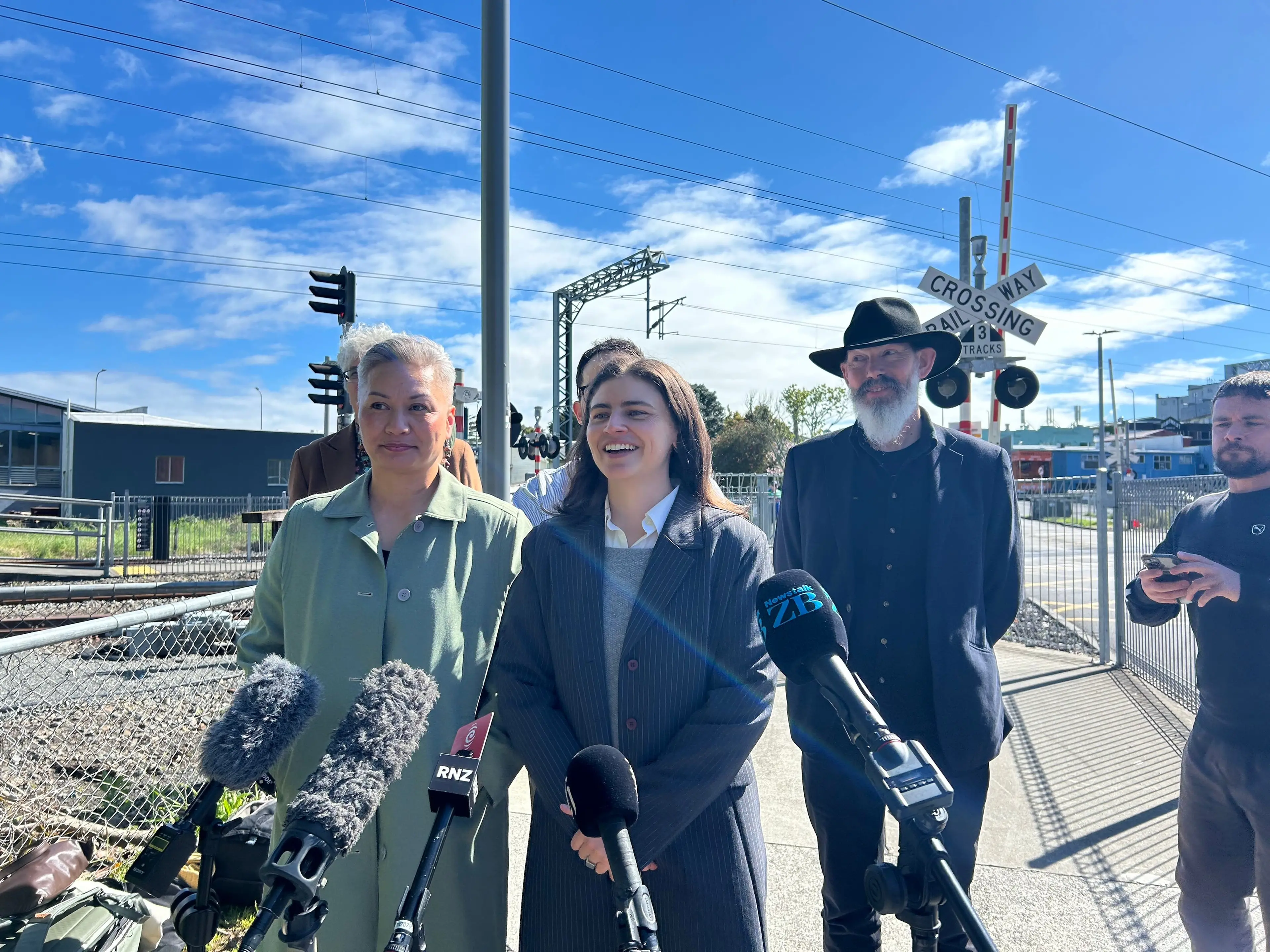
Green Party co-leader Chloe Swarbrick shares their discontent, but the wellspring of her frustration is not the topic, rather it is the direction of the debate — or, rather, the lack of one.
‘‘If only we were to have a meaningful substantive debate, let alone discussion about taxation in this country, but that's not what the National Party actually wants,’’ Ms Swarbrick lamented.
‘‘They want people to hear the word tax, be worried about it, and then not engage any further. But we know that right now the tax system says those at the top pay half the effective tax rate of the average hard-working New Zealander.
‘‘So multi, multi-multimillionaires and billionaires are paying 9c on every dollar in tax that they earn, whereas the average hard-working New Zealander, our nurses, our teachers, our firefighters, hairdressers, every average hard-working New Zealander is paying on average 22c in every dollar. That's not only fundamentally unfair, that's robbing us of the investment necessary to fix our crumbling infrastructure, to staff our emergency departments presently in crisis, to help to resource our transition with regard to climate adaptation.’’
National likes to paint the Greens as a party dedicated to finding new taxes to implement — which is true, to a degree.
The Greens do indeed have big ideas about tax which, if implemented, would equate to a wholescale revision of how the tax system works.
————————
Key policies
- Work toward a zero-emissions economy, decarbonise the economy, put a price on agricultural emissions.
- Revive passenger rail between cities.
- Set up energy and supermarket SOEs.
- Put the Treaty of Waitangi at the heart of everything the government does.
- Universal income for tertiary students.
————————
At the lower end, the Greens would introduce a tax-free threshold and reduce tax rates for low and middle-income earners, while also increasing the top rate of income tax. The party’s calculations are that more than 90% of New Zealanders would pay less tax, the shortfall being made up by introducing what it calls a ‘‘super-rich tax’’ of 2.5% on people with a net wealth over $10 million.
For some that is the politics of envy; the Greens argue it ensures ‘‘multi-millionaires pay their fair share’’, funds which Ms Swarbrick’s fellow co-leader, Marama Davidson, is eager to redirect to other areas such as child poverty reduction.
‘‘Tax is a key plank of it. We need to redistribute wealth.
‘‘The Child Poverty Action Group are asking political parties to commit to raising income levels, especially incomes for the lowest household income earners. Currently we give support to working parents in paid employment, but those supports miss out children whose families are not in paid employment or not enough paid employment. So our tax policy makes sure the super-rich and mega-corporates pay their fair share, and will give back to 96% of the population a tax cut, but especially those families living in material hardship and poverty.’’
While the Greens have a range of policies aimed at poverty and cost-of-living concerns, their flagship initiatives in these areas are plans for the state to become an active player in the grocery and energy sectors.
The party hopes to establish ‘‘KiwiMart’’, a publicly-owned supermarket chain, by requiring at least 120 stores, as well as distribution centres, to be surrendered — for a fair price — by the duopoly controlling the grocery sector. That new competitor in the market would operate with a mandate to prioritise affordability.
‘‘We're looking at, I think, it's between 10% to 14%, whereas the average in other jurisdictions is between 1% and 2%. So the reason that those margins are able to be sustained is because of the way that duopolies are, monopolies are able to exert market power.
‘‘Everybody agrees we need competition in order to drive down prices. Those are economic dynamics. So we are providing that competition. That's the basic point.’’
Likewise, in the energy sector, the Greens want to establish ‘‘KiwiPower’’, a state-owned entity which would control access to firming — generation which covers shortfalls on the grid due to things like dry weather-affected power derived from hydro dams. It would also invest in new renewable energy storage, the aim being to keep power prices down.
Ms Davidson said ‘‘the stranglehold that the big power companies are holding over households is that they can get away with charging massive prices, because they are trying to account for the dry year’’.
‘‘KiwiPower is about building, creating a mandate, a government-driven mandate, to build the local renewable energy, generate the local renewable energy, so that we can keep the prices low, and so that we don't have to go into chaos if Trump decides to bomb Iran, that we have got our own local resilience for power.’’
One of those energy resilience options would be increased use of solar power, something the Greens have advocated for decades. Both Labour and National have also recently released solar policies, and another frustration for Ms Swarbrick this parliamentary term was that Prime Minister Christopher Luxon repeatedly turned down her offer that the Greens would back National’s solar plan if the party chose to introduce it in Parliament.
‘‘Are we willing to grapple with those things? This is where I'd actually encourage all commentators and economists to the table, because they have a responsibility to own up to and sound the alarm on the reality of the issues that we're facing as a country, and to try and help to prompt politicians to be honest about what's necessary to confront them,’’ she said.
‘‘We're actually talking about confronting those issues and putting forward a solar plan to actually achieve them, as opposed to just waving around this big tax-fear-mongering campaign filled with AI slop and utter nonsense. Then I think we'd actually have a meaningful political debate on our hands, but we don't right now.’’
————————
The Greens on:
- New Dunedin hospital: ‘‘It's about understanding the specific diagnostic and treatment needs of that hospital, what they need to provide according to the community, and then investing in there.’’ (Marama Davidson)
- Bed taxes: ‘‘Very clearly, local government does not have the resources necessary to do what they are mandated to do under current legislation . . . the bed levy is a way to raise revenue on the basis that it only hits visitors, so it's always felt that the fairest possible option.’’ (Chloe Swarbrick)
- AI data centres: ‘‘If there is a way, it needs to be carefully thought through with adequate guardrails, ensuring that the principles of environmental protection and sustainability, community voice and power are held up. That's why at the least there needs to be at least a one-year pause on AI data centres.’’ (Marama Davidson).
- The proposed Bendigo mine: ‘‘We're looking at an absolute ban on mining, full stop . . . this government has decided to sideline community, to sideline climate, to sideline nature and to sideline the future of this country all for a short-term sugar hit.’’ (Chloe Swarbrick)
————————
This has been a tough three years for the Greens, who have lost MPs to resignations and a sudden death, and also had to support Ms Davidson through a breast cancer diagnosis and treatment.
Despite such turmoil, and being the repeated target of barbs from the government benches, the party has recently enjoyed record numbers in opinion polls and was looking forward to the election with anticipation Ms Davidson said.
‘‘We're forged in fire. I don't think, if you had presented a drama script for what we faced throughout the first, oh, easily year and a bit, and maybe more, no one would have believed you,’’ she said.
‘‘We have been being able to stay focused on our issues despite all of that, uphold our values and our political positions despite all of that, and now coming through where we are as a party, brave enough to take on corporate interests, putting out the solutions long before any other political parties.
‘‘We're continuing to put out our pathways, our solutions, stand by our values and our political positions with consistency.’’