
PHOTO
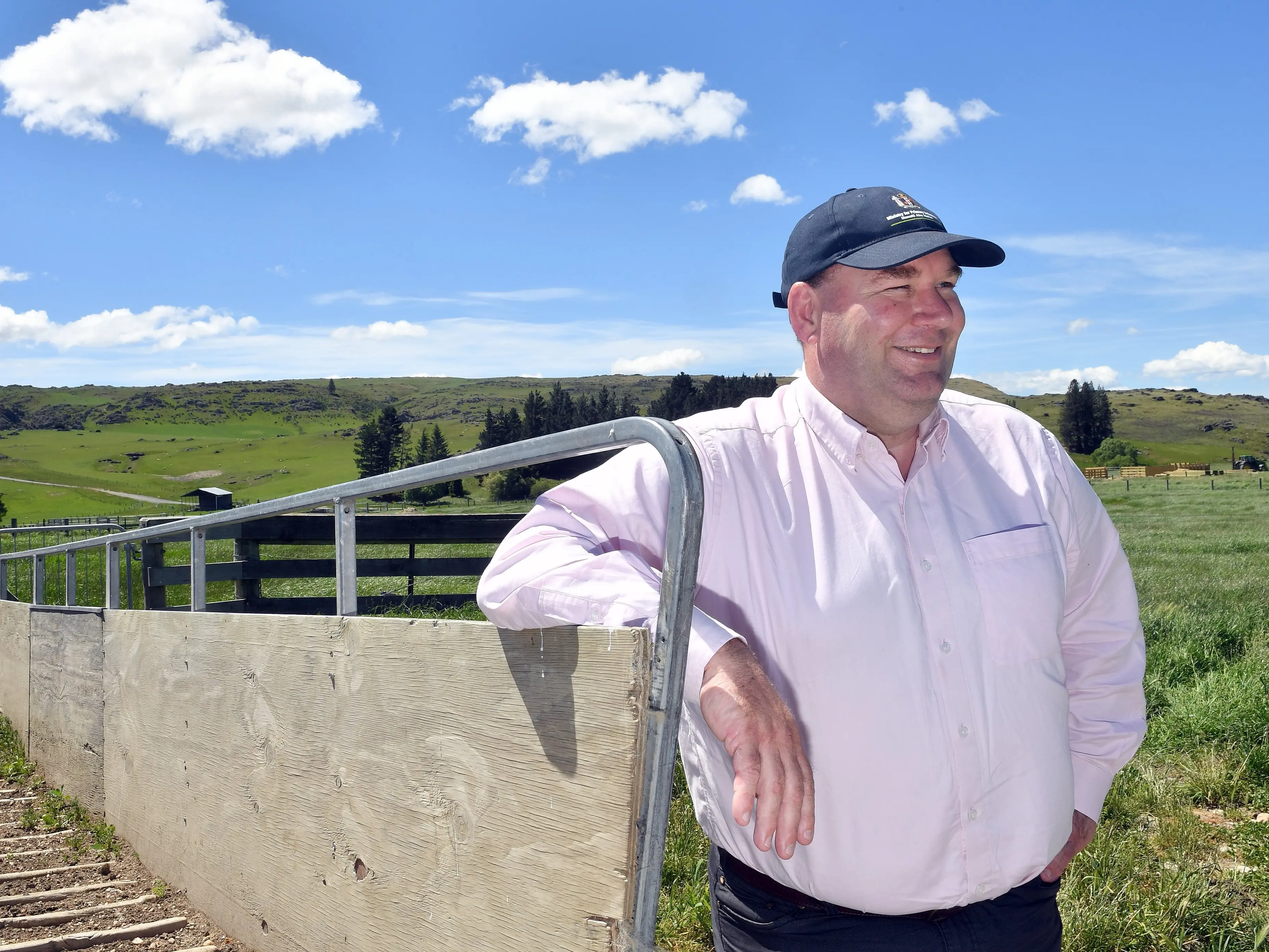
When Andrew Hoggard entered Parliament via Act New Zealand’s party list he was not unfamiliar with his new surrounds: the former Federated Farmers president had been to Wellington many a time to lobby ministers.
However, the tables were rapidly turned when he was named minister for biosecurity and for food safety, and associate minister of agriculture and of the environment: the lobbier became the lobbied.
"I knew all the people, well, most of the people within the bureaucracy," Mr Hoggard said.
"I had a good working relationship with all of them, so it wasn’t like I was meeting a whole bunch of new people for the first time. They knew me, I knew them, so that definitely helped.
"I obviously had quite a deep knowledge of a lot of the policy issues and what the various sides of the argument were around them, so that was, it wasn’t like I was needing to learn too many new things.
"What I did need to learn was how Parliament works and the written rules and the unwritten rules of how things happen in that place, so that was where the learning needed to occur. There’s a process that has to be followed."
It also helped that Mr Hoggard remains a hands-on farmer.
While he had had to take on contract milkers and a farm manager, he still gets out on the land each weekend that his political schedule allows.
"At the moment, every weekend, I’ll go and do some AI in the cow shed; that’s artificial insemination, not artificial intelligence," he said, laughing.
"You can’t get more hands-on with your portfolio than putting a glove on and shoving it up there."
Act has assiduously courted the farmer vote for years, and landing the well-connected Mr Hoggard for its party list played its part in keeping its already strong country vote in 2023 and boosting it in rural electorates.
However, it is one thing promising to end farmers’ woes and another to actually deliver on those promises.
"In terms of my portfolios, the big part of our policy push pre-election was on resource management change and all the associated farming rules around that," Mr Hoggard said.
"I think that’ll be the most important thing that we do in this term of government is getting a much better system in place that not only respects property rights but stops saying no to everyone, doing everything."
A bugbear for Mr Hoggard, from personal experience, is the cost of renewing a consent. He gives an example from his former Manawatu farm, where he wanted to make some upgrades.
"We had to go through a consent renewal then, but our old consent actually prohibited us from doing what was considered best practice. We wanted to do best practice, and so to do that we actually had to rip up the old consent, which still had 10 years on it, and get a new one."
That process, in 2008, was fairly straightforward and cost about $2000, he said — but a recent Federated Farmers survey found that a new consent cost, on average, $40,000.
"It’s no longer a situation where the farmer can just talk with the council about what new rules or what new improvements do you need me to make to the system, and then go about and do those," Mr Hoggard said.
"It now involves a whole bunch of consultants, ecologists and lawyers and all the rest of it, so definitely needs to be changed, and I think that’s going to be massively important that we get that through. "
While that has been high profile, Mr Hoggard also takes quiet satisfaction from more low level work, especially in his food safety portfolio and concerning the reduction of red tape which he believes will lower both the cost of farming and the cost of food.
"It’s taken up far more time than I actually expected it would, trying to reduce some of the regulatory oversight without reducing the safety as it were. What I’ve seen is if you’ve got one effective control mechanism, you don’t need half a dozen control mechanisms."
One notable feature of this government is the number of farmers in its rank, and their evident collegiality. In a few months’ time, however, all three coalition parties will be scrapping over the same rural vote.
"I think everyone can sort of have a ‘what happens on the field, stays on the field’ sort of attitude," Mr Hoggard said.
"Generally, I’ll be telling farmers, look, if you believe in these policies, if you like this, you want to see a more harder line taken on X, Y or Z, then give us your party vote, please. We’re not contesting all of these rural seats, so keep voting for Miles (Anderson, National, Waitaki), and Mike (Butterick, National, Wairarapa) and Suze (Redmayne, National, Rangitīkei), but please give us your party vote, because then not only will you get that rural MP representing you locally, but you get a stronger Act party which really stands up for rural New Zealand."