PHOTO
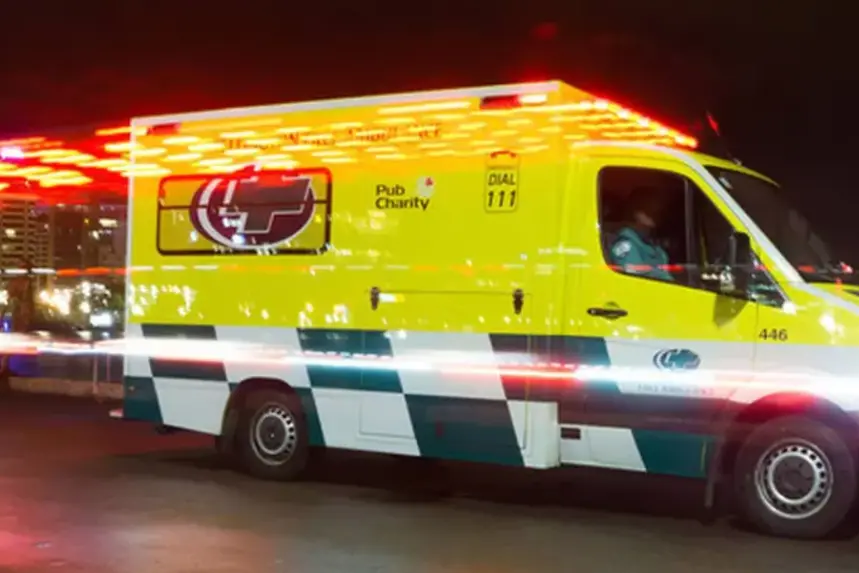
As Geoffrey Hartley lay on a shop floor complaining of severe chest pain, an ambulance clinical adviser told him to make his own way to hospital.
Hours later, the 79-year-old was dead.
When Hartley collapsed in the Wellington store, a shop assistant called 111 and reported he was lying on the floor with froth around his mouth.
The assistant was later asked to pass the phone to Hartley, who told a Wellington Free Ambulance (WFA) clinical paramedic adviser he was in "severe pain" and that his chest was "very sore".
The adviser told Hartley to make his own way to a medical centre or hospital, adding that the shop assistant should call police if Hartley didn't leave the store.
Store staff then helped Hartley into a taxi bound for Wellington Hospital. But he never arrived. Instead, he asked to be dropped at a shopping mall.
That afternoon, a support worker carrying out a welfare check found Hartley slumped on the floor of his Wellington flat. He was pronounced dead at the scene.
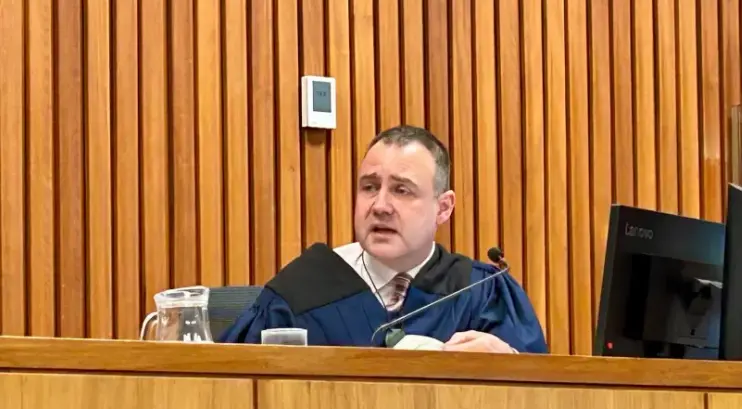
Coroner Ian Telford has found Hartley died from sepsis due to bronchopneumonia caused by influenza A.
But Hartley's family believe his death was preventable, saying that had paramedics attended on May 23 in 2023, Hartley "may still be with us today".
In findings released on Wednesday, the coroner described the case as challenging, requiring a "nuanced assessment", but said it was not a case where WFA simply failed to dispatch an ambulance.
"Although the evidence supports the conclusion that the dispatch of an ambulance to Mr Hartley on the material occasion may have prevented his death, that conclusion must be considered in its proper context," the findings said.
That context included a man with serious mental health issues who repeatedly called emergency services, including ambulance, and displayed aggressive and anti-social behaviour towards call-staff and paramedics, particularly women.
The findings said Hartley's needs were longstanding, exceptionally complex and multifaceted, with a mental health background that included schizophrenia, bipolar disorder, personality disorder, anxiety, depression and probable autism.
"Nothing in these findings should be understood as a criticism of Mr Hartley's character. Rather, his behaviour and presentations were manifestations of complex mental health conditions and, in the latter part of his life, the emerging effects of dementia," the coroner wrote.
According to the findings, WFA weren't the only ones who struggled to deal with Hartley.
He had been trespassed from Wellington Hospital, served with an eviction notice on his flat, and the month before his death was charged with misusing a telephone after multiple warnings from police about the inappropriate number of calls he made to emergency services.
On several occasions he called mental health and addiction services more than 100 times in a single night.
Two days before his death, Hartley had walked out of his flat and lay on the footpath. A member of the public had called an ambulance, but when paramedics arrived, Hartley stood up by himself and returned to his flat when asked.
According to the findings, WFA received a high number of emergency calls from members of the public, concerned after they had found Hartley apparently collapsed on the street.
Hartley called WFA almost daily, for non-urgent matters or requests that did not require an ambulance.
He made sexually explicit comments to female paramedics over the phone and in person, the findings said.
More recently, he had begun writing multiple sexually explicit letters addressed to female paramedics, and when paramedics attended he had threatened them with knives.
In response, the service had frequently offered to pay for taxis for Hartley to attend the hospital or medical centre for assessment.
But he would often leave before being triaged or assessed, only to call 111 again.
At the time of his death, the service was triaging Hartley's calls. If an ambulance was dispatched to Hartley's flat, the preference was to send male-only crews, or at least one male crew member.
An ambulance was dispatched for serious calls, but when the matter was deemed less serious, an ambulance would be dispatched in 30 minutes, if possible.
If an ambulance was not deemed necessary, the service would text him directly.
"Geoffrey, we are not sending you an ambulance as we are not the best agency to provide you care. You need to hang up and contact your GP or ED," the text said.
Coroner Telford said he accepted WFA was right to develop a plan that assisted staff to manage the difficult combination of clinical, operational and safety considerations "they encountered on an almost daily basis".
But WFA also acknowledged that its longstanding experience of dealing with Hartley influenced its interpretation of his symptoms.
It also agreed that on the day of his death, when Hartley had reported chest pain - not a symptom he had previously reported - it should have prompted a different response.
The service had outlined in considerable detail the governance, clinical oversight and operational changes implemented since Hartley's death to reduce the risk of a similar occurrence, the findings said.
This included a new internal management system providing oversight of all plans.
A new role had been created to deal with complex patients, a governance group had been set up to review and approve patient plans as well as escalating approval of complex care plans to the medical directorate or clinical leadership group.
"While these measures cannot alter the outcome for Mr Hartley or his family, they provide reassurance that the circumstances giving rise to this tragedy have been carefully examined and that meaningful steps have been taken to minimise the likelihood of a similar event occurring in the future."
Given that, the coroner said there was no need to make any further recommendations.
Coroner Telford also recommended Hato Hone St John receive a copy of his findings. Acknowledging the ambulance service had no involvement in or responsibility for Hartley, the coroner said any lessons arising from Hartley's death may assist the service, given it undertook comparable functions.
In a statement provided to NZME, WFA said: "Wellington Free Ambulance extends our sincere and deepest condolences to Mr Hartley's whānau for their loss.
"It acknowledges and accepts the coroner's findings and recommendations in full.
"Following this incident, as noted in the report and acknowledged by the coroner, Wellington Free Ambulance has made a number of changes to strengthen our systems and processes.
"Wellington Free Ambulance remains committed to continuous improvement and making changes that support the safety of our patients, communities and our people".