
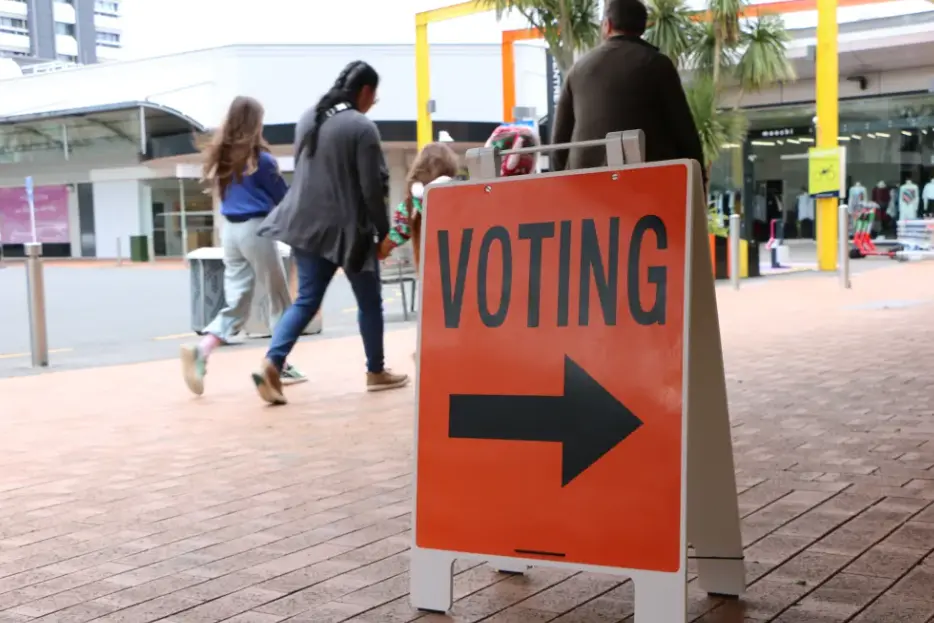
PHOTO
The Electoral Commission has launched its enrolment campaign ahead of the November election - and with it, a hefty serving of the latest stats.
RNZ has pulled some of them together in an easy-to-digest list:
Timeline
October 4: The cut-off date for being included on the printed roll. Voting is easiest if you are enrolled before this date, and it also ensures you will get an EasyVote card. This follows the dissolution of Parliament set down for October 1.
October 25: The cut-off date for enrolments. Unlike previous years, voters must be enrolled before this date or their vote will be thrown out.
October 26: The day advance voting begins.
November 7: Election day. Voting closes at 7pm. Political advertising ends and signs and hoardings must be taken down. Adverts posted to social media can remain there if they were posted before this date, with some provisos.
Facts and figures
About 3.6 million: The estimated number of people enrolled, about 89% of eligible voters. Electoral Commission chair Simon Moore says it's "not bad, but we don't think it's good enough". Each enrolled person will have an election pack sent to them between August 17 and 22. If you think you're enrolled and don't receive one, something's gone wrong. You can check your enrolment status at vote.nz.
About 440,000: The number of eligible people estimated to not be on the roll.
53%: The enrolment rate for people aged between 18 and 25. About 200,000 people in this age bracket are not enrolled, accounting for about 45% of the unenrolled voter base.
About 2 million: The number of emails the commission expects to also be sent out to remind people to enrol and about the new rules for when you can vote. "If you've got a second contact address, we'll use that. If you've given your email, we'll try that. If you've given a mobile number, we'll try that," chief electoral officer Karl le Quesne says.
27,000: The rough number of extra people the Electoral Commission needs to employ for the election. "That makes us the single largest employer in the country at that time by some very considerable margin," le Quesne says.
2300: Roughly how many voting places will be available.
850: Roughly how many advance voting places will be available.
460: The number of events the commission has run this year alone to encourage enrolment and boost voter numbers.
160: The number of schools that have taken part in events like the above.
10: The number of 'enrolment hubs' set up in places with high populations through September and October to encourage enrolment and make the process easy for people.
17: The number of political parties registered for the election.
700,000: The number of special votes the commission still expects to process this election.
55,000: The number of special votes the commission expects will still be disallowed. The total number of disallowed votes will be recorded and reported with the final election result, but the number of people turned away because their enrolment is incorrect or because they missed the 25 October deadline will not be.
Le Quesne says a special vote will be taken if there is uncertainty but would be discarded if it does not meet requirements. The post-election survey - which also polls non-voters - may estimate the number of people turned away.
20: The number of days the commission expects a full vote count to take. This puts the estimated date for the official results for the election at November 27.
Three: The number of days of counting the commission expects to save this election by no longer counting votes made by people enrolling on the day. However, it is expected to take the same time as the last election due to increasing enrolment numbers.
61: The total number of seats (electorate or list) a party or group of parties need to have a majority in Parliament and form a government - presuming there is no overhang.
100,000: The number of enrolled New Zealanders believed to be living overseas. Some in Australia will be able to vote at a voting place, otherwise they can lodge a special vote through the local New Zealand Embassy or download the forms online (if enrolled).
$36,000: The spending limit for electorate candidates to spend on advertising during the three-month regulated period (from August 7 to midnight November 6).
$1.503 million: The baseline spending limit for political parties, with an extra $36,000 per contested electorate for a maximum $4.059 million.
$17,000: The amount someone can spend on election-related advertising without having to register with the Electoral Commission. Groups that are not campaigning to enter Parliament can register as 'third parties' and can spend up to $424,000.
$40,000: The fine for failing to include a promoter statement on political advertising.
$179.2m: Rough cost to the Electoral Commission for running the previous 2023 election (not including the additional $1.2m cost of the 2023 Port Waikato by-election or the total $3.6m provided to parties for advertising). That is up from the $135.9m spent in 2020, which included a $36m top-up to ensure things ran smoothly despite the Covid-19 pandemic.
Three square metres: The maximum size for election signs.
100 metres: The closest you can be to a voting place while still providing free food, drink (other than water) or entertainment, unless you are an "entity that in its ordinary course of business provides free food, drink or entertainment".
-1: The number of electorates compared to the 2020 election. There are 16 general electorates in the South Island, as required under legislation. The numbers of Māori electorates across the country (seven) and general electorates in the North Island (48, last election there were 49) are adjusted automatically by the Representation Commission based on population levels.
0800 36 76 56: The freephone number for the commission, who can help check if you are enrolled.
3676: The phone number you can text your name and address to, for free, to have an enrolment form sent to you.
89: Days to go until the election (from August 10, the date this article was published).
