
PHOTO
Household greenhouse gas emissions have fallen by more than 5%, driven by the continuing fuel crisis.
Stats NZ has released data for the April to June quarter, showing that emissions across the economy fell by 2.9%, and by 5.3% for households alone.
It is the first full quarter of data to capture the effect that soaring fuel prices have had on the country's climate emissions.
"The decrease in greenhouse gas emissions over the June 2026 quarter was mainly driven by decreases in emissions from the manufacturing industry and households," environment statistics spokesperson Tehseen Islam said.
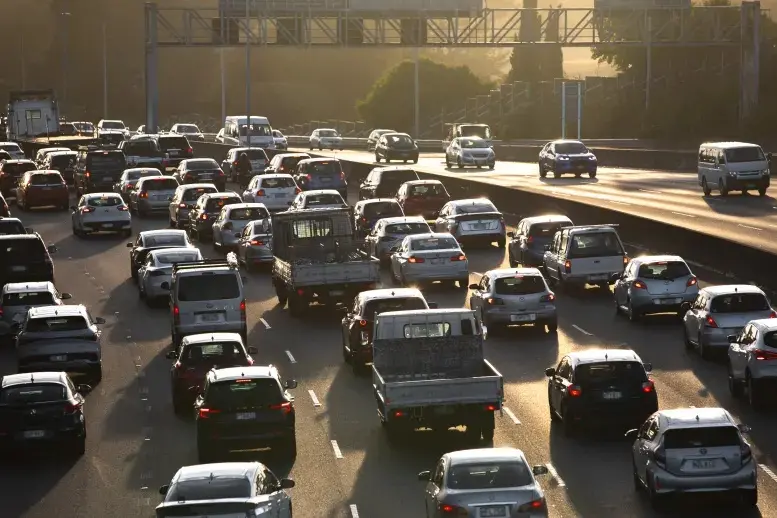
Road transport emissions were down 5.7% for households and were lower for almost all industries, in line with reduced fuel sales.
Overall, gross emissions fell by 550,000 tonnes and were now lower than they were during the first Covid lockdown.
The effects of the fuel crisis have been felt in other statistics.
Over the same time period, full electric and plug-in hybrid vehicles spiked to about 15% of all new registrations, and have hovered around that level in the months since.
The decrease in transport emissions was partially offset by increases in greenhouse gas emissions from the electricity, gas, water and waste services industry, which rose by 8.4%, Stats NZ said.
That was due to higher emissions from electricity generation and gas supply, which typically increase over winter when the proportion of renewable energy in the system falls.
The effect of the fuel crisis can be seen in the types of greenhouse gases New Zealand emitted.
Carbon dioxide - which makes up the vast majority of tailpipe emissions - fell by nearly 5% compared with the March quarter, while methane emissions - which mostly come from agriculture - have remained relatively flat.
The country's annual emissions for the year ended June 2026 also fell, by 2.9%, from 77 million tonnes (CO2-equivalent) to 75 million tonnes.
While lower transport emissions contributed to the final three months of data, most of the drop was driven by a 30.5% decrease in emissions from the electricity, gas, water and waste industry across the year.
Renewable sources accounted for 93% of New Zealand's electricity generation in the year ended June 2026, up from 85.6% the previous year.
"While the last two quarters have seen emissions from the electricity, gas, water and waste services industry increase, there was an overall decrease in emissions for the year ended June 2026," Islam said.
