
PHOTO
Green Party co-leader Marama Davidson is defending some of her candidates meeting with the Mongrel Mob, saying the party will engage with all communities.
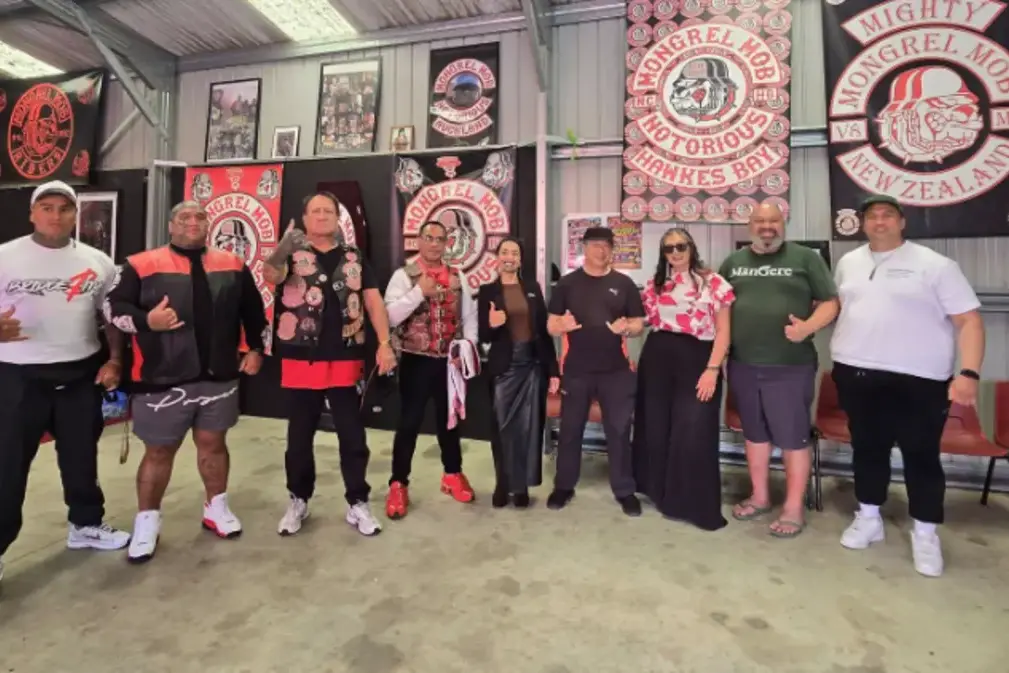
National is crying foul at a social media post from Mongrel Mob lifetime member Harry Tam, which shows the Greens' Hūhana Lyndon and Michel Mulipola, along with Oriini Kaipara and Hana-Rawhiti Maipi-Clarke from Te Pāti Māori, at a whānau, health, and wellbeing election hui.
National's justice spokesperson Paul Goldsmith said the Greens and Te Pāti Māori were "prioritising" gangs over victims.
"They profit off misery and addiction by peddling meth in our communities and they make victims of Kiwis up and down the country."
Goldsmith said National stood with victims, not the gang members who made them victims.
"I have one simple question for these candidates. Did you ask any of the Mongrel Mob members you met what they did to get patched? Because their victims know."
But Davidson said it meeting with gangs was not a new thing.
"We are unapologetic about making sure that we can engage with all communities, especially communities who are living on the margins. So we're proud, and we have done that year and year again.
"And actually, those communities are the very people who hold the solutions to being able to live good lives, so it's not a new thing, and we're not apologising for making sure that everyone has a chance to engage in democracy and has access to politicians."
Davidson said the Greens also met with victims.
"We do consistently, as we meet with people who have been harmed by the decisions of this very government, by the policy decisions to restrict housing support, with young people, we meet with the people who have been harmed by this government every single day."
Posting on Instagram, Kaipara said the kaupapa was about the health and wellbeing of the Mob community.
"Many will raise eyebrows, throw stones, and cast judgement over our visit, but the truth is, every member of a gang is a member of a whānau, a whakapapa and a part of New Zealand society."
Kaipara said being present did not mean endorsing everything.
"It means recognising that whānau do not stop being whānau because of a patch."
