PHOTO
Lawyers fighting to overturn Scott Watson’s convictions for the murder of Ben Smart and Olivia Hope say police “primed” the key witness and tainted the identification procedure for the rest of the investigation.
The lawyers are in the Supreme Court today arguing the Court of Appeal was wrong to conclude no miscarriage of justice arose from the trial judge’s decision to admit the visual identification evidence of water taxi driver Guy Wallace.
Wallace was key to the Crown’s case as the only person who identified Watson as exiting the water taxi with Smart and Hope.
Watson’s appeal focuses on the police identification process, montage pictures used to identify the key suspect and subsequent media saturation as reasons there was a miscarriage of justice and his convictions should be overturned.
Watson was found guilty of the murders in 1999 after an 11-week trial.
He was sentenced to life imprisonment and ordered to serve a minimum of 17 years. Watson, who remains behind bars, has consistently maintained his innocence.
Watson’s team are challenging a 2024 Court of Appeal decision ruling there was no miscarriage of justice arising from either the forensic evidence led at trial about the hairs located on Watson’s boat Blade, or Wallace’s identification of Watson from Montage B.
Members of the Hope, Smart and Watson families are attending the two-day hearing.
Chisnall told the court it wasn’t in dispute that the pair boarded a boat moored at Endeavour Inlet early on January 1, 1998.
They were never seen again.
The identity of the vessel and whether it was Watson’s single-masted sloop Blade – or a larger two-masted timber ketch – was contested at trial.
Wallace refused to resile from the description he initially gave police, or that the boat he dropped the man off at was a ketch.
Wallace also told police that the lone man at the bar and the man on the boat were one and the same.
Chisnall told the court that Wallace’s identification of Watson was, and is, inadmissible and was contaminated by outside influences early in the investigation.
In particular, he was critical of the methods police used to get Wallace to identify Watson, including the use of a single photograph, interviewing Wallace, and media saturation.
The court heard Wallace was shown a single photograph of Watson when police interviewed him in early January 1998.
Wallace didn’t recognise Watson, but Chisnall submitted that the use of that photo tainted any further identification.
Three days later, Chisnall said police pressured Wallace, telling him that Watson had been identified by others as the lone man at the bar and named him as Watson.
“This telegraphed to Wallace that he was the key suspect,” Chisnall said.
“In my submission, police primed Mr Wallace to identify Mr Watson, and that tainted the identification procedure from that point onwards.”
Media saturation
Chisnall also referred to media coverage which identified Watson as a suspect by mid-January 1998. This included the release of the identikit picture which Watson’s lawyers say drew a link between Watson and his boat Blade.
Such was the media saturation, Chisnall said, that in the lead-up to the deposition hearing, the Solicitor-General issued a directive to the media not to publish further details, given the importance of the case.
Chisnall also referred to cross-examination at trial, where there was evidence of witnesses adding details to their statements because of what they had seen, heard and been reminded of in the media coverage, he said.
Montage B
“The final nail in the unfairness coffin,” Chisnall submitted, “was the fact that police created an unfair and improper montage that predisposed Mr Wallace and others to select Mr Watson”.
Wallace was shown the eight-person police photographic montage, known as Montage B, in April, three and a half months after Watson was identified as a suspect.
The court heard there was a pre-trial challenge to Montage B, which showed Watson with his eyes half closed.
That challenge was dismissed, but Chisnall told the court that the judge wasn’t told Wallace had been shown a single photograph of Watson or that he had been told Watson was a suspect.
Wallace only identified Watson from that montage, and the photo differed from the description others gave of a man in the bar that night.
Watson’s lawyers say Wallace’s identification from Montage B was crucial because it tied Watson to the pair.
A picture of Montage B shown at the hearing showed Watson was the only one who had his eyes closed.
Watson’s lawyers say given the passage of time and the media involvement in the case, if the appeal is successful, a retrial isn’t appropriate.
“This case is singular in the way the media and the nation have been captured by it,” Watson’s second lawyer Kerry Cook, KC, told the court.
The hearing before Chief Justice Helen Winkelmann and Justices Ellen France, Joe Williams, Stephen Kós and Francis Cooke continues tomorrow when the Crown will respond to Watson’s arguments.
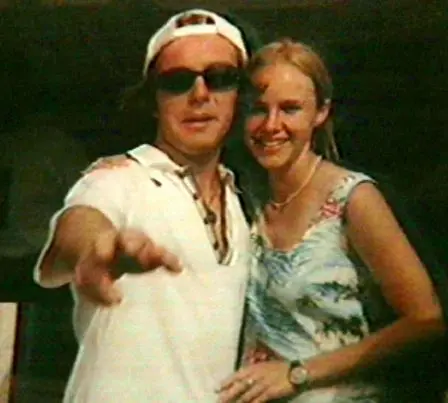
Scott Watson timeline
- January 1, 1998: Ben Smart, 21, and Olivia Hope, 17, were last seen after leaving a water taxi in Endeavour Inlet, Marlborough Sounds, with a lone man who had offered them accommodation on his yacht. Neither has been seen since; their bodies and possessions have not been found.
- 1999: A jury found Scott Watson guilty of murder after a three-month trial in the High Court at Wellington. He received life imprisonment with a 17-year minimum non-parole period.
- 2000: Watson’s first Court of Appeal challenge to the convictions was dismissed.
- 2017–2020: Watson lodged a royal prerogative of mercy application in 2017. In 2020, Governor-General Dame Patsy Reddy referred the convictions to the Court of Appeal to consider whether there may have been a miscarriage of justice.
- June 2024: The Court of Appeal heard Watson’s second appeal. His lawyers challenged Guy Wallace’s identification evidence and the handling, possible transfer or contamination of two hairs linked by DNA evidence to Hope. The Crown argued its case was cumulative and circumstantial, rather than dependent on any single witness or the hair evidence alone.
- September 2025: The Court of Appeal dismissed the appeal in a 291-page judgment, finding no miscarriage of justice and holding that the trial had been fair. It said the Crown had presented “a compelling circumstantial case” that Watson was the lone man.
- March 2026: The Supreme Court granted leave to review the reliability of Wallace’s identification evidence, while declining to hear the other proposed appeal grounds, including the challenge to the hair evidence.
- October 2026: Supreme Court hearing begins in Wellington.