
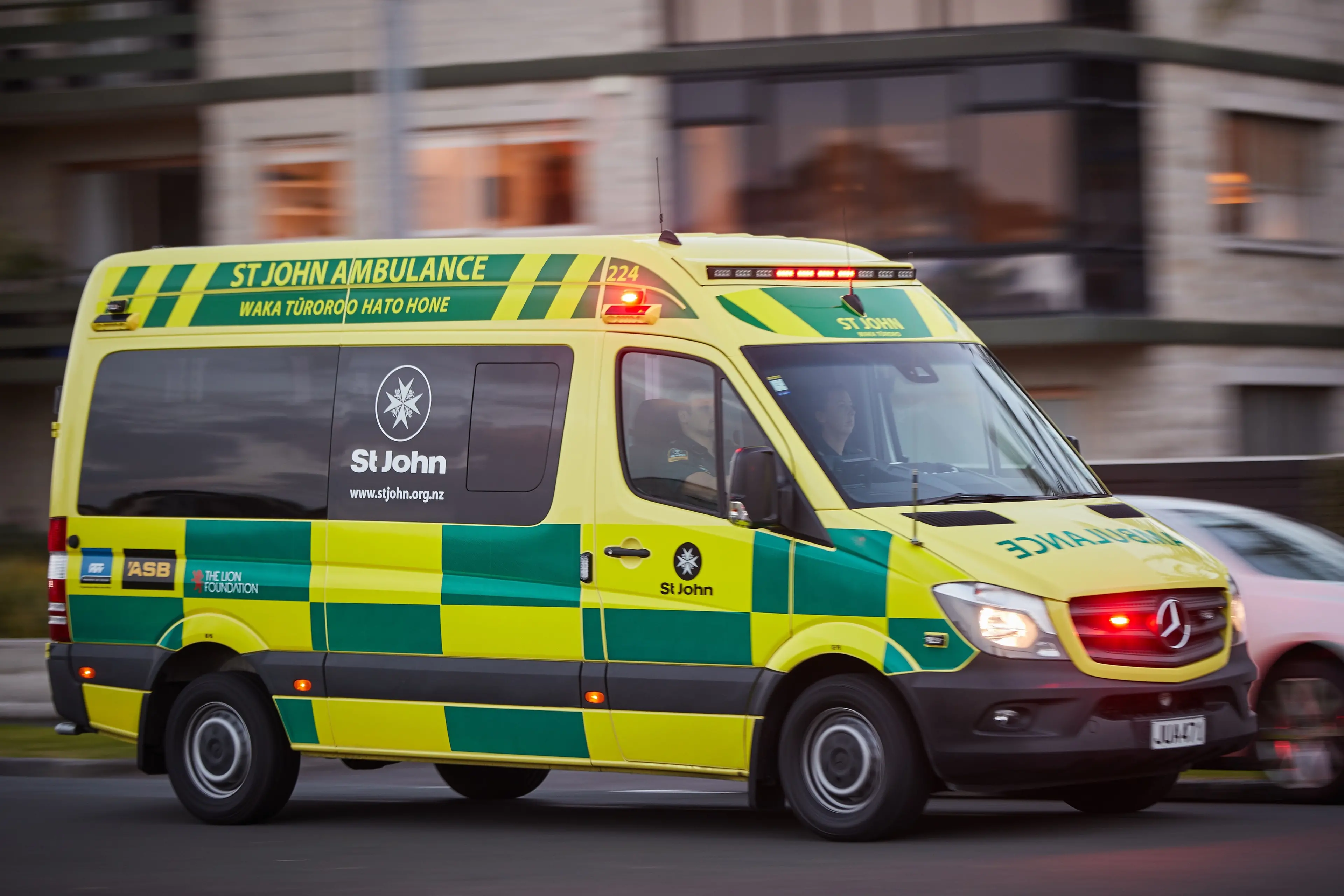
PHOTO
Hato Hone St John has activated its major incident response following its busiest single day on record.
The move comes after the ambulance service also saw a week of sustained high demand. That is expected to continue on Monday.
On Saturday, 2562 calls came into the ambulance service through 111 - the highest number received in a single day. A normal day would see around 1900 calls.
Hato Hone St John director of ambulance operations Doug Gallagher said it was the third time the daily record had been broken this week, with 2404 calls received on Monday, 3 August, and 2454 calls received on Thursday, 6 August.
Gallagher explained the ambulance service's concerns at a press conference on Sunday afternoon, as St John confirmed the major incident response.
"All three days were busier than any recorded during the Covid-19 pandemic or on traditionally high-volume dates such as New Year's Eve. At the peak, emergency call handlers were answering a call every 20 seconds," he said.
By 2pm on Sunday, the ambulance service had received 15,268 calls this week. It is set to beat the previous weekly record of 15,289 calls, which was set between 27 July and 2 August.
Before that, the busiest week on record had seen 14,984 calls. That record was set between 25 and 31 August in 2025.
"Saturday is not normally our busiest day, so this level of demand is highly unusual," Gallagher said.
"Our emergency ambulance staff are continuing to respond effectively, but the workload is not showing the signs of easing that we would normally expect over a weekend.
"With demand remaining high and Mondays typically bringing the greatest workload, we are preparing for further pressure."
Declaring a major incident and activating its Emergency Operations Centre was "an early and precautionary decision" to ensure it could keep giving effective care during a period of unprecedented demand, Gallagher said.
"We want to reassure people that emergency ambulance help remains available, and we are continuing to respond to those who need us.
"Our first priority is patient safety. Ambulance staff continue to prioritise people with life-threatening and time-critical conditions."
People with less urgent conditions may experience longer waits than usual. A person calling 111 may receive alternative support instead of an ambulance response if deemed appropriate, St John said in a statement to media.
"These are clinically led decisions based on the individual patient's condition and needs. They are about providing the right care, at the right time and in the right place," Gallagher added.
According to Hato Hone St John, the major incident response gives the ambulance service a clear national structure for coordinating decisions and resources at pace. The Emergency Operations Centre brings teams together to maintain a detailed national view of demand and ambulance availability.
The major incident arrangements will be reviewed regularly against current demand, ambulance availability and wider health-system conditions.
