
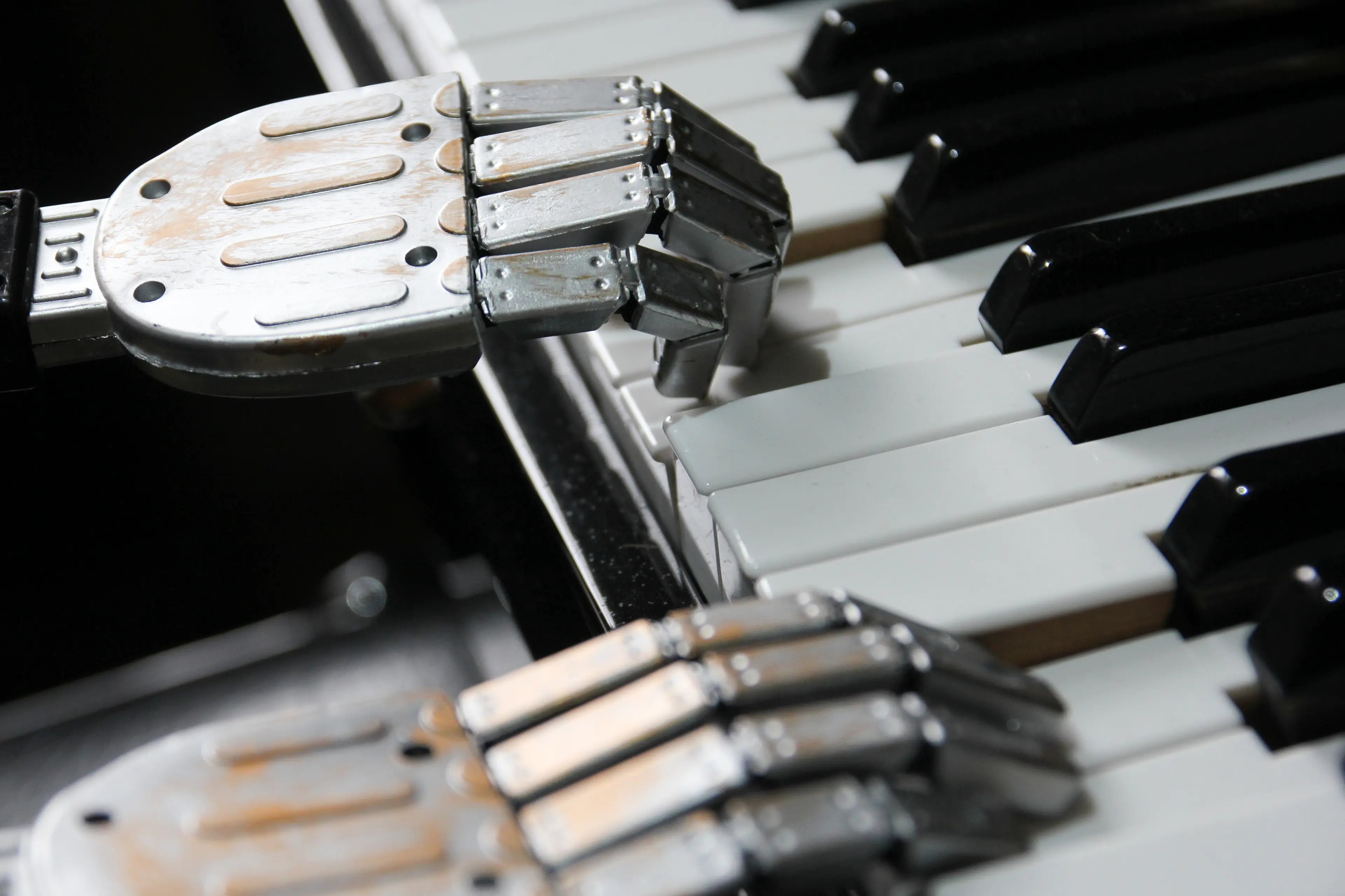
PHOTO
We are rapidly learning to live with AI. Or at least, we find ourselves living with it, whether we are learning to or not.
It pops up in our email applications, when we press reply, offering us supposed alternative ways of responding to emails (“Thanks, will do” – “Tell me more” – “Sorry to hear”).
At first, I was astounded. “Someone is reading my emails,’’ I told my students. I want to compose my own discourse, thanks very much. It’s what we’re here for.
Fancy having so little pride (or possibly, confidence) in your ability to say what you mean – or having so little idea what you mean – that you are grateful for such short-cuts.
Fancy fobbing off anyone with so little of your mind or heart. Fancy convincing yourself that you’ve better things to do than to think, and imagine and treat other people with dignity.
I’d like to know what those better things are.
AI now also pops up, uninvited, when we do a Google search, using precious real-world resources like water and energy to provide amazing answers to “questions” that are frequently fatuous – and that we have quickly accustomed ourselves to asking just because we can.
As we learn about AI, if we do – rather than just holding our noses and jumping in – we should quickly perceive that there are many activities in which short-cuts are unnecessary, inappropriate – or worse.
At one level, AI is just another piece of machinery, sold in order to make money, and that we should be asking ourselves whether we can, in fact, manage perfectly well without.
Take, for an offline example, something as simple as using a leaf-blower rather than, say, a rake. A leaf-blower costs more than a rake, it wastes petrol, it makes noise, it breaks down more readily, it shifts the problem rather than solving it, and raking requires strategic craft and delivers bodily exercise.
There’s no contest. But we love these things.
University lecturers are now impelled by management to use online technologies called Learning Management Systems.
Last year the brand name was Blackboard, this year it’s Brightspace. For some reason I keep calling it Blackspace.
Managing the Learning Management System is actually more onerous (and far less interesting and rewarding) than managing my subject and my students. I’m very tempted to return to assessing by pen and paper.
Why are we as a species attracted – even, fatally attracted – to doing things in costly, mechanised ways, and to taking perceived short-cuts?
These are not questions for AI but for psychologists. Or theologians.
Certainly there are realms of knowledge where we should not hesitate to use AI. If medical researchers could deploy AI to discover a cure for cancer, or engineers to make safer cars, bridges or buildings, or to send Elon Musk and his acolytes to another planet, who could object?
But it’s different, or should be, on my side of the campus.
The humanities – art, music, philosophy or literature – are not about solving problems or producing perfect answers to straightforward questions.
Hamlet solves nothing. A great novel, movie, or piece of music is not an answer to anything.
We pursue these disciplines, and the cultural artifacts and bodies of discourse they study, for other reasons – reasons that themselves are difficult to express, but emerge in the pursuit.
I study the things I study – and teach the things I teach – so that my students and I, as individuals, may expand our minds and sympathies by grasping, extending and enhancing human experience; so that we may exercise our faculties of memory, thought and imagination. So that we might enter more deeply into the human condition.
We can’t do this by digital proxy.
So, I tell my own students that I don’t want perfect essays from them: there are thousands of perfect essays, and now we can get new ones at the press of a button.
What I want are their own essays: their own unique engagements with the subject of study. I have
no interest in teaching on any other terms.
I want my students to demonstrate that they have internalised a body of knowledge, that they can think for themselves, that they will be equipped by education to perpetuate and contribute to human culture.
My friend Tom, habitual devil’s advocate and who has a trained AI chatbot named Claude, put it to me – playing to my known tastes – “We’ve only got 41 symphonies by Mozart. Wouldn’t it be cool if A.I. could produce more symphonies that you couldn’t tell from Mozart’s?”
He’s right, I couldn’t tell: I love music, but not like an expert. For me, part of the point and the joy of Mozart’s symphonies is that they were written by a creature of my species, sharing my DNA and /or the imago Dei: a fallible, human genius named Mozart.
The same applies to all the products of the humanities. We are not trying to fix things, but to enhance, and find beauty and meaning, in human experience. Artificiality won’t do that.
Dr Paul Tankard is an associate Professor of English, University of Otago, and director of the Otago Centre For The Book.