
PHOTO
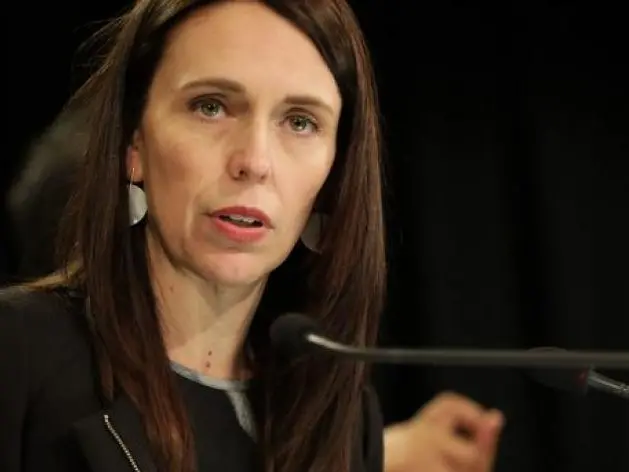
Prime Minister Jacinda Ardern played her mantra going “hard and early” for all it was worth when New Zealand went into Alert Level 4 lockdown last year.
Given the success of the Covid-19 elimination strategy and New Zealand’s subsequent Covid ride, she, her Government and this country can be thankful this policy was pursued and thankful our geographic isolation made it possible.
Level 4 was indeed “hard”, and subsequent policy on managed isolation has been firm. The practice proved somewhat different, as the “dissonance” between what the Government and Ministry of Health was saying first on actual Covid testing of MIQ residents and then on boarder-worker testing was revealed.
The Government also stubbornly refused to see the value of both mask-wearing and quick saliva testing, as an adjunct to the more reliable nasal probe. Several preventable holes in the system were only plugged after, not before, MIQ failures.
It also took too long to set up an effective contact-tracing system. The Government’s responses to the Auckland outbreaks were mixed, and we should all remain on tenterhooks for at least the next four to six months as we await community-wide vaccination.
The Wellington scare of the past week, when an infected visitor from Australia splurged on central city attractions, provided another test. Once again, the Ministry of Health was sluggish.
Where was the capacity and will to work through the night after the alarm was raised? Too many people were put at risk unnecessarily the following morning.
Where was the surge capacity to immediately set up testing stations? Testing was overwhelmed on day one. The people of Wellington had largely lost interest by the time several stations had been established.
It seems likely, too, that the current Level 2 would have been insufficient if the infected Australian had been a “spreader”. Sydney tried partial measures against the Delta variant before being forced to institute a lockdown.
New Zealand’s luck appears to have held this time. But good fortune is fickle. The Government has been cautious on bubbles with Australia and Rarotonga and reasonably quick to “pause” connections after Australian outbreaks. It, however, has been soft and late vaccinating all border workers and took many months to institute risk-based quarantining for arrivals.
It has also been soft and late on QR-code use and masks.
That is not entirely its fault. New Zealanders have been slack and complacent. Even mask use on buses, belatedly introduced under level 1, has deteriorated. QR code scanning rates are appalling. The number would be about 10 million a day if New Zealanders were using them properly. This rose to just two million at the height of the pandemic and has fallen to 400,000.
Experts for months have explained the Delta variant prompts new challenges, and sensible and considered advice on masks goes back more than a year.
The Government has been stuck in 2020 response mode. Finally, Ms Ardern announced this week that Cabinet has commissioned advice on mandatory scanning for high-risk locations and compulsory mask-wearing at Level 2 and above for such locations where social distancing was difficult.
There are various issues including enforcement, challenges for those without capable phones and complications for the hospitality industry. But compulsory mask-wearing, as well as scanning, takes place in other parts of the world, and in more prescriptive ways than those proposed. Surely, with a bit more of a compulsory push, we can do much better.
Perhaps as we learn about rampant Covid in Fiji and the community cases scattered around Australia, New Zealanders might be spurred to do better at protecting themselves, not relying so much on the Government. Why, though, did Cabinet need to commission advice on upgraded protections? Surely, the changes could have been assessed weeks if not months ago.
It and the Health Ministry have known about the dangers of the Delta variant for months.