
PHOTO

Indian Prime Minister Narendra Modi was in New Zealand for a good time, not a long time, but his 24 hours on Kiwi soil will likely resonate for years to come.
The leader of the world’s most populous nation was on a lightning trip to the southern hemisphere, and spent Friday in Australia. And that would have been that for most Indian leaders, as it has been for the last 40 years.
However the present New Zealand government has, building on the work of the previous administration, made building closer ties with India a priority, National leader and Prime Minister Christopher Luxon having made reaching a free trade agreement with India a 2023 election campaign promise.
Many people doubted the elephant of India would want to converse with the mouse of New Zealand, let alone strike such a deal, but they were proven wrong.
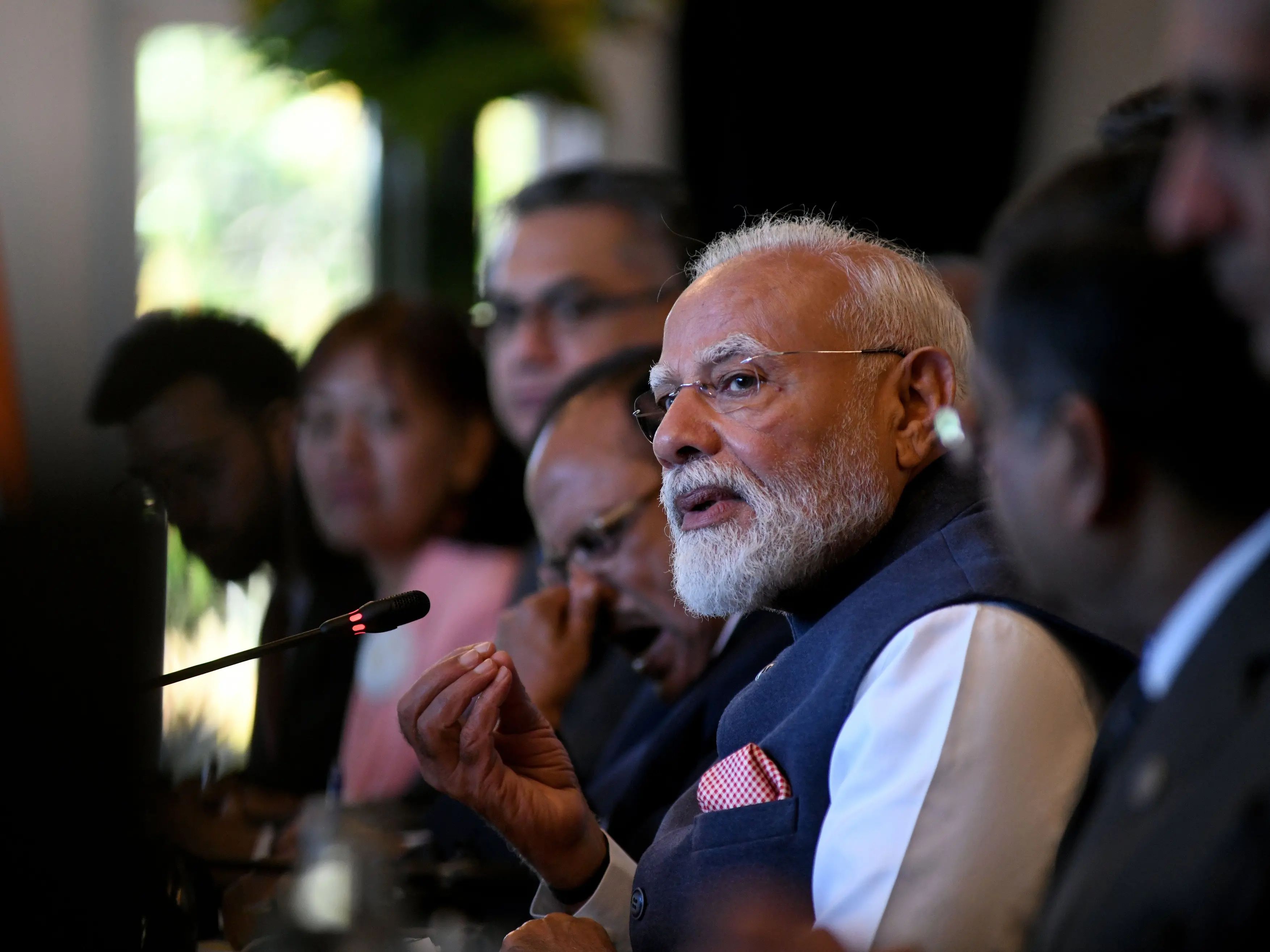
The New Zealand-India FTA was signed several months ago and Mr Modi’s visit to this country, albeit brief, was living, breathing proof that India also sees something of value in closer ties with New Zealand.
That is no small thing, on a security, economic or social level. New Zealand and India have links through a shared colonial history, and a substantial Indian community lives here and calls Aotearoa home.
The centrepiece of the visit was the signing of a ‘‘Strategic Partnership’’ with India.
Some might question whether that wording actually means anything in reality, but in the finely-tuned language of diplomacy it means rather a lot.
Put crudely, the partnership, and its related ‘‘Roadmap to 2030’’ signify that the FTA is not something to be put up a shelf to gather dust from India’s point of view — and given the power and economic imbalance in the relationship, that matters a great deal.
India is one of the world’s largest economies, and getting larger by the day.
The Roadmap’s ambitious proposal that two-way trade between the two countries will double in the next 3-1/2 years is highly aspirational, to say the least, but being so bold as to make the commitment at all will be hugely significant for New Zealand businesses should it come to pass.
For most New Zealanders the most obvious signs of the Roadmap will be on the sports field; India’s cricket team is here for an extensive tour shortly and the All Whites now have friendlies booked in against India.
Other, more distant examples of our growing closeness are military exercising and a maritime co-operation arrangement.
While the timing of Mr Modi’s visit was purely coincidental, and these agreements will have been worked out well in advance, it does New Zealand little harm to have proof positive of having a big friendly giant on its side in a week when China tested a submarine-launched missile in the Pacific.
More scientific and cultural exchanges will also be less obvious but also deeply significant.
New arrangements were signed by the leaders which covered many areas, including tourism, farm stock breeding and dairying.
Much of this territory was traversed in the FTA negotiations, so potential upgrades being considered so soon will be seen by many as encouraging.
It was interesting to see dairying on that list of topics discussed, given that India protects its own dairy sector fiercely and it was felt that in its original form the FTA had little for the biggest sector in the New Zealand economy.
Dairy’s full inclusion in the FTA still seems a distant hope, but there may well be scope for some incremental change in favour of New Zealand farmers.
Some sticking points remain, notably the FTA’s requirement that New Zealand investment in India be increased. Mr Modi twice referred to that as a ‘‘commitment’’ on Saturday, while Mr Luxon calls it a requirement to promote.
Again, diplomatic hairs can be split on the interpretation of this clause.
Everyone can agree that more money is expected to be invested into Indian business ventures by Kiwi enterprises; it is what happens of the flow of Kiwi money does not match the torrent of enthusiasm of the politicians who have negotiated the deal which remains to be resolved.
For now officials and politicians from both countries will have to be taken at their word that this will not prove to be a future sticking point. However, this is an issue for a few years down the track, and all signs so far are positive that New Zealand and India have a new, warm and likely enduring relationship.