

PHOTO
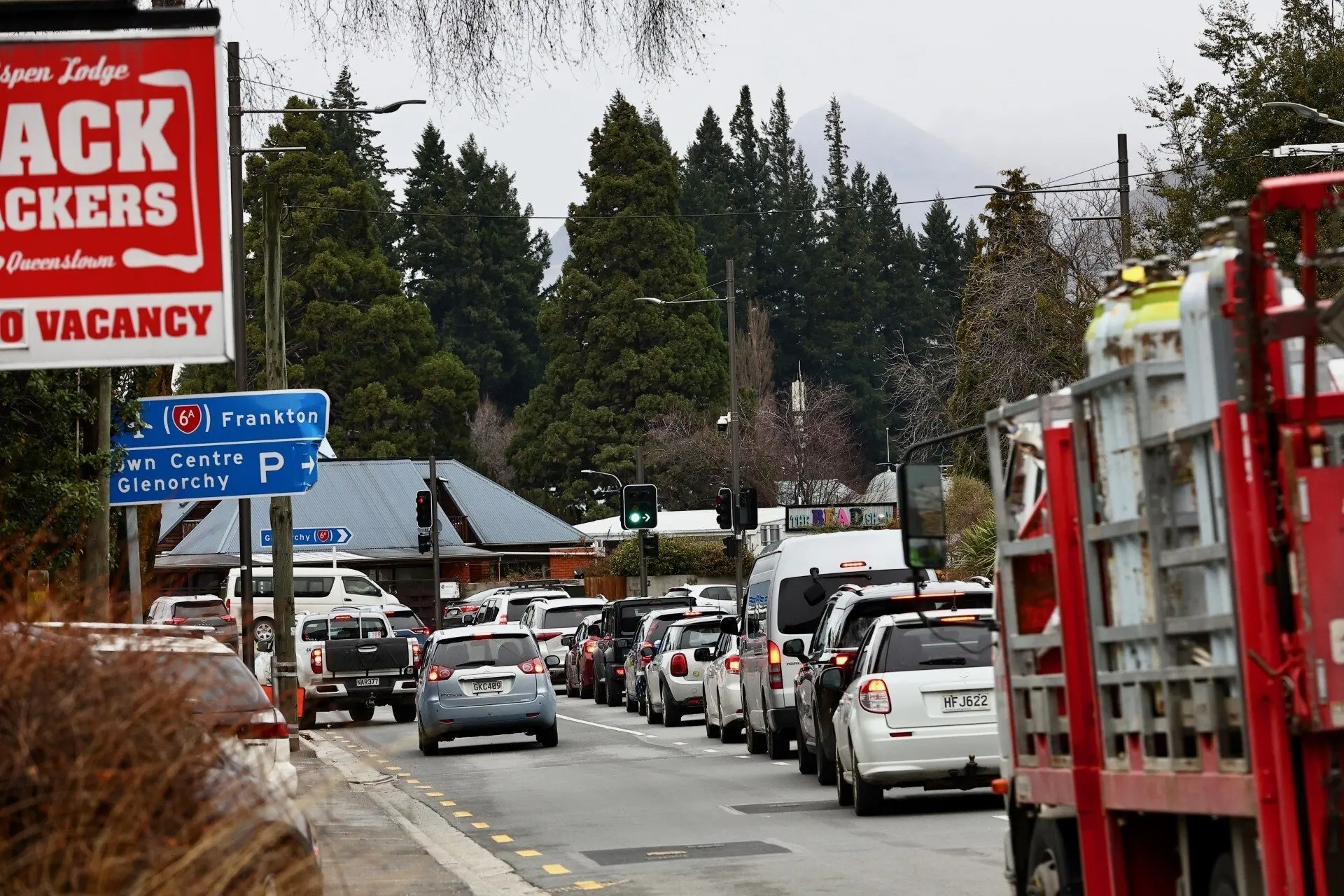
It took me over two hours the other afternoon to do something that should have taken around 30 minutes.
I drove from Frankton into Queenstown to collect one of my daughters from school, back to Frankton to pick up my youngest from daycare, then home.
In total, I travelled around 15km, which took two hours and 10 minutes.
Yes, the return trip took over two hours.
The morning school and daycare drop-off had already taken around 90 minutes. By the end of the day, I had spent well over 3-1/2 hours in traffic simply getting my children to and from school and daycare.
Sadly, experiences like this are becoming increasingly common. Talk to almost anyone in Queenstown and they’ll have a similar story.
But while it’s easy to point at Queenstown’s continued development and blame growth, I think that misses the bigger issue.
Queenstown is growing because people want to live, work, travel, invest and build a life here.
The real challenge is whether we can build the roads, public transport and infrastructure quickly enough to support that growth.
There are signs the conversation is beginning to shift and it’s encouraging that both central and local government now appear to be recognising the scale of the issue.
Recently, National announced an election commitment to four-lane the remaining section of SH6
between Hansen Rd and the Five Mile roundabout.
But roads alone won’t solve the problem. This is only around 1km of roading, but this will make a big difference.
Proposals such as a Queenstown gondola, increased bus and ferry services and active transport all deserve serious consideration.
With Queenstown’s geography, there is a limit to how much additional road space can realistically be created, so we need to be open-minded about different ways of moving people around the district.
Recent confirmation from the government that gondola projects in Queenstown could be eligible for public transport funding through NZTA is therefore an important development.
It’s also worth noting that Queenstown’s transport challenges didn’t suddenly appear because of the latest subdivision. They have been building for decades.
The arrival of regular jet services in the early 1990s was a turning point for Queenstown. Improved accessibility to the region helped transform Queenstown into the international destination we know today.
While growth has brought economic benefits, the local infrastructure investment hasn’t always kept pace.
That imbalance is particularly significant when you consider the number of visitors Queenstown’s infrastructure has to support.
For years there has been discussion around a local visitor levy or ``bed tax’’, a model that is common in international tourism destinations around the world.
The principle is simple: visitors who use local roads, facilities and infrastructure contribute towards providing
them, rather than leaving a relatively small ratepayer base to carry the cost.
Queenstown’s proposed levy has repeatedly become a political football. That’s unfortunate because there is simply too much at stake.
Better infrastructure doesn’t just benefit residents; it improves the visitor experience and protects the tourism industry Queenstown and New Zealand rely so heavily on.
Good work from the Queenstown Mayor John Glover for jumping up and down after the government back tracked on having a discussion around this levy.
Queenstown is different from the rest of New Zealand as about 75% of our visitors are from overseas: most other cities across are 25% overseas visitors and 75% local.
I am selling around two houses every month where people are leaving because of traffic issues.
But funding infrastructure is only one side of the equation. We also need to think carefully about where future growth occurs and how people will move between their homes, workplaces and everyday activities.
Housing also needs to be part of the transport conversation. Stopping development won’t necessarily fix our congestion issues, nor does it fix our housing shortage challenges, and it won’t make housing more affordable.
We need more homes for the people who already live and work here, and for the teachers, nurses, tradespeople, hospitality workers and business owners who keep the district running.
Queenstown will continue to grow. It has been doing so for decades, and it’s a sign of Queenstown’s success. The challenge is ensuring infrastructure keeps pace.
So, smart planning, infrastructure investment and enabling supply in the right locations all need to be part of the conversation.
Infrastructure projects are complex and no one expects solutions overnight, but the gap between growth and infrastructure delivery has become increasingly difficult to ignore.
We may have reached the point where infrastructure can no longer afford to play catch-up.
- Hamish Walker is a former National MP and director-salesman of Walker & Co Realty, Queenstown. He writes the Walker’s Words column for the ODT.