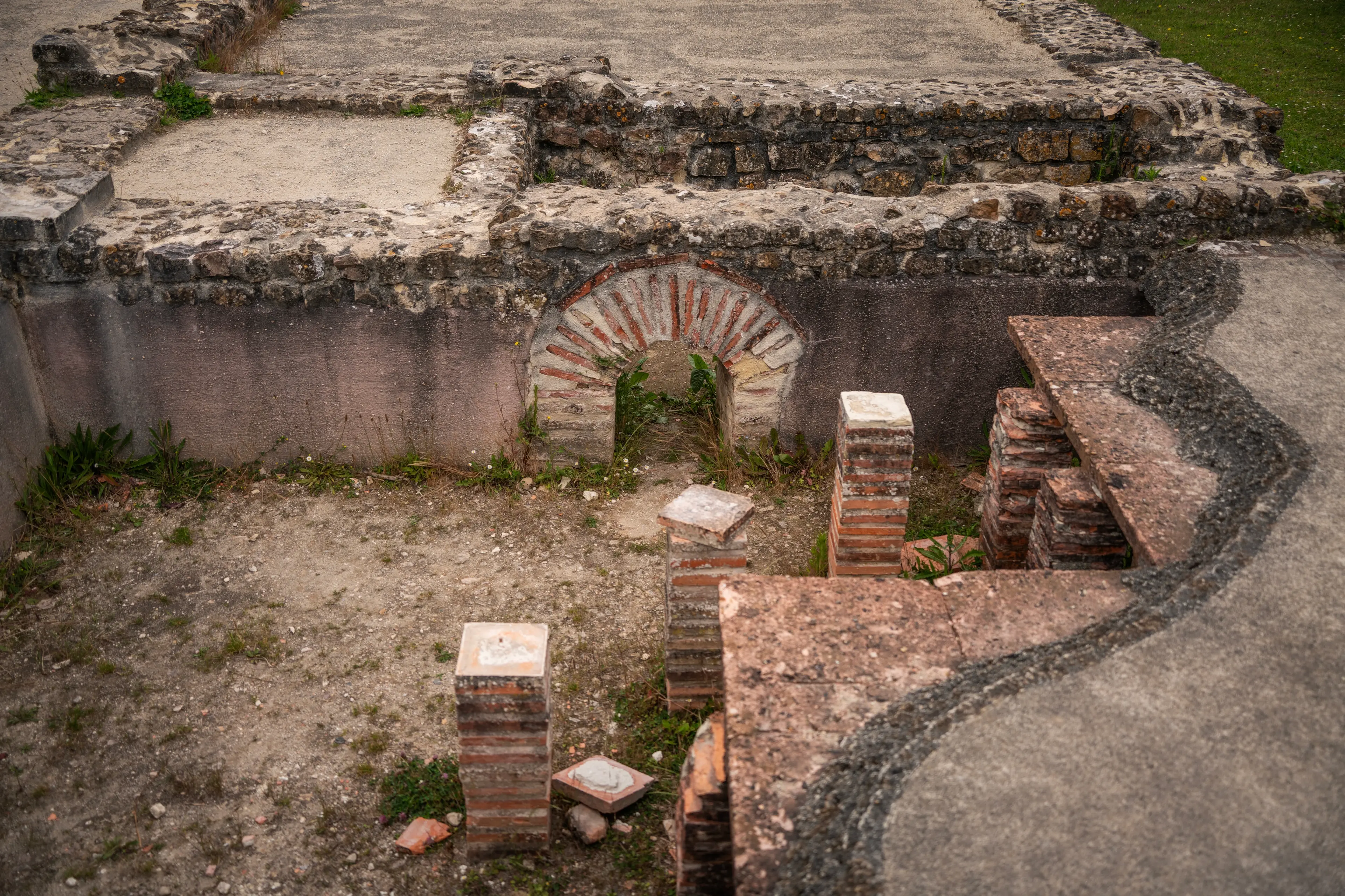
Nasty’s a fine old word. I remember an elderly master, at a school I taught at briefly 40 years ago, pointing out a fifth-form boy to me and saying, ``that child is a nasty piece of work.’’ The word nasty spits out its meaning. Talk about nasty weather and you can feel the sting of the wind and the rain like grape-shot (whatever grape-shot might be.) Call a child nasty and you’re not holding back. And just this morning I have discovered how the word nasty came into being. It came into English via the French. But to get there we’ve got to go back to the Romans. Because nasty starts, improbable though it may seem, with a villa. A villa was a Roman country house or farm or estate. Wherever the Romans went during their many centuries of empire they established villas. Some grew vast as their owners grew wealthy. The best of them had mosaic floors and underfloor heating and painted wall plaster and a separate multi-room bathhouse with hot, cold and tepid pools. Obviously such a country estate, such a farm, would need labour to maintain it, and the labour would need somewhere to live within range of the main house. So a cluster of dwellings would often develop in the vicinity of the villa – not large enough to be called a town but still an entity in its own right. A village in other words. Now, the Romans conquered England around the time of Christ, and for the next 400 years or so they built their villas all over the country, administered the locals, taxed them cheerfully and bashed them up when necessary. But then in the 5th century the Roman empire crumbled and they withdrew, leaving only the shells of their villas to fall into ruin. They did not leave their language behind. The next invaders came from what is now North Germany and Holland. They were the Angles and the Saxons. They bashed up the locals, driving them into the mountains of Wales and Scotland, and settled where the Romans had, bringing their language with them. But unlike the Romans, they never moved on. They became the English and their Anglo-Saxon language is the core of the language we speak today. It owed nothing to the Romans and their fancy Latin. It did not include the words villa or village. In what is now France, however, which was also part of the Roman Empire, Latin did survive. Indeed French is just a corrupted form of Latin. And in 1066 the Norman French famously invaded England, killed King Harold, won the Battle of Hastings, put William the Conqueror on the throne, and brought French to England. For the next couple of hundred years, French was the language of power, authority and law. But the Anglo-Saxon peasants continued to speak Old English, derived from those Anglo-Saxon ancestors. It took almost 300 hundred years for Old English and Old French to fuse into what is known as Middle English, precursor of the language we speak today. During that time the French-speakers had all the money, and they sneered at their rural English subjects. They had numerous words to describe the labouring underclass, words like serf or peasant or villein. A villein, evidently, was one who lived in a village and tilled the land for the lord. And because he was such a lowly soiled creature he was thought likely to rob you, given half the chance. So it was a short step from villein to the modern villain. Now, there is in French a suffix ``astre’’ which is pejorative. It suggests a cheap or shoddy version of whatever noun it is attached to. We still have an example in English: a poetaster is someone who aspires to be a poet but writes little more than advertising jingles. So the French nobility, looking down their noses at the grubby English labourers, created the word villeinastre, meaning one who wasn’t even a decent labourer, a sort of sub-peasant, likely to be violent and larcenous. And over the years the word villeinastre shortened for ease of delivery and it became, as you have already guessed, the word nasty. It’s hard to imagine a teacher today describing a child as a nasty piece of work – though somewhat less hard to imagine them thinking it. But the teacher all those years ago was bang right. The kid he pointed out proved to be a bully and a thug. A real villeinastre. A nasty. Lyttelton writer Joe Bennett writes the Sleeping Dogs column for the ODT.