
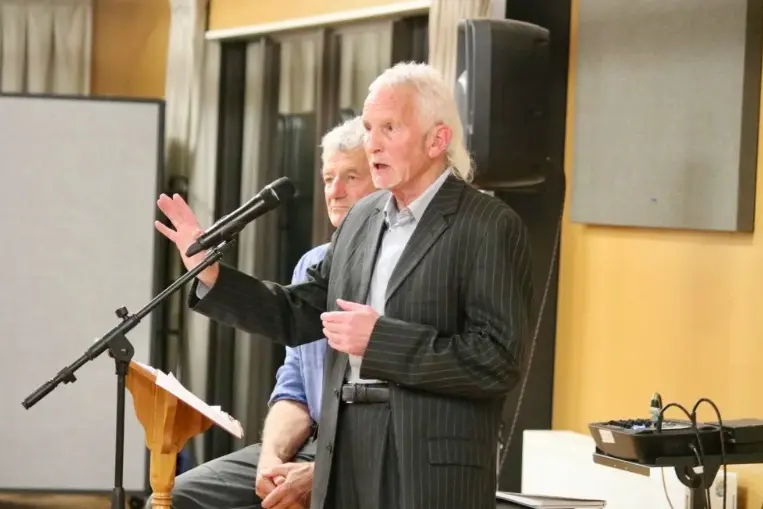
PHOTO
Two words. It’s broken.
And joining a whole lot of councils together isn’t going to make it unbroken. Potentially, just broken on a bigger scale.
Why is local government broken? Because the senior staff run the show, the elected are basically along for the ride, and the ratepayers and residents are routinely ignored. they call this routine indifference, “consultation”.
I know local government is broken because I was the Mayor who brought in the lowest rate increases in New Zealand, every year for six years. And I know what I inherited.
Also because I’ve been an Otago regional councillor for the past 10 years and watched my community not simply ignored, but told that we are environmental hazards. That we get in the way of the ``wairua’’ of the water. That we are basically selfish heathens.
I’ve done my bit at trying to stop these excesses. A team of us stood last year and we have a new chairperson and brought in a 0% rates increase. Zero. Not reported outside Otago at all. Wonder why?
But that was after 50%-plus total rate increases over the previous five years and a near doubling of staff numbers.
What do they all do? I honestly don’t know. I don’t see any less rabbits nor cleaner lakes and rivers. A lot more pests, though.
If I was Minister of Local Government this is what I would do:
1. Allow everyone to stand for elected office. Currently the only people standing are unemployed, self-employed or retired.
Why is that? Because the staff arrange countless meetings during their work hours effectively excluding any waged or salaried person from office. Got a job or a family? Forget it.
2. Eradicate council workshops. I did in Wanganui. Waste of time. Sorry, that’s too moderate. The greatest waste of time outside of watching grass grow (and even then).
I don’t go to them because they turn into staff lectures about the paths/decisions that they would want you to make. And so many are secret.
3. Reform the Local Government Act 2002. Restore real power to the community and their elected representatives. Make it plain that there is no dividing line between governance and operational.
Elected members are responsible for everything a council says and does.
4. Get rid of the monastic order that is local government senior staff. Trained, recruited, retreaded, always from within. Recruit senior managers from the private sector with the emphasis upon customer service and maximising efficiency.
5. Aggregate services (this is where local government unification and unitary authorities make sense). It’s crazy that each council has its own payroll, IT, HR, consents, compliance, infrastructure and management teams. That’s an inefficient madness all of its own.
6. Come up with something a lot better and more effective than Three Waters or its successor, Local Water Done Well.
They are still as woke as Wellington, and as costly and bureaucratic as anything they will replace. And a lot less accountable.
7. Ensure there is no co-governance. That you sit around the council table because you’ve won the trust and faith of your local community. All the community irrespective of culture or ethnicity.
We don't need to reform local government finances, debt or the rating structure. They all adaptable enough.
The problem has always been the internal structure and the mindsets. Work on them first.
Michael Laws is an Otago Regional Council councillor and former Mayor of Whanganui.