
PHOTO
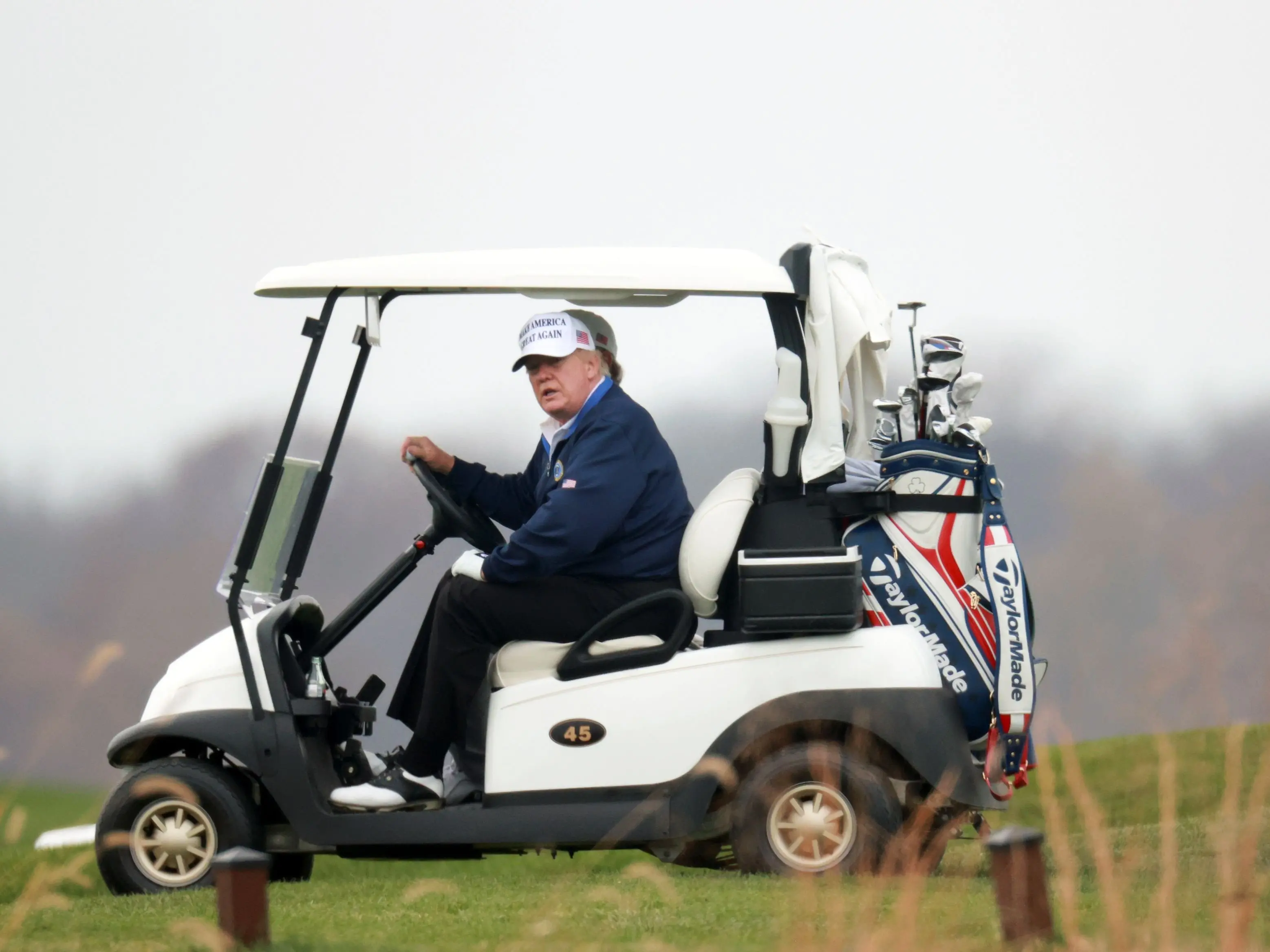
Rather than cut his losses, United States President Donald Trump is doubling down and insisting that he has won the 2020 presidential elections.
Even as Trump’s own election officials have declared the election "the most secure in history," his legal and political proxies have launched court challenges to the voting process in several states.
Leading these efforts to delegitimise the election results are Rudolph Giuliani, former mayor of New York City and Trump’s personal lawyer, and Republican Senator Lindsay Graham, the Chair of the Senate Judiciary Committee.
Meanwhile, the escalating Covid-19 pandemic claims more lives. The United States has now registered an astounding 250,000 deaths.
How can we best explain Trump’s actions?
Any explanation for why Trump is challenging the election results has to start with an assumption of whether he is rational or irrational.
Irrational explanations would include the view that Trump is acting emotionally, retaliating out of anger at his election loss.
It could also include any variant of the conspiracy theories that pitch Trump as defending the US political system from a hostile takeover by nefarious sources.
The biggest problem with these explanations is that for them to hold up, we have to either assume that Trump is acting against his own interests, or that he is the protagonist in an implausible plot against what is arguably the most powerful state in world history.
A more convincing way to understand Trump is from a rational, interest-based perspective.
This perspective assumes that Trump has a basic understanding of the costs and benefits of his options, and that he is selecting an approach that maximises his benefits while minimising his costs.
In other words, Trump knows exactly what he is doing.
There are at least two interest-based approaches that Trump could have adopted in response to his election loss.
The first would have been for him to gracefully accept that he lost the election, assist in a swift transition to a Biden presidency, and thereby build up his political capital to fight another day.
Trump could then serve as the Republican Presidential candidate in 2024. Or, he could be the ‘king-maker’ who determines which Republican Party politician continues the Trump effort to ‘Make America Great Again’.
It could be plausibly argued that such a strategy nicely combines Trump’s personal interests with the country’s national interest.
Trump has rejected such an approach.
Instead, he has adopted an alternative strategy which focuses on his personal interests, with little regard for the national interest as it is conventionally understood.
Trump’s actions during the 2020 election year, which include refusing to co-ordinate a national coronavirus strategy, and contesting the presidential election results, reflect the belief that such a disruptive anti-democratic posture either does not hurt him, or even maximises his personal interests.
What are his personal interests in continuing the campaign to overturn the 2020 presidential election results?
These include Trump setting himself up for a post-election career disputing the 2020 election results, and establishing a policy grievance on which any of his high-profile children can use to seek public office in the future.
It may also be that Trump plans to paint any future legal prosecution for his many alleged pre-presidency financial improprieties as evidence of a ‘deep state’ campaign targeting him for his refusal to accept the 2020 presidential election results.
For Trump’s strategy to work, the Republican Party must co-operate.
By keeping their heads down, the vast majority of Republicans in both the Senate and the House of Representatives are in effect choosing to support Trump.
The costs to the United States of this remarkable development are significant.
At least three can be identified.
First, it forestalls a more effective response to the coronavirus pandemic in the United States.
Second, it taints the election result by perpetuating the falsehood that Joe Biden lost, enraging a substantial bloc of Republican voters. This perpetuates the dysfunction in the United States’ political system, further diminishing the credibility of liberal democracy as an example to other countries.
Third, it heightens the appeal of the political stability and economic growth model provided by authoritarian rivals to the United States, notably China.
The argument that Trump is looking out for his own interests might seem an unexceptional argument. But we live in exceptional times, where conspiracy theories abound and the obvious needs to be explained, cogently and succinctly.
Trump’s decision to continue challenging the elections results is unprecedented. It reflects the reality that the United States is deeply divided and has never had a president like him.
And, in challenging the election results, Trump may be many things, but he is not irrational and knows exactly what he is doing.
■ Nicholas Khoo is an associate professor in the politics programme at the University of Otago in New Zealand.