
PHOTO
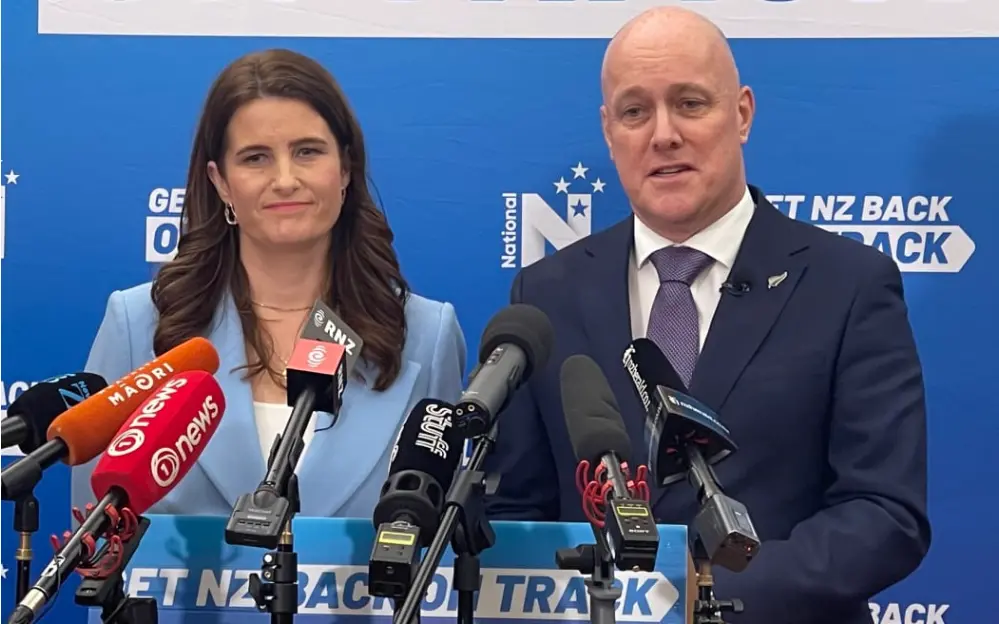
The National Party finally released its tax policy yesterday and while many of the commitments were anticipated, there were a couple of surprises.
National has indicated that middle New Zealand has been hurting in recent times with high inflation and increasing interest rates.
This is the main focus of many of the measures announced as this is a group who National claims have been left behind.
The "Back Pocket Boost" intends to provide up to $100 a fortnight (child-free household) and up to $250 per fortnight for a family.
This is achieved through changes to the Independent Earner Tax Credit, Working for Families and FamilyBoost childcare tax credit.
Further, they have addressed the fact that a full-time worker on minimum wage can easily cross over into the 30% tax threshold and propose to tax any extra hours at 17.5%.
The proposed changes to the income tax thresholds (not updated since 2009) are welcomed but capped at $78,100, meaning those with incomes above this amount will have the same tax reduction.
Other measures announced include progressively removing the non-deductibility of interest for residential rentals over the next three years, changing the Bright-line Test back to two years, cancelling the proposed fuel tax increase, removing the Auckland regional fuel tax, removing the ute tax (details to come), and removing Labour’s proposed app tax.
All of these are targeted at assisting middle NZ to face present economic challenges.
However, with the economic headwinds facing the New Zealand economy at the moment, there has been a significant speculation as to how National would pay for any proposed tax cuts.
National have been smart with this and are focusing a large portion of the new revenue measures on non-voters.
The proposed introduction of a 15% foreign buyer tax on the purchase of homes over $2 million for anyone who does not hold a resident class visa is forecast to bring in over $700m per year and is consistent with many overseas countries. Other initiatives hitting non-voters is taxing offshore gambling operators, and moving to user-pays immigration levies.
They have also proposed to remove commercial building depreciation, a measure also signalled by Labour.
The commercial property sector will be less enamoured with this change but for most, it will be a timing issue as opposed to a permanent loss, assuming the broad trend that property values do increased over time (across economic cycles).
Aside from back-office/consultant reductions in spending, one of the more interesting "reprioritisations" is the proposed "climate dividend".
The proposal is to increase ETS price paid by polluters and return this to New Zealanders to allow them to make their own choices about reducing emissions.
It will be interesting to see how this evolves and whether this is seen as a tax refund or is more targeted, requiring taxpayers to use these funds in a positive manner.
It will also presumably have an impact on the wider design of the ETS system and the role of, and return to, forestry companies.
While these measures all seem reasonable, the state of the New Zealand economy has no doubt delayed timing of the implementation of some measures and other changes have not been forthcoming.
The lack of comment around the new 39% trust rate would indicate that this is likely to remain.
Many commentators have suggested that this should be a tiered rate to mitigate over-taxation of middle-NZ, but no such suggestion has been made by National.
While the previous reintroduction of commercial building depreciation had been described as a Covid measure by both the major parties, the reality is that buildings do often actually depreciate over time.
Whether this impacts the commercial property values in New Zealand, we will have to wait and see, but it does increase the tax paid by landlords.
As with the residential property changes, the only way for landlords to recover the additional cost is to look to increase rent.
Whether this leaves us with more empty buildings, we will find out soon.
Overall, the tax proposals by national seem relatively measured.
It will be interesting to see if any of the parties have any late election promises, although politicians should be fully aware that post-election it may be very difficult to deliver further trinkets if there are no funds available to pay for them.
- Jarod Chisholm is managing partner of NZ tax advisory for Findex.