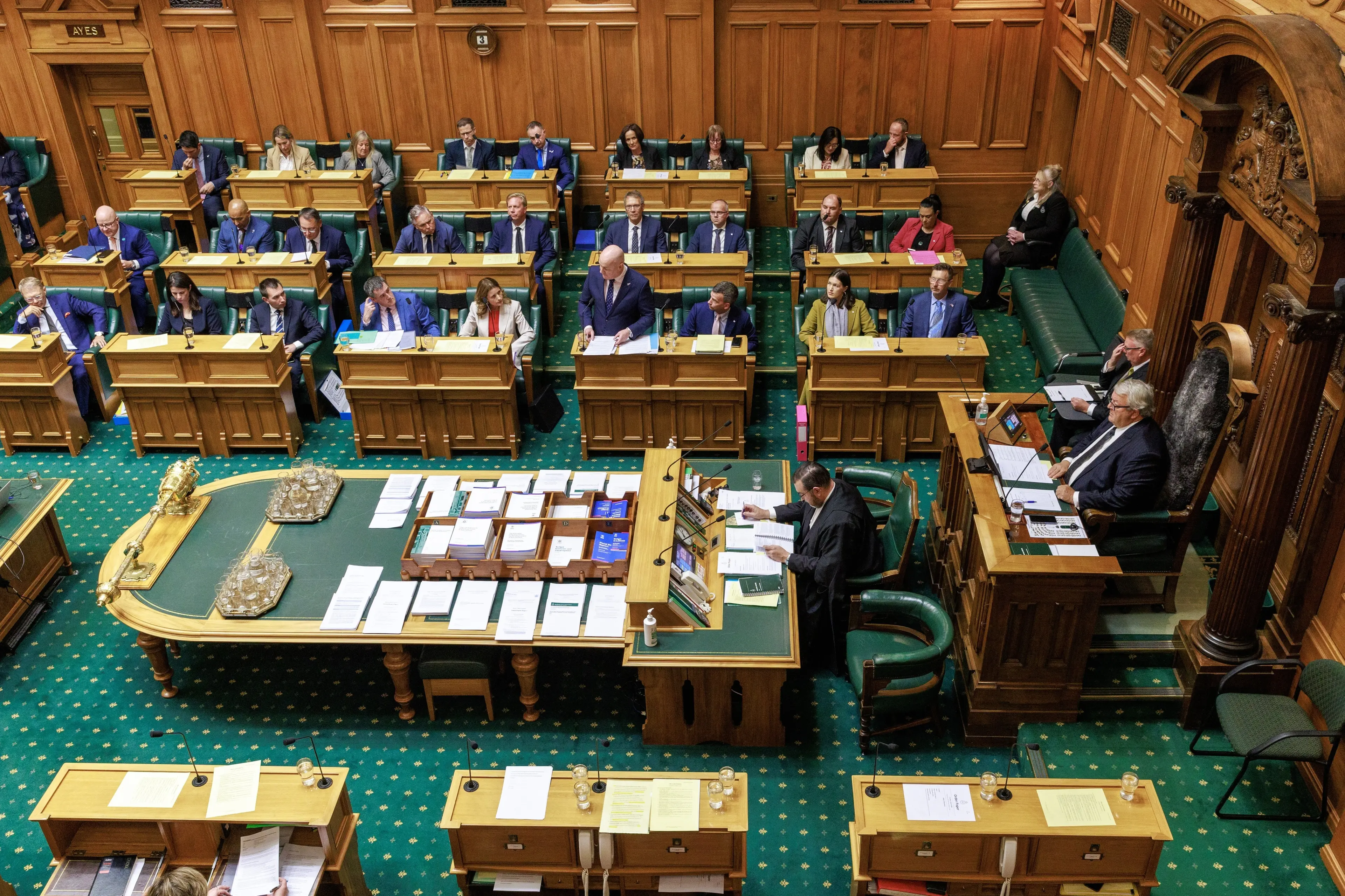
You have to love the optimism of those who compile information on the New Zealand Parliament’s website. According to one of the entries (last updated in 2020), one of the highlights of watching a parliamentary debate is government and opposition Members of Parliament sparring at Question Time. ``With the eyes of New Zealand watching, members’ oral questions and Ministers’ responses give us valuable insight into the actions of the government.’’ On another part of the website it says the asking of oral questions in the House ``helps to make sure the Government is accountable to Parliament and to you’’. This idea is reinforced in the chapter covering oral questions in the 2023 version of Parliamentary Practice in New Zealand, also on the website. It says Parliamentary questions are an important tool for members to hold the Government to account. But as I settle down with my knitting to watch Question Time (not quite in the vein of the tricoteuses waiting near the guillotine) of a winter’s afternoon, I find it hard to see much that fits that bill. Much of what happens is grandstanding rubbish with Winston Peters a serial offender frequently raising spurious points of order. What is particularly galling as we edge closer to the election campaign is the use of patsy questions by government MPs to ministers on issues which are pure electioneering. As we all know by now, and are probably already sick of hearing, National’s campaign is all about no new taxes. Somehow, that made it OK for its members last week to ask questions of its own ministers about whether they are considering implementing a streaming tax or a ute tax. Of course, the answers given by the relevant responders Paul Goldsmith and James Meager were a resounding no. They then went on to waste more of Parliament’s time answering supplementary questions to tell us how terrible such taxes would be. But how is any of this holding the government to account? It hasn’t introduced either of these taxes and says it has no plans to, so where does its responsibility lie? Finance Minister Nicola Willis, in response to patsy questions, has also made a meal of extolling the virtues of Investment Boost, which allows businesses to claim 20% of the cost of new assets as an expense, then claim depreciation as usual on the remaining 80%. Her glowing endorsement follows the Labour Party announcing proposals to change it. Many sensible questions do not come within cooee of being answered. As retiring MP Duncan Webb said in a recent interview, if a reasonable question is asked there should be an expectation of a coherent reply, not a response which bats away the question with irrelevant information. Sadly, the norm seems to be that if the respondent has ``addressed the question’’, even in the vaguest way, it is sufficient. Occasionally, the Speaker pushes for something better, as in the recent case of Labour’s health spokesperson Ayesha Verrall asking Health Minister Simeon Brown if the net increase of full-time equivalent nursing staff employed by Health New Zealand between the quarters ending March 2024 and March 2026 was 54. The answer was yes, but it was 242 words of fudgy nonsense from Mr Brown in several outbursts before we got to that, and further input from the Speaker, Dr Verrall and shadow leader of the House Kieran McAnulty. More insistence from the Speaker about the relevance of answers would be great, along with limiting patsy questions from government members to ministers and their tedious press-release type responses. Maybe someone could ask Workplace Relations and Safety Minister Brooke van Velden why it is that the Ministry of Business Innovation and Employment appears to have no deadline for providing advice to her regarding how best to address the safety issue posed by working with engineered stone. That is despite the original consultation on this happening more than a year and a half ago. Ms van Velden did not answer my question about when she might expect advice, and the best I could get from MBIE (after initial emails were ignored) is that after a targeted consultation in April this year, work is ongoing and officials will provide advice to the minister ``in due course’’. Is such vagueness good enough on a serious issue affecting workers’ health? It is time those who want a ban on this product (and the introduction of other measures) similar to that introduced in Australia in 2024 started making noise about it again. PS Thank you to the two male readers, both of whom have witnessed the glory of my kitchen chaos, for admiring my bravery in exposing it in the photo that accompanied my July column on benchtops. While I appreciate the thought and understand their confusion, the image was a stock Getty image of someone else’s similarly spectacular mess. Dunedin writer Elspeth McLean writes the When Moths Collide column for the ODT.