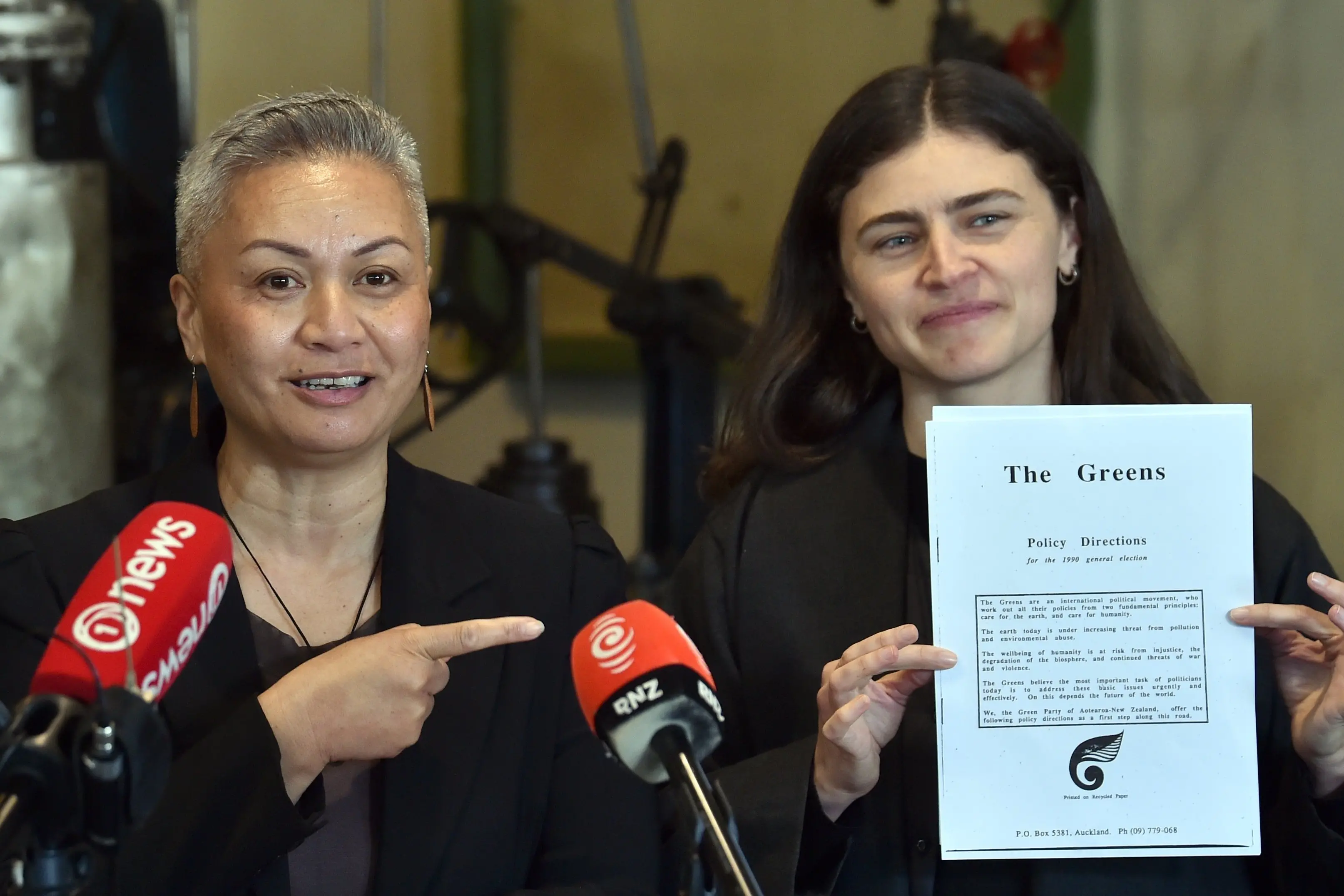
WHATEVER one may think of their politics and policies, there is one aspect of the electoral process which the Green Party excels at: putting its programme before the electorate nice and early. Conventional political wisdom is that parties should not release policy too soon as it gives their rivals plenty of time to examine the details and expound counter arguments. While that is true, delaying releasing policy also denies voters the chance of full and fair appraisal of what a political party might be offering the country. Over the weekend the Greens held their AGM and released the party’s election manifesto. Of its 44 pages the majority set out the Greens’ position on what the party sees as being the major issues, and at two policies per page, from ‘‘children’’ to ‘‘zero waste’’, that is an extensive list of priorities and initiatives it hopes it will be in a position to push for following polling day on November 7. Not only do the Greens say what they mean, they are unequivocal about those positions. While other parties may fudge about the edges and proffer ambiguity to assertive language, the Greens lay out their priorities on page 1: an Aotearoa that honours Te Tiriti o Waitangi, and that corporations and the ‘‘super rich’’ are greedy and need to be brought to heel. For the first, the importance of the Treaty is acknowledged by most. The debate now centres on the word ‘‘honour’’ and just what that might entail for it to be achieved. For the Greens, the Treaty is central to all its policies, putting it at the opposite pole — as if there was any doubt — from the parties currently governing New Zealand. Similarly, a philosophical debate is likely to be had about the place of businesses and wealthy individuals in New Zealand society. While the Greens would no doubt argue that not all businesses are bad — they have extensive policies aimed at supporting emerging entrepreneurs and encouraging the purchase of New Zealand-made goods — at its broadest brush the party’s sloganeering tends to demonise big business, and those who have become well off due to being involved in big business. While it is true, as the Greens state, that corporations loyalty is to their shareholders rather than to the country in which they operate, it is also far from true that success in business automatically leads to disregard for people and planet. The three main pillars of the manifesto are affordable living, healthy nature and real democracy. As broad statements, again, few would argue, but some may regard the details as devilish. One part of the affordable living pillar, the Greens’ tax policy, has proven to be fiendishly difficult. Its costings of how much will be gained by its plan to create a new tax bracket to ensure what it calls the ‘‘super rich’’ to pay more tax have been disputed, and some people who regard themselves as middle income earners may be surprised to discover that the Greens think that they are that well off. That in turn begs the question whether higher cost Green promises, such as establishing a publicly-owned power company, ‘‘KiwiPower’’ — a proposal announced in Dunedin last week — at the cost of $980 million, are within the realm of affordable possibility. Healthy nature is core Green politics, and a principle which plays well across the entire political spectrum. However, as always, a balance will need to be found between the Green desire to regulate in this area and the section of the electorate which disdains what it considers to be red tape. Real democracy is a more nebulous concept, encompassing everything from lowering the voting age to bringing greater transparency to political lobbying —ideas which have also attracted widespread support in the past. The Greens’ manifesto release came with an additional policy announcement, a proposal for a one year moratorium on consents for new AI data centres. In some ways this is populist, tapping into the wellspring of disquiet inspired by the already consented Datagrid AI centre planned for Southland, but it is also pragmatic and sensible. If built and operated as intended, the Southland centre will use about 6% of New Zealand’s total electricity supply. It will be built just a few kilometres away from New Zealand’s largest consumer of electricity, the Tiwai Point aluminium smelter. Given that amount of power drain in one small part of the country, it is at least worth pausing and taking stock of grid capacity and likely future demand before plugging more major power users into the network.