

PHOTO
Aquaculture is set to have “transformational economic impact” on Southland over the next 10-30 years, business leaders heard on Tuesday.
Great South regional strategy general manager Bobbi Brown said recent developments had moved the sector from discussion to reality, and Southland businesses were being encouraged to prepare themselves for the opportunities the growing industry presented.
Historically, the nation’s aquaculture industry had grown more slowly than that of international competitors, which had started about the same time, because of regulatory hurdles and lengthy consenting processes, she told the Southland Business Chamber event.
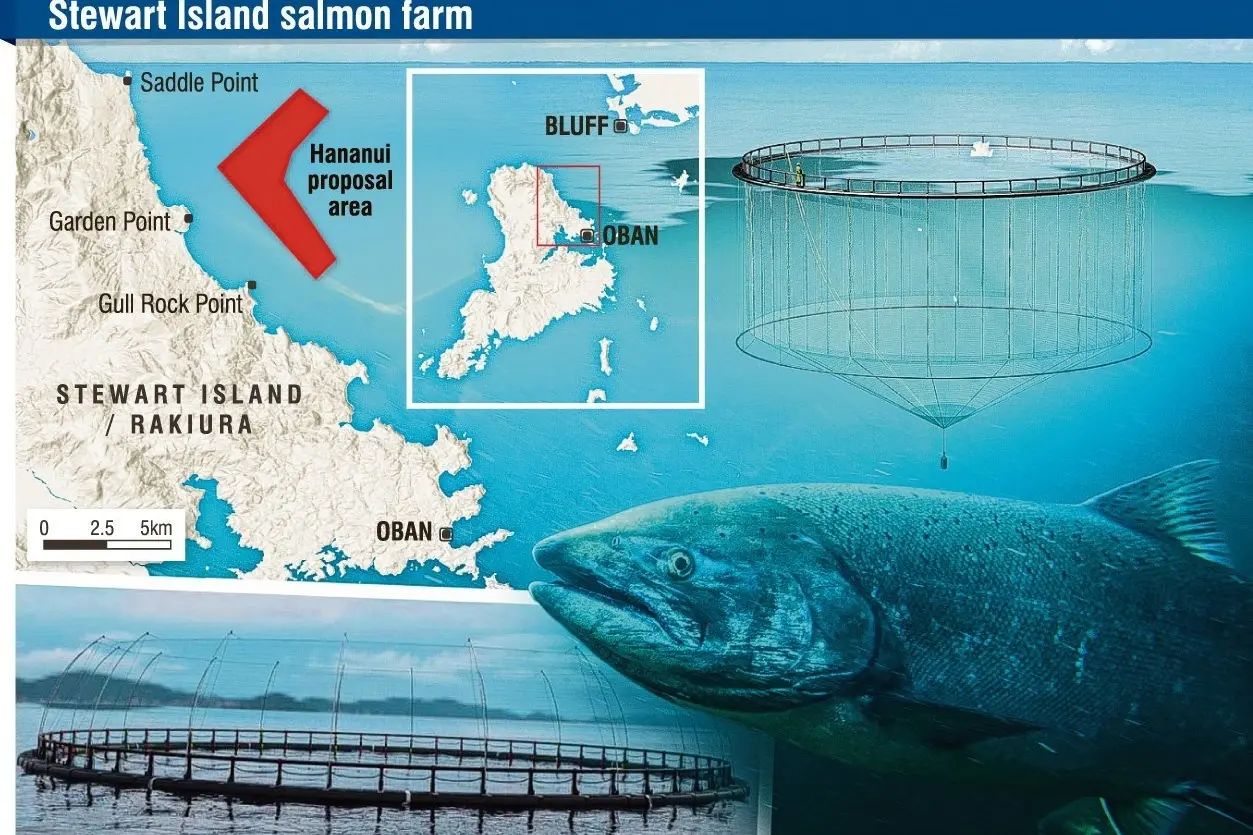
Confidence had increased since fast-tracked Ngai Tahu’s Hananui Ocean Farm project and Fiordland Group’s planned 30,000 tonne Atlantic salmon farm were announced, she said.
Ngai Tahu’s plan was to build the Hananui Ocean Farm in stages — with stage one expected within five years and the wider stage two development over the next 15 years.
Bluff would likely become the export gateway for future aquaculture products.
The Bluff region had been identified as a prime site for marine farming because of its cool, high quality coastal water and strong ocean currents.
Guest speaker Nelson-based Kernohan Engineering chief executive Paul Miller said businesses needed to prepare before the boom started.
Those who would benefit the most would be those who prepared early by investing in skills, embracing innovation and building strong networks before the industry peaked.
“I don’t think it’s possible to be too early now in aquaculture.
“The potential in Southland is huge at the moment.”
He believed emerging industries could be created where expertise did not yet exist and traditional Southland businesses should be looking beyond their current markets to explore how they could become involved.
“When no-one’s the expert in something … you have the opportunity to become the expert.”
Diversifying current operations might offer new opportunities.
“You don’t have to be defined by what you have been doing for the last 50 years.”
His own engineering company had expanded from traditional steel fabrication into marine and aquaculture-related manufacturing.
He conceded labour shortages could inhibit growth and recommended the region invested in building local skill development, but also implementing robust processes to screen quality international personnel.
Automation would also play a major role in the sector where the industry struggled to find enough staff.
Ms Brown said Southland already had a strong export-based economy which had the capability to support another major export sector like aquaculture.
Bluff, which already had an established and growing marine and seafood sector, would not need to build the industry from scratch and could benefit from expertise developed in other aquaculture regions.
She believed the blue economy could be viewed as a generational opportunity, as it continued to expand over the next 30 years.
But adequate infrastructure and spatial planning would determine its success.
“This is a 30-year thing. This isn’t just a flash-in-the-pan thing going to happen tomorrow and move on to something else.
“We’re trying to do it right, set it up properly so that it endures.”