
PHOTO
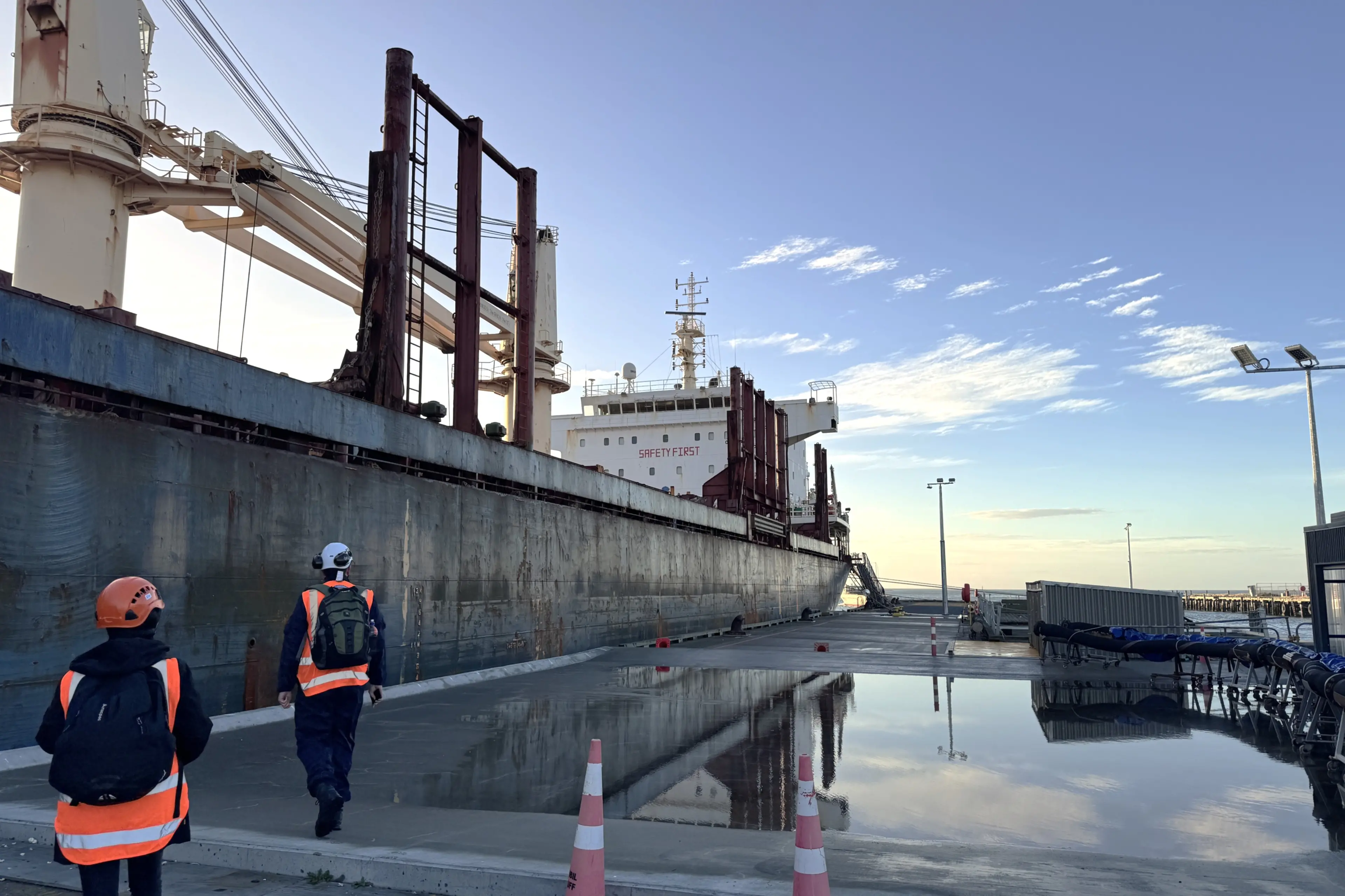
Crew fatigue and a lack of appropriate face protection that contributed to the severity of the injuries suffered were highlighted in a report into an accident on the bulk carrier Olivia at South Port, Bluff in May last year.
The Transport Accident Investigation Commission today released its final report into the May 24 accident in which two crew suffered serious burns to their faces and arms and a third received bruising while cleaning soot from inside the vessel’s boiler.
The ship had been in port since April 23 for extensive maintenance and repairs after issues arose with the main engine and generator during its inbound voyage .
Maritime New Zealand had required the vessel operator make the repairs before Olivia could leave port.
Repeated attempts on May 23 to restart a boiler burner failed, so the night shift team was using an air lance — a long tube connected to a compressed air hose — to direct a jet of air to clear soot to fix the problem when the blowback occurred in the early hours of the morning.
According to the findings, the crew regarded boiler cleaning as familiar work, but they usually cleaned the boiler at sea after it had cooled for several days.
On this occasion, no objective check confirmed the furnace had reached a safe temperature.
Chief Investigator of Accidents Louise Cook said it was likely disturbed heated soot ignited residual fuel as the air lance was withdrawn.
“Before internal cleaning, a boiler furnace needs to be isolated and verified as safely cooled. Blowing compressed air into that hot furnace with unburned fuel was a recipe for a blowback.”
The commission’s investigation identified two safety issues: inadequate implementation of the vessel’s safety management system, and a lack of guidance for managing crew during sustained intensive work periods.
Most engineering resources were focused on the daytime generator repairs.
The daytime senior engineering officers were very probably fatigued, which adversely affected their decision-making when approving the cleaning job, the report stated.
Then the smaller night shift lacked the capacity to plan and supervise unexpectedly higher-risk work.
“Long repair programmes need continuing attention to workloads, rest and supervision,” the report said.
“If an unexpected job is beyond people’s capability, it should be a straightforward decision to stop and get the right support.”
In its findings, the TAIC also said it was “very likely” the severity of the injuries would have been reduced if the crew members had worn appropriate face protection.
The ship’s operator, Fleet Management, has taken action to address both issues, including reviewing procedures, protective equipment and fleet training, so there was no need for the commission to issue new recommendations.
TAIC investigates to establish circumstances and causes of accidents and incidents in order to help the transport sector avoid similar occurrences in future. It does not assign blame. — Allied Media