During the course of an 18-month stay in Paris I was drawn time and again to the Austrian region of Styria.
The soaring peaks, lush green valleys and pure alpine air of my grandfather's birthplace were the perfect counterbalance to Parisian city life.
The town of Schladming, located about 45 minutes east of Salzburg, and where I stayed with relatives, is a sporting paradise.
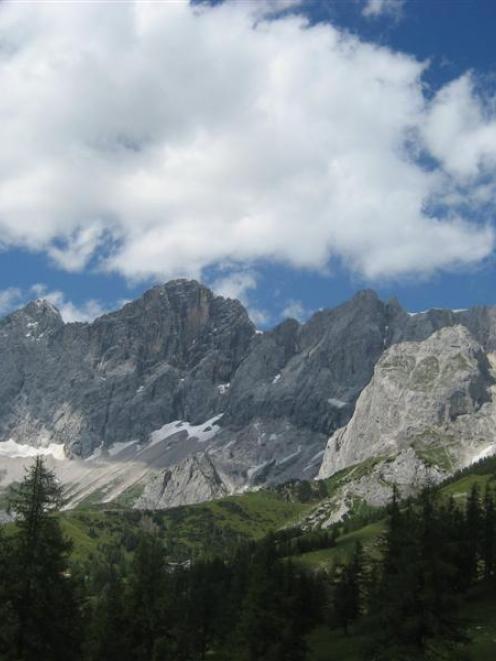
The village sits in a valley with the towering cliffs of the Dachstein Massif to one side and several skifields to the other.
The winter sports are excellent and for the rest of the year mountain-biking, climbing, paragliding and rafting abound in the most fabulous settings.
One activity which is enjoyed by all generations is walking; not a peaceful meander along St Clair Beach but goat-style bounding up and down mountains.
One unseasonably chilly August morning, I join a local church group who do regular day-trips in the region.
By 7am the bus is pulling away and a quick glance around confirms that, with the exception of my cousin, I'm the youngest by three or four decades.
I could have done with a sleep-in and stronger coffee but my bus mates are rearing to go; their bronzed leathery faces are glowing and they look fit and fresh.
The bus winds along the valley, through Liezen before climbing up into the clouds.
We reach a ski station, deserted in midsummer, and start up the skinny, mossy path, through low alpine plants.
There is a 65-year-old setting the pace, and it's brisk. The Austrians seem to have been born attacking slopes at this pace and they manage to keep up the chatter at full volume while I puff out short responses.
For most of the ascent the path is lined with blueberry bushes, perfectly ripe and within reach of my sweeping fingers.
The weather turns as we reach the ridge and we put on extra layers while taking in the stunning green valley and the still turquoise tarn through the thickening clouds. The freezing wind is soon followed by rain and the descent is fast and muddy.
Though we appear to be in the middle of nowhere I feel we are sure to come across an "alm" before too long.
These are not tramping huts as we know them in New Zealand but snug little havens of warmth and traditional food.
Our lunch stop was the Stallaalm hut, looking as it probably did 200 years ago, but run by a young couple in their 20s.
There are window-boxes of geraniums, a family of piglets, toddlers feeding the rabbits and no powerlines.
We duck inside through the low doorway and take seats in the front room.
Big copper kettles are put onto the range to boil and orders are taken - tea with schnapps and Bavarian fritters for all.
There is a slight odour of sour milk in the dimly lit room, and I discover the source of it on the shelf above my head; ripening cheeses.
They are wheels about the size of footballs, crumbling at the edges, tinged green and covered in flies! It is a local speciality called Steirerkase, which has been made in the high alps for centuries.
I have tried it in its end-form; salty, brown granules that are eaten sprinkled on buttered bread.
I struggled to be polite and swallow it at the time and now that I know its origins I'm not sure I'll be tempted by a second taste.
I sit brushing flies from my cheeks, getting heady from my tea and considering my own origins as I listen to the oldies telling tales in incomprehensible local dialect.
I barely understand a word but I think I know how they have stayed so spritely. Like us fortunate Otago-ites they have a magnificent, though somewhat steeper, playground at their feet.
All we need now is an alm on Flagstaff.