
PHOTO
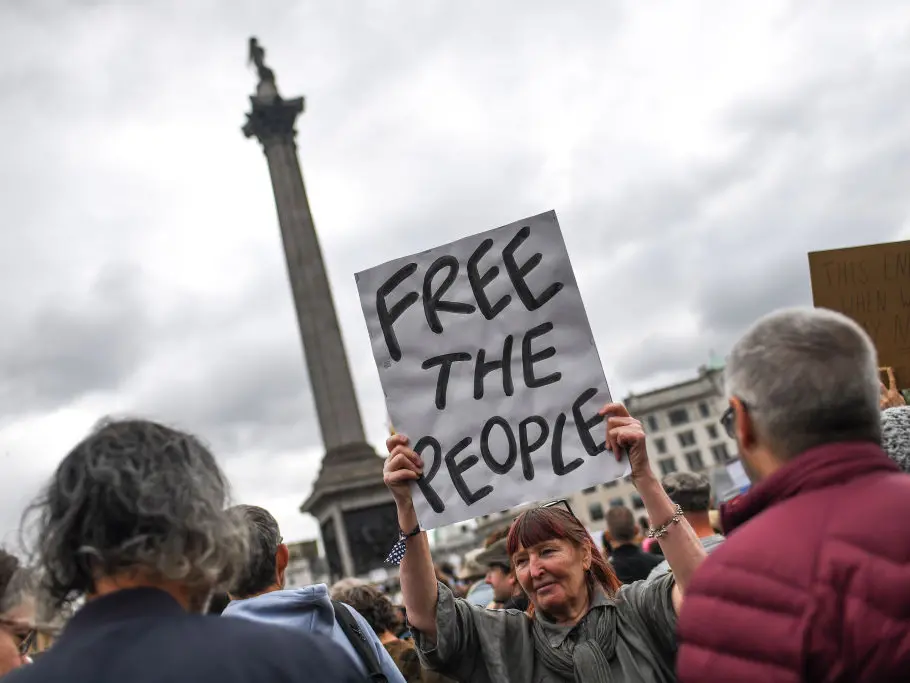
One of the significant issues raised by Covid-19 is its impact on our freedom. I write as someone who lives in Auckland and has recently moved from the restrictions of Level 3 to the slightly freer Level 2.5.
We are living in a strange situation where we have the freedom to travel again but, we are being told by politicians and experts in other parts of the country, that it is not a freedom we should too quickly exercise.
Globally, New Zealand has instituted some of the more stringent restrictions on individual freedom in an effort to control Covid-19. Most of the population has accepted the need, although there have been persistent voices arguing against the restrictions. In other countries infringement on freedom has been a matter of violent protest, at times in direct contravention of orders restricting mass gatherings.
Freedom is a very important part of our social and political world. We value our freedoms highly and are quick to defend them. Yet, we don’t often stop to ask about the nature of our freedom. What are we free from? What are we free for?
In an extraordinary article in Rolling Stone titled "The Unravelling of America", Canadian anthropologist Wade Davis argues that the Covid-19 pandemic is the trigger that will likely lead to the unravelling of the US as a superpower.
He claims that individual freedom has undermined the social fabric to the point that there is nothing to hold US society together. He says the "American cult of the individual denies not just community but the very idea of society". About the thousands who have ignored social restrictions he says: "Those who flock to the beaches, bars and political rallies, putting their fellow citizens at risk, are not exercising freedom: they are displaying.the weakness of people who lack both the stoicism to endure the pandemic and the fortitude to defeat it."
Davis contrasts the American reaction to the pandemic with that of Canada, which he says is founded on three fundamental principles of social democracy. They are: a living wage, access to education and universal healthcare. These, he argues, counteract social division, therefore aiding cohesion. Davis concludes: "the measure of wealth in a civilised nation is not the currency accumulated by a lucky few, but rather the strength and resonance of social relations and the bonds of reciprocity that connect all people in a common purpose."
Freedom is at the heart of the biblical message. The great paradigm of divine action in the world is the story of the Exodus, the release of Israelite slaves from captivity. Later, using the words of the prophet Isaiah, Jesus described his mission as including the release for captives (Luke 4:18). What Jesus declared was a message of good news that offered a way for release from both internal constraints of our own sinful attitudes and actions and the external forces of oppression.
The Apostle Paul, writing in the New Testament, describes living as a Christian in terms of freedom. Yet paradoxically he argues that such freedom necessitates becoming a slave. He writes: "Do not use your freedom as an opportunity for self-indulgence, but through love become slaves to one another" (Gal 5:13). This exhortation is in the context of supporting the faith of fellow Christian believers, but it is based on the notion of working for the common good.
Paul’s call to "become slaves" is not theoretical; many early Christians were slaves. Against the stark reality of slavery Paul was convinced that faith in Christ offered a freedom that could not be constrained by circumstances. For Christians in particular, external restrictions should not be an impediment to living in the freedom of Christ. A freedom that needs to be expressed in acting for the greater good.
There were a number of Christian missionaries in Papua New Guinea during World War 2 who refused to leave in the face of the advancing Japanese forces. They believed they could not exercise the freedom to leave when the people they were called to serve faced hardship. All suffered and several were executed but their solidarity with the indigenous people left a lasting impression.
Covid-19 has restricted our civil freedoms but it does not need to restrict our freedom. It certainly should not restrict our freedom to choose the good of the other, particularly for the more vulnerable among us. Whether people of faith or not, willingly sacrificing some immediate freedoms for the greater good is a true measure of our social wealth.
- Dr Don Moffat is the Sir Paul Reeves Lecturer in Biblical Studies at St John’s College in Auckland and visiting lecturer at the University of Otago.