Over the past four months American air strikes on 28 boats in the Caribbean Sea and eastern Pacific Ocean killed 104 persons suspected of smuggling drugs.
The Pentagon has also deployed a large military force near Venezuela for an operation named Southern Spear. The announced purpose of Southern Spear is to stop the trafficking of drugs from Venezuela to the United States.
Prior to Operation Southern Spear, drug smuggling was considered to be a civilian criminal matter and the Coast Guard carried out law enforcement. When the Coast Guard found drugs on intercepted boats, the couriers were arrested and the contraband was seized for evidence.
Operation Southern Spear has militarised drug law enforcement.
President Donald Trump’s administration has justified militarisation by claiming the US is being attacked by drug cartels using fentanyl and other drugs as weapons to kill Americans.
In the Trump administration’s telling, international and US laws allow the United States to kill these ‘‘narco-terrorists’’ and ‘‘unlawful combatants.’’ Therefore, air strikes on suspected drug boats are legitimate self-defence.
There appears to be a consensus among experts on international law that the attempt to portray drug trafficking as an armed attack is absurd.
A drug cartel is a criminal business, drugs are not a weapon, and the occupants of the boats are likely only couriers not fighting anyone. (Military officials involved with Operation Southern Spear have acknowledged they do not know the identity of the individuals on the boats.)
The couriers are denied due process of law and human rights. Therefore, the air strikes are unlawful extrajudicial killings.
The air strikes have been controversial. In at least one incident a boat was bombed again to kill two survivors clinging to the wreckage.
Admiral Alvin Holsey, Commander of the Southern Command which oversees the operation, opted for early retirement from concern about legal and moral issues. For the same reason, the United Kingdom and Colombia ceased sharing intelligence on drug trafficking in the Caribbean region with the US.
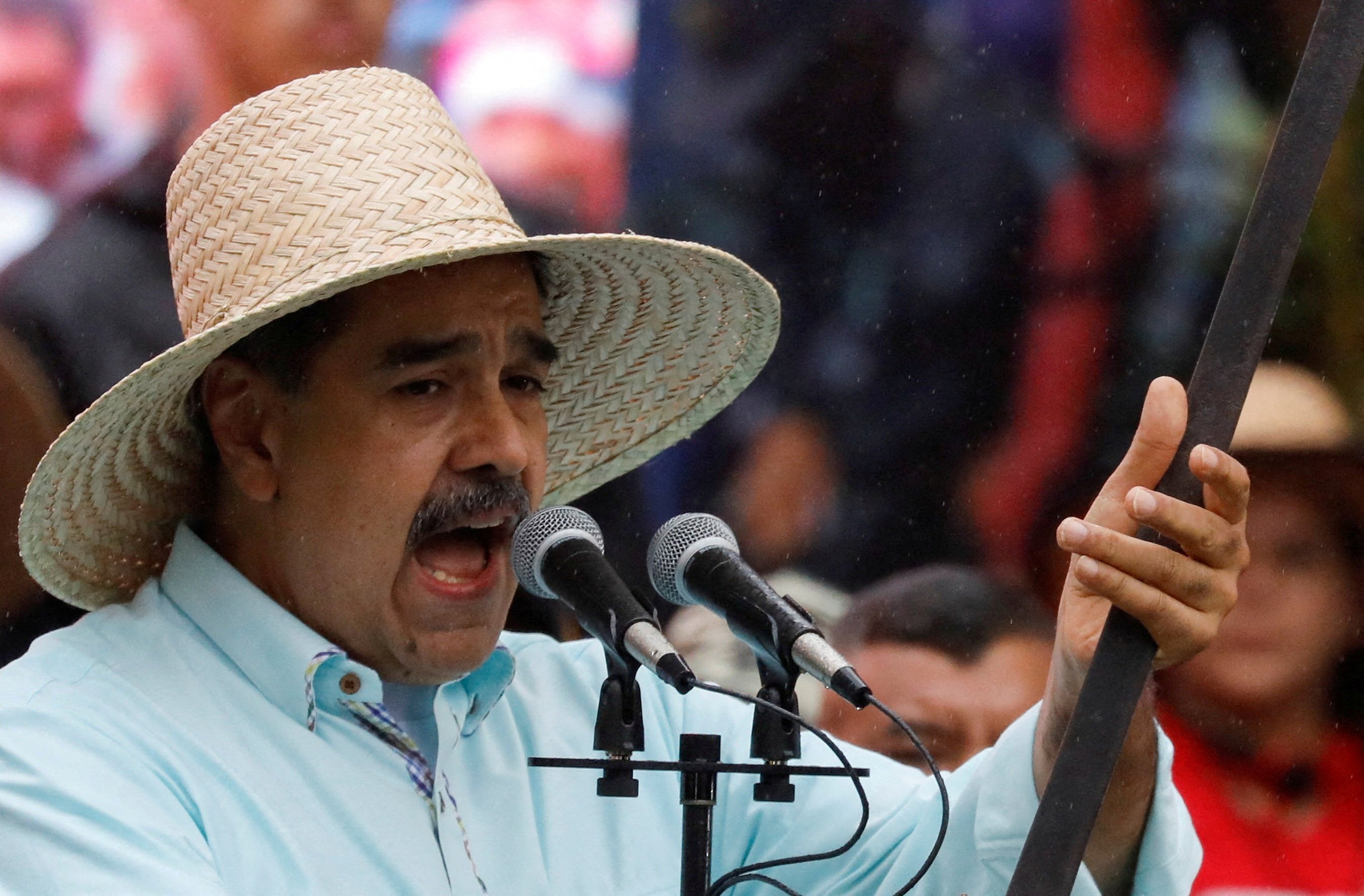
The Trump administration blames Venezuela President Nicolas Maduro for much of the fentanyl and other drugs smuggled to the United States. In Trump’s telling, Maduro leads a drug cartel named Cartel de los Soles and a criminal gang named Tren de Aragua.
Trump has not provided any evidence to support that assertion. Fact checking journalists have pointed out that Cartel de los Soles is a Venezuelan pejorative for corrupt government officials, not an organised drug cartel.
Furthermore, fentanyl — the drug that causes the most deaths — comes to the United States from Mexico, not Venezuela.
Trump has also routinely claimed without evidence that Maduro emptied prisons and mental institutions for migration to the US.
Recently, Trump said publicly the maritime air strikes against drug trafficking will be followed soon by air strikes on land as well. He authorised covert CIA operations in Venezuela and seizure of ships carrying Venezuelan oil.
Secretary of State Marco Rubio declared the status quo with Venezuela is intolerable.
The accumulating evidence indicates the secret mission of Operation Southern Spear is regime change in Venezuela. The Trump administration appears determined to secure removal of Maduro from Venezuela’s government by any means necessary.
Trump has been cryptic about using military force to topple Maduro, saying only that war is not ruled out.
Trump and his advisers might be calculating economic and military pressure will lead to a military coup or popular rebellion against Maduro. Those scenarios are not far-fetched but improbable.
If Trump and his advisers are war gaming direct US military intervention to topple Maduro, they are likely excluding ground combat soldiers.
Even if Trump’s proclivity for exaggerated and false statements is set aside, Maduro is a contemptible tyrant.
A military campaign or covert CIA operation to topple Maduro is fraught with unintended consequences. The historical record is relevant.
Unintended consequences of CIA operations for regime change in Guatemala, Cuba and Chile remain bitterly remembered legacies in the region. Direct military intervention would make the US responsible for postwar reconstruction.
It is worthwhile to remember Colin Powell’s warning to President George W Bush in 2002 about starting military intervention for regime change in Iraq: ‘‘if you break it, you own it.’’ (As Secretary of State, Powell was Bush’s senior adviser on foreign policy.)
There are better alternatives to assist the people of Venezuela with restoring legitimate, democratic government.
The Trump administration could try negotiations with Maduro. So far, negotiation appears to be limited to a Trump-Maduro phone call.
Negotiations would be difficult. If Maduro became willing to resign from government, no doubt he would insist on amnesty and personal security. The Trump administration would have to accept distasteful concessions to achieve a peaceful resolution of the crisis.
The Trump administration could also turn to multilateral diplomacy with Latin American nations to compel Maduro to submit to another presidential election with opposition leader Maria Corina Machado.
Maduro stole the previous election. The integrity of another election must be strictly monitored by international observers.
Trump would have to share credit, but this alternative would have the virtue of avoiding suspicion of American imperialism.
■ Richard Byrne is a retired professor of history at the University of Maryland Global Campus, who is now resident in Dunedin.