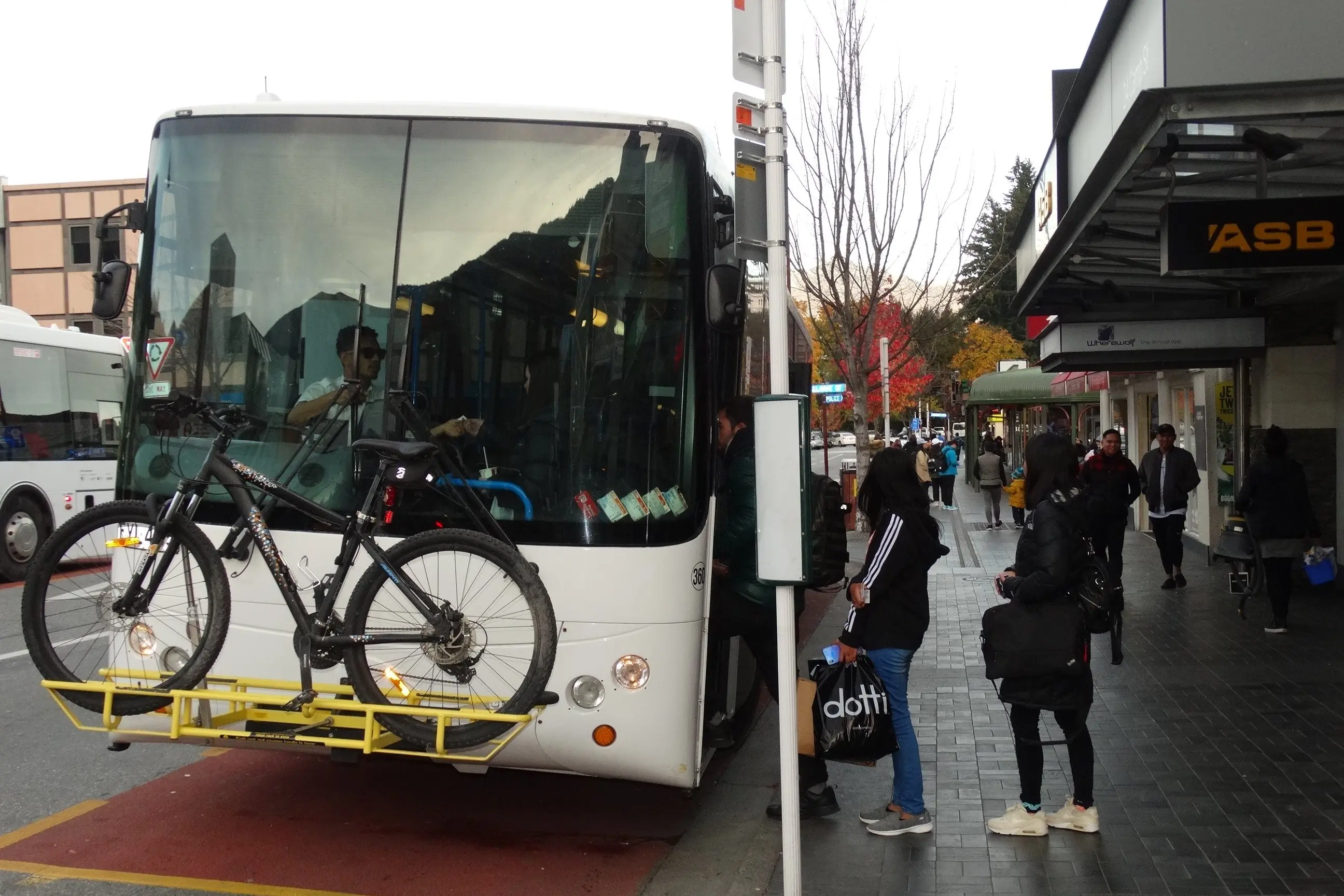
Public transport to link workers into Queenstown from as far away as Alexandra has been proposed but will not start until 2028. The Otago Regional Council will be asked on Wednesday to consider a four-month trial for the new service. The introduction of a bus service in the Central Lakes sub-region was expected to lead to a shift away from private vehicle travel, reducing transport-related emissions in Otago, a report to the council said. The report said due to the limited funding environment and strong focus on affordability, the preferred option was a two-route bus network operating four return trips per day, seven days a week. One route would connect Queenstown with Alexandra, Clyde and Cromwell, and the other with Wānaka, Luggate, Pisa Moorings and Cromwell. “This option is considered to represent the best value-for-money entry point for establishing public transport in the Central Lakes sub-region. There is flexibility to scale up service levels subject to council appetite and available funding,” the report said. “The indicative annual operating cost is approximately $2.929 million.” Initially operated as a trial service commencing in early 2028, the estimated cost would be $976,000 for four months’ service delivery and $100,000 in implementation costs. The report recommended the trial be paid for through targeted rate funding to meet a local share of 49% of total operating costs of a two-year trial. Co-founding for the service would then be sought from NZ Transport Agency Waka Kotahi through ORC’s upcoming 2027-2030 regional land transport plan. The report said the Central Lakes sub-region is experiencing rapid population growth, increasing visitor demand and ongoing transport challenges. The Central Otago district population has grown 12.7% between 2018 and 2023 and was projected to reach at least 36,900 by 2045–2055. Low availability of affordable housing close to Queenstown had contributed to people choosing to live in the various urban centres of the subregion, such as Wānaka, Cromwell and Alexandra, frequently travelling to Queenstown for work, the report stated. With no subsidised public transport services in the sub-region apart from Queenstown, most residents remained heavily reliant on private vehicles. Commercial bus services mainly catered to the visitor market and were centred around Queenstown Airport. If the trial was considered successful and NZTA approved the continuation of the service beyond a trial, a rates review might take place in the wider Central Lakes region to better understand how to be fund the service. The economic modelling for the proposed service assessed both a $20 fare and $10 fare. The analysis showed the $20 fare generated a high level of cost recovery for the four-trips-per-day option. In comparison, the $10 fare performed better. However, it had a lower cost recovery and might drive demand which exceeded capacity, possibly requiring larger buses or higher frequency, the report stated.