
PHOTO
Farming, red-tape, and an absent Labour candidate were front and centre at a meet the candidates event in the Waitaki electorate last week.
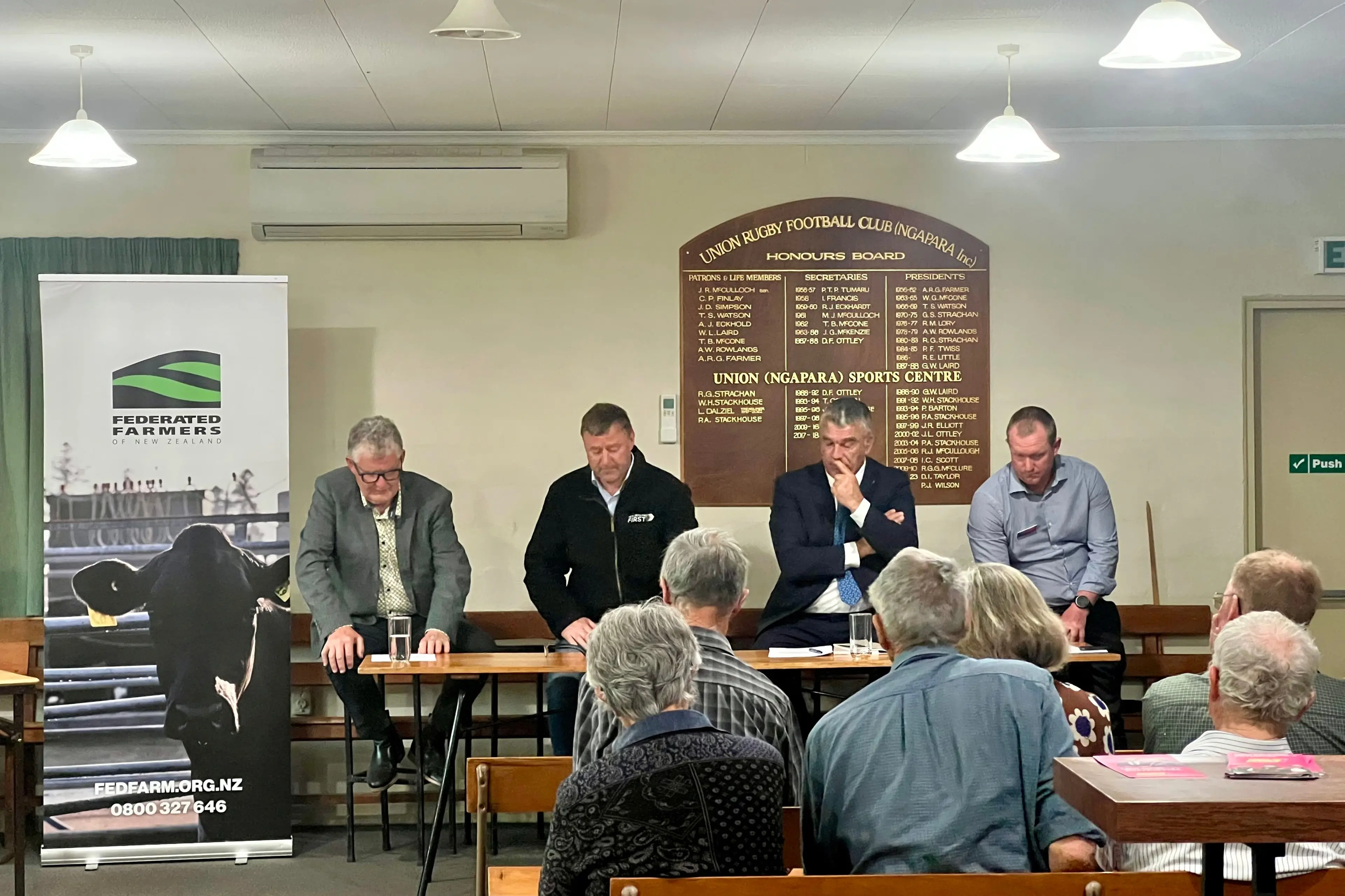
With beer on tap and a waft of sheep manure in the air, National candidate Miles Anderson, ACT candidate Sean Beamish, and NZ First’s candidate for the neighbouring Taieri electorate, Mark Patterson, standing in for Michael Laws, spoke to a small crowd of about 25 rural voters at the Ngapara Rugby Union Club rooms.
Hosted by Federated Farmers and moderated by former Waitaki District councillor Jim Thomson, the panel began 45 minutes late after organisers waited for Labour candidate Damien O’Connor who failed to appear.
O’Connor said a failure in his communication system meant the event was not logged and an alternative event was scheduled in its place.
Other candidates, Helen Tait of the Opportunity Party, and three independent candidates contesting the electorate seat, Daniel Shand, Adrian Graamans, and Bronwyn Judge, did not attend.
Anderson, the incumbent having been elected in 2023, discussed National’s moves to slash red tape, overhaul the Resource Management Act (RMA) and curb inflation, saying the party planned to return the country to surplus by 2029.
Removing regulatory hurdles was Anderson’s central focus going forward, describing them as “the folk theatre of every community”.
He said the new Natural Environment and Planning Bill would cut costs and support the rural sector, and criticised Environment Canterbury for creating water uncertainty through short-term consent renewals.
Beamish, who made it clear he was standing only for the party vote, said ACT wanted to prioritise infrastructure and cut public services, reducing government spending and limiting officials “dreaming up ways to control your lives”.
With South Island roads carrying much of the country’s freight, road maintenance needed to be prioritised, he said, proposing a $1 nightly charge per visitor, with tourism dividends for local areas, and a $6 daily contribution from temporary work visa holders.
Beamish also supported national standards to allow farm activity to operate without resource consents, particularly around water, and pledged $4.5m a year to catchment groups demonstrating good results.
Patterson backed equitable roading funding, saying the South Island received just 11% of the national roading fund.
He also backed long-term consents for agriculture, ensuring irrigation was maintained and continuous.
When questioned on iwi property and land rights, Anderson said National’s planning rules would end requirements to seek permission from, or pay fees to, iwi.
He added that while some hapū “try to push the envelope”, others operate large businesses constrained by “archaic” Māori Land Court processes.
“[People] have to go through somebody else to get permission to do stuff on their own land ... politicians seem to be very scared of the power that particularly Ngāi Tahu hold.”
Patterson agreed, saying individual consents should be exempt from iwi consultation.
Candidates also addressed patchy cell coverage, genetic technologies and pest control, and the Paris Agreement on climate change.
Anderson warned withdrawal from the agreement could trigger retaliation, Beamish called for a re-negotiation of terms, and Patterson firmly opposed the agreement.
“We’ve got the most carbon efficient farmers in the world. We need that money to be spent here,” Patterson said.
All candidates backed more regional pest control, including pest plants, guided by the community.
Ngāi Tahu was contacted for comment but did not respond by deadline.
LDR is local body journalism co-funded by RNZ and NZ on Air