PHOTO
In just four short months, a special piece of Kelvin Heights has been transformed from a felled wilding site, into the beginnings of a native forest.
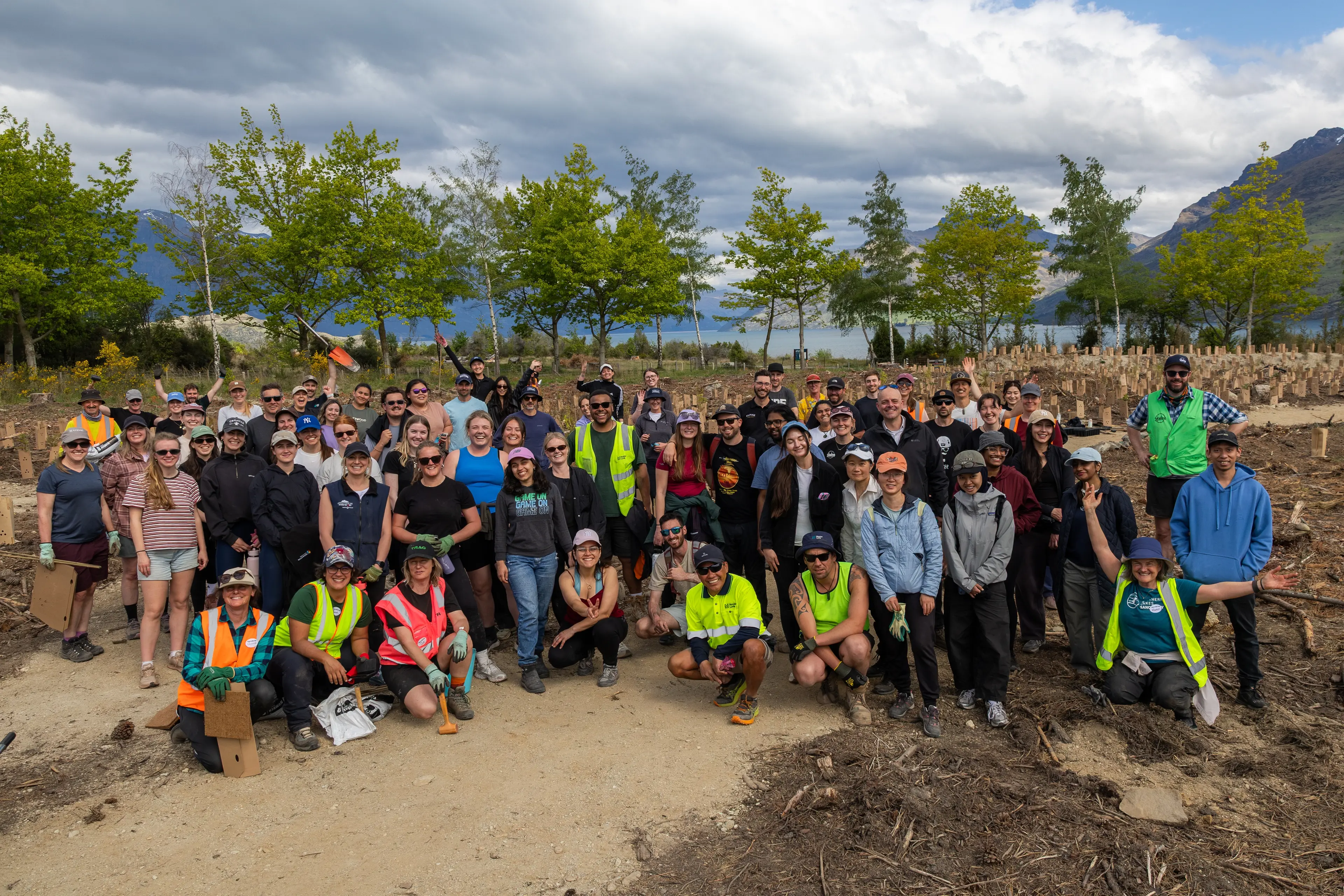
Last Thursday, more than 3000 native seedlings were being planted at Kelvin Heights’ Jardine Park by over 150 volunteers during the latest Love Queenstown Industry Planting Day.
The planting day marks the third year of the restoration partnership between Love Queenstown, the Whakatipu Reforestation Trust (WRT), Skyline and Queenstown’s council — to date, more than 7000 natives have been planted at the site.
Love Queenstown community fund co-ordinator Ash Bickley says it’s “pretty special” to see the impact of the work already.
“More businesses are getting involved, wildlife is already being found among the young trees, and you can see what everyone’s efforts are adding up to.
“These days take months of preparation, and seeing so many people arrive ready to help makes it all worthwhile.”
Bickley says the Whakatipu Wilding Control Group (WCG) and council led the removal of the mature wilding pines, a seed source for wilding spread, while WRT vollies grow native plants from locally-collected seed at the neighbouring community nursery.
Additionally, Southern Lakes Sanctuary and the Whakatipu Wildlife Trust are helping map and support wildlife in restoration area — cryptic skinks have recently been found among earlier plantings at Jardine Park.
WRT ops manager Sararose Brown says the partnership’s enabled planting on a scale that couldn’t be readily achieved alone.
“This patch was still covered in wilding pines in June.
“Getting those trees down, preparing the ground and having everyone here planting just a few months later is a wonderful result.”
Brown says they’re planting mountain beach, podocarps and broadleaf species that once would have grown on the lake margins, providing food and habitat for wildlife.
“In 20 years, people will be walking beneath these trees with birds above them.
“That’s a lovely thing to help create.”
Skyline Queenstown sustainability co-ordinator and WCG volunteer Padraic Prendergast says removing the wildings has benefits beyond the immediate vicinity.
“Those mature trees were sending seed … towards the Remarkables and across the lake to Cecil Peak.
“There hasn’t been a cone-producing wilding on Cecil Peak since 2015, but we’re still removing thousands of trees there because seed keeps blowing across.
“Taking out sources like this helps reduce that ongoing work, and seeing thousands of native seedlings go in instead is a fantastic turnaround.”
Last week’s planting completes the partners’ initial three-year programme, however restoration at Jardine Park will continue.
tracey.roxburgh@scene.co.nz