PHOTO
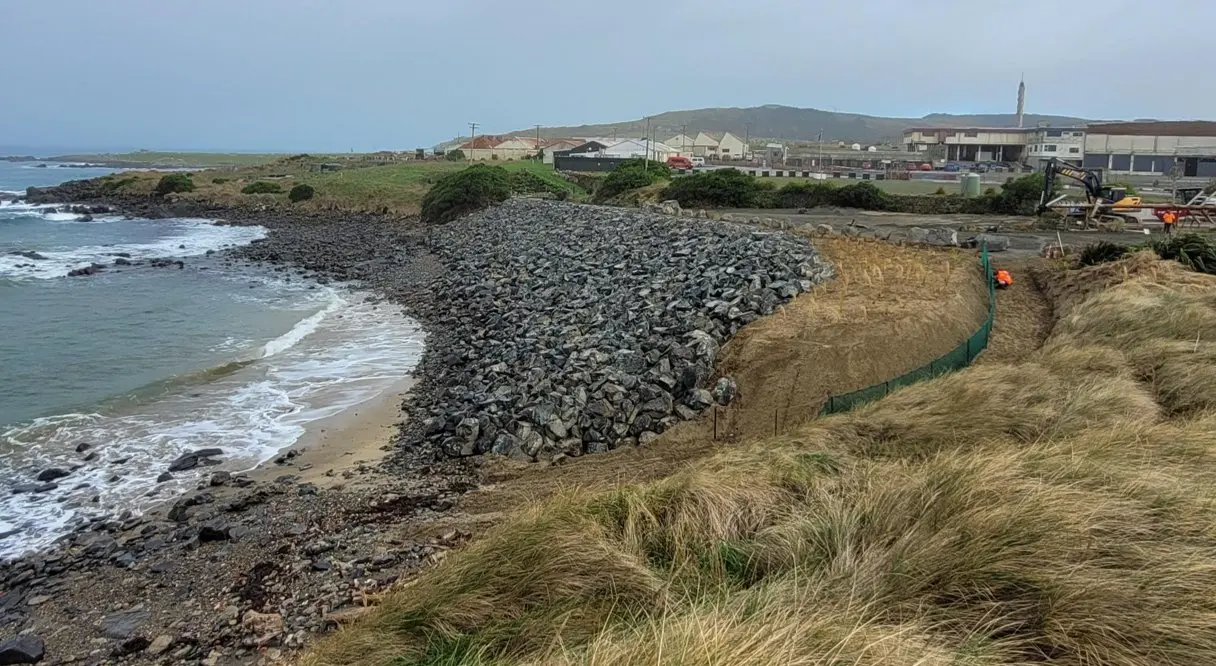
Further work could be required to protect a Bluff beach from old waste such as asbestos, despite tonnes of material already having been removed.
Ocean Beach reopened to the public in August after it was closed in 2018 due to contamination from a historic landfill.
But recent work to protect the area — including construction of a seawall — may not be the end of the road.
A report by Invercargill City Council strategy and policy manager Rhiannon Suter for the Bluff Community Board last month hinted at continuing remediation work.
"Significant" amounts of asbestos needed to be removed and up to 50 years’ work was forecast, Ms Suter wrote.
The comments follow a multimillion-dollar project last winter to remove 9000 tonnes of material from the landfill and build a 90m rock wall, which took about 6500 tonnes of rock.
Council acting group manager Russell Pearson said the seawall was designed to protect the area of the landfill most vulnerable to erosion for up to 100 years.
But the landfill reached other areas not directly protected by the seawall, he said.
"These areas are currently contained. However, long-term modelling on erosion risk relating to climate change and potential sea level rise shows that additional work and further investment may be required over the next 30-50 years."
Department of Conservation Murihiku operations manager John McCarroll said contaminants, including asbestos, were first reported at the beach in 2018 and 1.2tonnes of material was removed.
The site was found to be at risk of further erosion, which could release more contaminants, although the risk to the public was considered low, Mr McCarroll said.
"The beach is open and is regularly monitored for further contaminants."
Located just outside Bluff, Ocean Beach is situated near an old freezing works site, which is now home to aquaculture and a distillery.
Work to protect the area has been funded by Doc, the Ministry for the Environment and the Invercargill City Council.
— Matthew Rosenberg, Local democracy reporter
— LDR is local body journalism co-funded by RNZ and NZ On Air.